
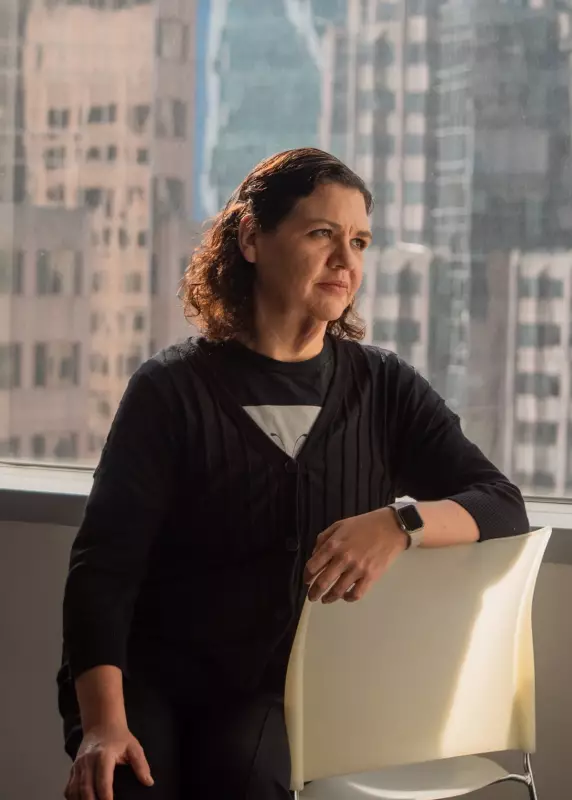
In the heart of San Francisco's federal building, a daily drama unfolds where the fate of dozens of asylum seekers hangs in the balance. At the centre of this maelstrom is immigration attorney Milli Atkinson, whose work has become a critical lifeline in a system described as increasingly chaotic and unforgiving.
A 5am Start in a Climate of Fear
The day begins before dawn for Milli Atkinson, Director of the Immigrant Legal Defense Program at the Bar Association of San Francisco. Her alarm sounds at 5am, and her first act is to check her phone for overnight alerts on the Rapid Response Network's hotline, scanning for reports of Immigration and Customs Enforcement (ICE) arrests.
This year has seen a significant escalation in enforcement actions within the city's immigration court. At least 88 asylum seekers have been arrested by ICE at their court hearings, creating an atmosphere of profound fear. Compounding the crisis, more than half of the court's immigration judges have been removed from their posts.
Atkinson is not a morning person, but punctuality is non-negotiable. She must be at the 630 Sansom Street federal building by 8am to catch the narrow window to advise undocumented immigrants before their hearings commence. On her commute over the Golden Gate Bridge, she seeks a brief mental respite with apolitical radio, steeling herself for the day ahead.
The Courtroom Onslaught and Translation Crisis
By 8am, with an iced coffee in hand, she joins the queue outside the building that houses immigration court, USCIS, and an ICE field office. She knows that for 10 to 20 people each day, appointments here will end in detention as the administration seeks to meet deportation targets.
Inside the fourth-floor courtroom, families with young children wait in hushed tension. Before the judge arrives, Atkinson addresses the room in Spanish, introducing the Bar Association's Attorney of the Day programme, which offers free, last-minute legal counsel. Since ICE began making arrests in court, she has instituted a roll call to ensure clients do not simply 'disappear'.
The barriers are immense. Her staff speak over 32 languages, but it is never enough. On this day, the judge requested a Kazakh interpreter, but none was available. Others in the room speak Hindi and Mam, a Mayan language from Guatemala. The stakes of miscommunication are catastrophic; a form filled out incorrectly or a misunderstood question can lead to an accusation of lying, the denial of asylum, detention, and ultimately deportation.
The judge moves through a high volume of cases at speed. Atkinson whispers urgent advice to clients: if a government attorney moves to dismiss their case and the judge agrees, ICE will likely arrest them immediately. She instructs them to clearly tell the judge they wish to continue their case. All the while, she knows ICE officers are waiting outside the courtroom door.
Detention Conditions and a Relentless Pace
At 10am, Atkinson leads a tour for journalists and a city supervisor to the sixth-floor ICE holding facility. Clients have reported being held for days in freezing, brightly lit rooms without proper beds, hygiene materials, or edible food. They describe limited access to legal counsel and a lack of medical care.
She shows the group the cramped attorney-visitation room, divided by thick glass, which requires a detainee's exact official name for access—a particular problem for trans asylum seekers whose chosen names don't match their documents. Following a lawsuit by the ACLU, a district court judge issued a preliminary injunction in November requiring improved conditions, but challenges remain.
The rest of Atkinson's day is a whirlwind of media interviews, staff meetings, and managing the direct trauma her team now witnesses. They see breastfeeding mothers and pregnant women handcuffed and shackled after attending court hearings. There are days, she admits, when she and her staff break down in tears. Leadership now involves modelling sustainability to prevent burnout in a context where every day feels like a crisis.
Finding Hope Amid the Chaos
To switch off, Atkinson forces herself to stop work at 5pm. She has taken up running as a form of active meditation and loses herself in 'trashy' historical romance novels to escape. She strictly maintains weekly tap dancing and mahjong sessions, and friends know not to ask about her work.
Despite the onslaught, points of hope persist. Her team has found recent success by filing Habeas Corpus petitions in federal court, arguing that detentions violate constitutional due process rights. Every one of the 44 individuals they have filed for since September has been released.
Having attorneys show up for the Attorney of the Day programme gives her hope. So does seeing people rally in solidarity with the immigrant community. As an American who grew up in a bilingual, multicultural Californian town, the current climate breaks her heart. She views it as a 'bizarre alternate universe where the law doesn't apply anymore'. Yet, she is in this fight for the long game, even planning to be on call on Christmas Day so her staff don't have to be, knowing that ICE shows no such holiday respite.




