
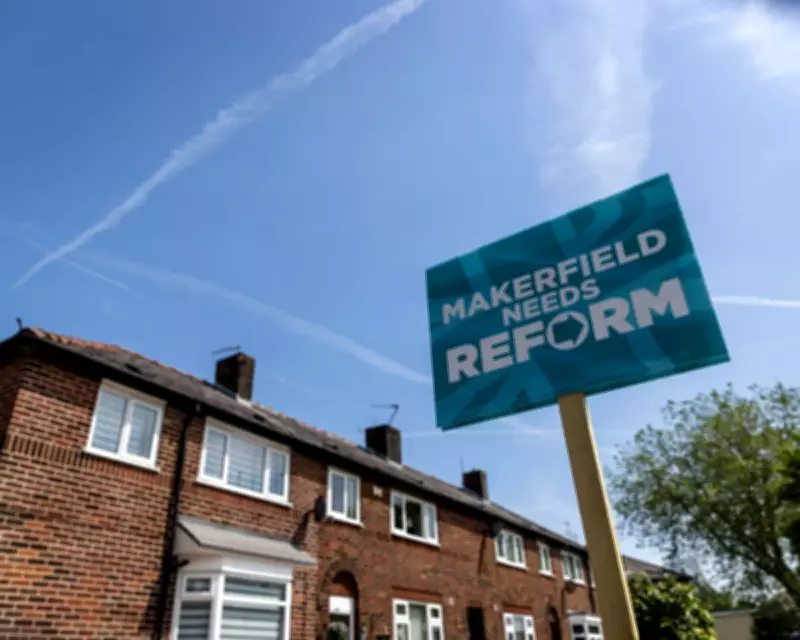
In the constituency of Makerfield, a collection of towns and villages in Greater Manchester, the roads are lined with turquoise banners proclaiming 'Makerfield needs Reform.' This area, once at the heart of Wigan's coal-mining industry and represented by Labour continuously since the 1900s, now sees Nigel Farage's party gaining significant traction. With any other Labour candidate, this seat would likely fall to Reform.
Local issues are predominantly environmental. On New Year's Day 2025, severe flooding hit several areas, forcing residents from their homes for months. In Bickershaw, a massive 25,000-tonne illegal waste dump has blighted the village. Public transport is inadequate, with no Metrolink tram service and journeys to Manchester city centre taking up to an hour by train and bus. Despite these environmental concerns, Reform voters are undeterred by the party's climate policies, which include scrapping net zero and ending renewable energy subsidies.
Voter Sentiment
Stefan Bilski, a roofer from Abram, is 'probably' voting Reform. His house has flooded twice, in 2015 and 2024, and he feels Labour has not done enough to address the issue. Immigration also sways his vote, as he believes Labour is failing to curb illegal migration. 'My name's Bilski, so my grandad was a migrant, but he came over in the war and worked down Bolton colliery. He didn't come asking for benefits,' he says.
A pensioner on Bickershaw Lane, who asked not to be named, has also been flooded twice. She describes the ordeal as unimaginable, with her home losing value after being uninhabitable for eight months. She leans toward Reform, accusing Labour of taking the area for granted. She dismisses climate change as the cause, pointing instead to new housing developments.
Immigration and disenchantment with Labour are driving voters to Reform more than any other issues. Controversial online comments by Reform candidate Robert Kenyon, where he described himself as sexist, made derogatory remarks about women and gay people, have not discouraged supporters.
Reform and Restore Britain
Stephanie Doohan, a former railway worker and trade unionist, flies a Reform flag outside her home. She wants 'change' and supports Kenyon as a 'local lad.' She dismisses criticism of his online activity, focusing instead on his policies. She believes Andy Burnham, the Labour candidate and Manchester mayor, is using the seat as a stepping stone to become prime minister and does not care about Makerfield.
Restore Britain, led by Rupert Lowe, poses a significant threat to Reform. Polling from Survation places them third with 7% of the vote. In Hindley, Zoe has lost faith in both Labour and Reform, considering Restore Britain as a viable alternative. 'Everybody's struggling, the prices are going up, nothing's being done about it,' she says. She distrusts Reform, seeing them as part of the political establishment.
The Bryn community club, formerly a Labour club, now serves as Restore Britain's campaign headquarters. About 24 volunteers gather there to campaign. Tracey Bailey, a nurse and health visitor, says, 'I'm here as a nurse and a health visitor to save our country and save our children. I'm a mother of three, and I don't like the state of the nation.'
Eilieen Orrell, a former railway worker and trade unionist who voted Labour in the last general election, plans to vote for Restore Britain. She has followed Rupert Lowe for three years and appreciates that he addresses issues beyond migration. For her, the decline of the high street symbolizes neglect. 'When I was growing up, there were shoe shops, a Woolworths, a hardware shop – everything you could find was on the high street. Now, there's nothing,' she says, pointing to vape shops and barbers.
Labour's Hope: Andy Burnham
The main barrier to a Reform victory is Labour's candidate, Andy Burnham. The Manchester mayor, formerly MP for neighbouring Leigh, is regaining votes lost to the left and right. Survation polling shows him with a narrow lead over Kenyon.
Elizabeth Whitehurst voted Green in recent local elections but will vote for Burnham on 18 June. She fears a Reform or Restore victory due to their disregard for Green issues. Her house in Abram was flooded, forcing her family to live upstairs for months. 'It was extremely difficult, there was no help, there was nothing,' she says.
Michelle Hogan, head of supply chain for a fruit juice manufacturer, says she would not vote Labour if not for Burnham. 'I think Labour have lost their way. I don't think Keir Starmer represents working-class people. I've always liked Andy Burnham, but I think he's got a track record now with what he's done for Manchester, and I just think he's a personable, down-to-earth bloke, who working-class people can relate to.' She was overjoyed when Burnham stood for Makerfield and believes retiring MP Josh Simons made a selfless decision. Hogan did not vote in the last election but now supports Burnham, though she worries the Green party might split the Labour vote.
Sarah Wakefield, the Green candidate, defends her party's decision to stand. 'I'd say that the Green party did not call this byelection, Labour chose to call this byelection, Andy Burnham has chosen to stand in this byelection, and it's his job to make the case for why he should be the representative of these people. That's not my job – my job is to tell people why they should vote for Green policies.' However, the Greens are not dedicating the same resources as in Gorton and Denton, where they won.
Sue Houghton, who is not normally a Labour voter, backs Burnham. She hopes he will challenge Starmer for leadership, calling Starmer 'not a strong enough leader.' Her husband, Paul Houghton, normally votes Reform but will support Labour this time. 'If it was a normal election, I would normally vote for Reform, but I'm going to vote for Labour this time, and I've not voted for Labour in years. I think he's doing a good job for Manchester, he's done a cracking job as mayor, and I think he'll make a good prime minister.'




