
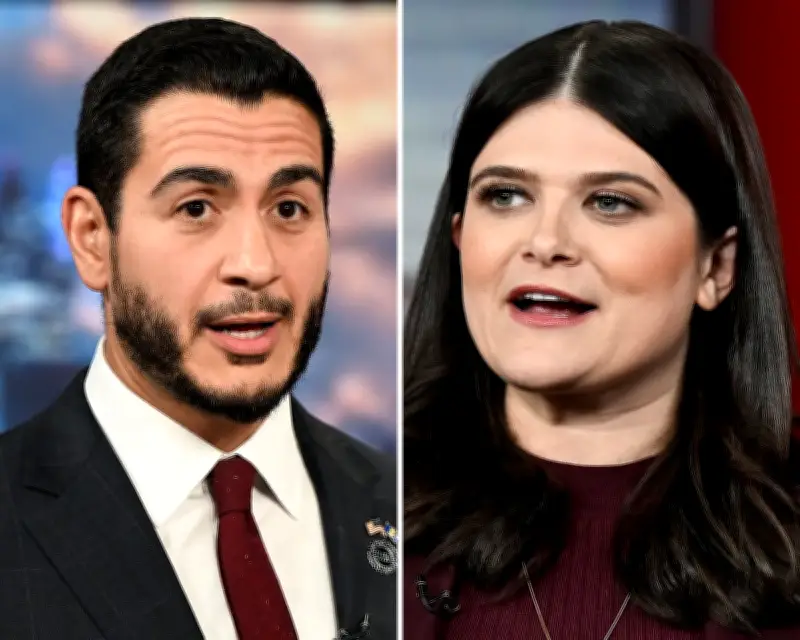
The Michigan Democratic primary has become the most contentious and crucial test for the party this year, with voters weighing electability and policy in a race that could determine control of the US Senate. Recent polls show progressive Abdul El-Sayed leading centrist Representative Haley Stevens by 15 points among likely Democratic voters, according to a nonpartisan Emerson College poll released this week. The survey found 54% support for El-Sayed, a physician and former Detroit health director, compared to 39% for Stevens, with a stark generational divide: voters under 50 favor El-Sayed by 42 points, while those over 60 prefer Stevens by 14 points. Independents side with El-Sayed by a 27-point margin.
The Candidates and Their Platforms
El-Sayed, 41, an epidemiologist who served as health director for Detroit and Wayne County, is campaigning on a progressive platform centered on universal healthcare through Medicare for All, getting money out of politics, and taking on corporate monopolies. He has been endorsed by prominent progressives including Senators Elizabeth Warren and Chris Van Hollen, who rallied with him in Michigan last weekend. Stevens, 43, who has represented Michigan's 11th Congressional District since 2019, has branded herself as a pragmatic workhorse, emphasizing her record of flipping a Republican seat and winning in a purple district. She has secured endorsements from Senate Minority Leader Chuck Schumer, Governor Gretchen Whitmer, and retiring Senator Gary Peters, whose seat both candidates are vying for.
The winner of Tuesday's primary will face Mike Rogers, a former Republican congressman who lost to Elissa Slotkin in the 2024 Senate race. El-Sayed, who is of Egyptian descent and Muslim, has faced questions about his electability, which he argues are often coded attacks on his name and religion. "Michiganders are open-minded, big-hearted people," he told voters at a gathering in Davison. "When they say I'm unelectable, that's not a comment on me; it's on you. They're trying to say you're not big enough to see past my name. I'm betting otherwise."
Outside Spending and Attacks
The race has drawn over $40 million in outside spending, much of it from groups supporting Stevens or attacking El-Sayed, including pro-Israel groups associated with AIPAC. AdImpact reports more than $60 million in ad reservations and spending to benefit Stevens. Misleading ads have accused El-Sayed of "disrespecting women" and tied Stevens to former President Barack Obama, who has not endorsed in the race but previously praised her work on the auto industry rescue. The Obama connection resonates with some Black voters, who make up about 20% of the Democratic primary electorate and have shown skepticism toward El-Sayed.
El-Sayed has turned the outside spending into a central campaign issue, arguing it proves the establishment is threatened by his candidacy. Stevens, who holds an A-rating from End Citizens United, a campaign finance reform group, says she feels "very strongly" about reducing money in politics. She told reporters last Sunday that most of her direct contributions come from small donors, holding up a note from a church member who said, "Had I known that you would be at church today, I would have brought my checkbook."
Voter Perspectives and Ground Game
At Chad Green's house in Davison, where baby chicks roamed the lawn, the retired federal firefighter hosted an event for El-Sayed. Green, 54, a moderate Democrat who originally supported McMorrow, said he resonated more with El-Sayed's policies. "I've never seen people more excited about a candidate," Green said. "I feel like there's not going to be excitement for the Republicans to vote. And I feel like there is excitement for Democrats to vote for Abdul."
El-Sayed's campaign boasts more than 10,000 volunteers and is knocking on nearly 10,000 doors per day, aided by groups like the Working Families Party, the United Auto Workers, and Indivisible. At a rally in Rouge Park, Detroit, Justin Daniels, 45, who is Black, said the dividing line is establishment versus non-establishment. He believes younger Black voters would lean toward El-Sayed, while older ones are a toss-up. "I see him winning over Republicans, because what a lot of people don't understand is they're getting their benefits cut just as well," Daniels said.
Stevens's Strategy and Electability Case
Stevens, who has won in a competitive district four times, argues she is the stronger general election candidate. "I think the Republicans have answered that for us," she said, pointing to a leaked phone call where Rogers said he had a better chance of flipping the seat if El-Sayed won. She has embraced her viral Michigan accent, putting the phrase "stick it to 'em" on campaign signs, though she suggested the virality was driven by "cool kids on the Internet doing the cool kid chatter," some of whom "might be the coastal elites."
At church services in Detroit, Stevens emphasized her work with Obama and her focus on "kitchen-table issues." Scott Benson, a Detroit city councilman and deacon, said he supports Stevens because of her pragmatism. "I am very pragmatic. I'm very kitchen table. I'm about jobs," Benson said. "Other issues just really don't align with mine and so, great guy, but Haley Stevens' policies align with mine, and her effectiveness as a legislator is also a very big deal to me."
The Stakes for the Democratic Party
The race is being closely watched as a barometer of the progressive movement's strength, especially after a wave of wins in solidly blue districts. Senator Warren told the Guardian that adding a few more progressive fighters could change the Senate's tone. "Remember, the Senate is actually a pretty small place. For Democrats to be in the majority, shoot, there'd only be 51 of us," she said. "You bring us just a few more progressive fighters, and the whole tone of that place changes."
Van Hollen said he believes El-Sayed has a better chance of winning in November because of his ability to mobilize voters with a message of uniting against political corruption and concentrated economic power. "Voters don't vote for a convicted felon unless they're really frustrated with the way things are," he said of Trump. "And he has changed the status quo in all the worst ways. We need to change the status quo in all of the best ways."
El-Sayed, who has faced criticism for not releasing financial disclosures (he subsequently did) and for his past podcast and book, says his campaign is about inspiring both non-voters and disillusioned Trump voters. He regularly has people attend his town halls who voted for Trump but now support him. At Green's house, he asked the group: "Why did it go for Bernie, then Trump, then Biden, then Trump?" He argued that voters are "going to the buffet, and not finding what we really want," and offered himself as an alternative to the corrupt system on both sides.
Robin Evans, a 75-year-old registered Democrat at Green's gathering, said she is voting for El-Sayed despite electability concerns. "They're trying to sell the fact that he's not electable, but I'm not doing that," she said. "I'm voting for whom I feel is right, not for electability."




