
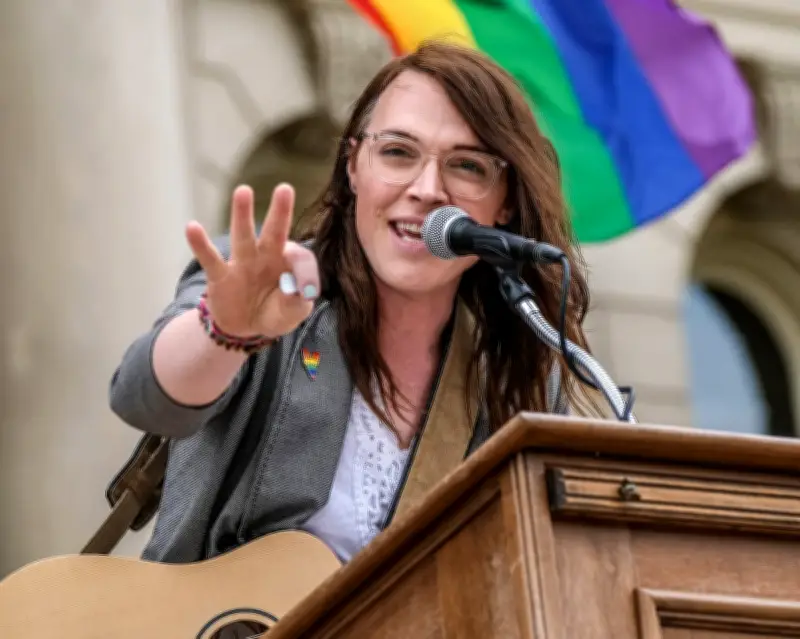
Joanna Whaley, a former megachurch pastor who endured 15 years of conversion practices, has won the Democratic primary for Michigan's 2nd House District, securing her place as the first transgender member of the state legislature. Her victory on Tuesday was decisive, as she comfortably defeated former state Representative Frank Liberati and Gary Schlack in a district that leans heavily Democratic.
Primary Victory and Legal Challenges
Whaley's path to victory was not without obstacles. Earlier this year, Liberati attempted to have her disqualified from the ballot, challenging her name change. The Wayne County clerk's office dismissed the challenge, ruling that Whaley's candidate affidavit was legal and proper. This legal hurdle did not deter her campaign, which focused on economic issues and grassroots engagement.
Her win was celebrated by national figures, including Sarah McBride, the first openly transgender member of the US Congress, who posted on X: "So proud of my friend, Joanna Whaley! She faced indignities from her opponent, channeled the energy into knocking on doors, doubled down on her economic agenda, and she defeated that former Dem legislator (who took the low road against her) by 30+%! Way to go, Joanna!"
Background and Personal Journey
Whaley, 38, grew up in a Catholic family and spent nearly two decades as a pastor at an evangelical megachurch. As she wrestled with her gender identity, the church forced her to undergo Christian conversion therapy with four different therapists over 15 years. In 2022, she was forced to quit when church leaders discovered she was contemplating a gender transition.
After leaving, Whaley found work at a more progressive church, shared her story on social media, and launched a podcast. She also served as a hospital chaplain in emergency rooms, intensive care units, and hospice care. These experiences have shaped her perspective on healthcare and social justice.
Campaign and Voter Reactions
During her campaign, Whaley encountered unusual situations with potential donors. She told the LGBTQ Nation website in April: "Some of those conversations go weird. We have a semi-pro hockey team in the area, and I was sitting down with one of the directors. In the middle of the conversation, he says, 'So do you have a brother? I went to high school with someone named blah blah blah,' and they said my dead name. I'm like, 'That's me.' And they're like, 'Whoa, what?'"
She added: "It happens all the time. I'm honored by it, but at the same time, it does turn into some really weird and uncomfortable conversations, especially with some of my old Christian friends who then try to save my soul and tell me that I'm living in sin."
In an interview with the Detroit Free Press, Whaley acknowledged the significance of her candidacy: "It hits me when I'm talking to trans folks across the state. I'll get in that conversation with someone across the state who just comes up and says, 'Thank you,' and I'm, 'What are you thanking me for?' I understand in this moment in politics what it would mean to elect a trans woman could be monumental. I don't take that responsibility lightly at all. I take it very seriously."
Endorsements and General Election
Whaley has earned endorsements from groups including the LGBTQ Victory Fund, Run for Something, Her Bold Move, and Families United for Trans Rights. She will face Republican Ronald Kokinda in the November 3 general election, aiming to replace Tullio Liberati, the brother of her primary opponent, in the statehouse.




