
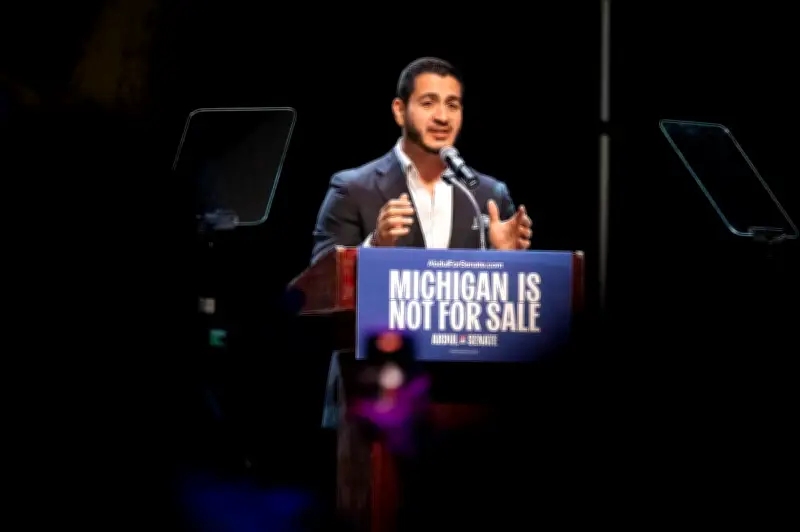
Michigan Democrats are increasingly turning to Abdul El-Sayed, the former Detroit health department director and 2018 gubernatorial candidate, as a leading contender for the 2026 gubernatorial race. Party insiders and grassroots organizers say his progressive platform and ability to mobilize young voters make him a strong candidate to succeed Governor Gretchen Whitmer, who is term-limited.
El-Sayed's Background and Appeal
El-Sayed, an epidemiologist and former health official, gained national prominence during his 2018 run, where he narrowly lost the Democratic primary to Whitmer. Since then, he has remained active in public health advocacy, particularly during the COVID-19 pandemic, and has built a loyal following among progressives. His campaign would likely focus on healthcare access, economic inequality, and climate action, echoing themes from his previous run.
According to a recent poll conducted by the Detroit Free Press, El-Sayed holds a 12-point lead over other potential Democratic contenders, including state Senator Mallory McMorrow and Attorney General Dana Nessel. The poll surveyed 800 likely Democratic primary voters and had a margin of error of 3.5 percentage points. "Abdul has the unique ability to inspire a new generation of voters while also appealing to the party's base," said Detroit-based political strategist Rachel Humphrey.
Party Dynamics and Potential Rivals
While El-Sayed's candidacy is gaining momentum, he may face challenges from more established figures. McMorrow, who gained national attention for her response to a conservative colleague's remarks, has been vocal about education and reproductive rights. Nessel, the current attorney general, has a strong record on consumer protection and civil rights. However, both have yet to announce formal bids, leaving the field open.
Some party moderates worry that El-Sayed's progressive stances on issues like Medicare for All and the Green New Deal could alienate swing voters in a general election. "We need a candidate who can win in the suburbs, not just in Detroit and Ann Arbor," said former state representative and centrist Democrat John Walsh. "El-Sayed's policies are bold, but they might be too bold for the average Michigan voter."
El-Sayed's Response and Campaign Readiness
El-Sayed has not officially declared his candidacy but has been meeting with donors and community leaders across the state. In a statement to The Guardian, he said, "Michigan needs a leader who will fight for working families, expand healthcare access, and tackle the climate crisis head-on. I'm exploring how I can best serve our state, and I'm encouraged by the support I've received."
His potential entry into the race would likely reshape the Democratic primary, drawing attention to progressive priorities and forcing other candidates to address issues like student debt and universal healthcare more directly. Political analysts suggest that El-Sayed's strong ground game and social media presence could give him an edge in the early months of the campaign.
National Implications and Fundraising
The Michigan governor's race is expected to be one of the most closely watched in 2026, with implications for national Democratic strategy. El-Sayed's candidacy could test the party's appetite for progressive policies in a key Midwestern swing state. Fundraising will be critical; El-Sayed raised over $5 million in 2018, and his team is reportedly aiming to double that figure this cycle.
Despite the enthusiasm, some caution that El-Sayed's path to the nomination is not guaranteed. The primary is still over a year away, and unforeseen developments could shift the political landscape. However, for now, his name is at the top of many Democrats' lists, and his potential candidacy is generating significant buzz both locally and nationally.




