
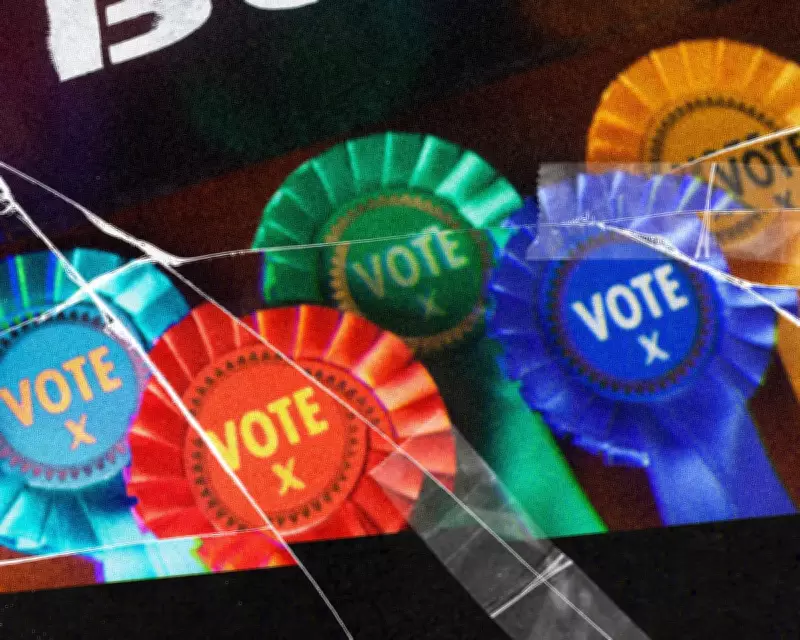
The latest local election results have sent shockwaves through the political landscape, with both major parties facing significant challenges from insurgent movements. Our panel of experts weighs in on what these results mean for the future of British politics.
Green Party Surge in Urban Areas
Owen Jones, a Guardian columnist, highlights the Green Party's remarkable performance in urban strongholds. In Hackney, where Labour had won the mayoralty by at least 25 percentage points for two decades, the Greens took it by 12 points. They are now bullish about other inner London communities such as Lewisham and Haringey. In Manchester, they hoped to win six council seats but instead secured 17. They made sweeping gains in Sheffield, ousting the Labour leader, and in Newcastle. Their vote share increased in Stockport, Oxford, and Exeter. Jones argues that Labour's high command gambled on a smear campaign against the Greens, but Zack Polanski's insurgents are well positioned to replace Labour in large swaths of its urban heartland. Keir Starmer believed that crushing the left within Labour would expel it from politics forever, but the Greens have proven him wrong.
Reform UK and Tory Divide
Henry Hill, a journalist and commentator, notes an excellent night for Reform UK and a potentially dangerous but not disastrous one for the Conservatives. In 1990, victory in Westminster and Wandsworth allowed Margaret Thatcher to put a brave face on terrible local election results. Kemi Badenoch fell two seats short in Wandsworth but retaking Westminster may do her a similar service. However, despite picking up seats in a few places, the overall results are dire for the party. Unlike last year's rout, these elections were last fought in 2022 during Partygate, so they were already bad by historic standards. The so-called 'Kemi bounce' in personal ratings has not translated into electoral gains.
Labour's Narrative Battle
Morgan Jones, co-editor of Renewal, suggests that Labour will now fight over the narrative. One view is that the party needs to focus on losses to Reform UK; another is that losses to progressive parties like the Greens are more damaging. John Curtice has pointed out that even when seats switch from Labour to Reform, the Green vote often damages Labour more than direct switchers. Some polls show only 1% of Reform voters would back Labour, suggesting that obsessively pursuing voters to the right is partly causing Labour's unpopularity. One lesson may be the need to staunch losses to the left.
Tories Need Change
Ruth Davidson, former leader of the Scottish Conservatives, acknowledges tough elections for the Tories. She credits Kemi Badenoch for picking the party up off the canvas but calls for more focus on building coalitions of voters, including young people, parents, public sector workers, and business owners. She wants to reach out to a broader coalition, including those now voting Labour or Liberal Democrat, and focus on making the economy work for them.
Starmer's Toxicity Hurts Local Labour
Jason Okundaye, Guardian assistant Opinion editor, points out that despite good work by local Labour councils, voters are repelled by the national party. In Wandsworth, where Labour ended 44 years of Conservative control in 2022 with a radical campaign, the council has fallen to no overall control. Councillors reported that locals acknowledged their good work but considered the national party too repulsive to support. Similar dynamics are seen in Lambeth and Hackney. The toxic association with the national leader is more significant than power manoeuvres at the top.
Lib Dems: Quiet Winners
Mark Pack, former president of the Liberal Democrats, highlights that the Lib Dems have made gains in eight successive rounds of local elections. They already run more councils than the Conservatives and are on course to overtake them in councillor numbers, perhaps even Labour. Dramatic gains in Richmond, where all Conservative representation has been replaced by Lib Dems, show progress. Smaller gains in Exeter, Ealing, and Lincoln spread their strength.
Foreshadowing Future Drama
Carys Afoko, communications strategist, sees these results as a dress rehearsal for the general election. For Greens and Reform UK, this was a test of their party machines. Both challenger parties will be energised. The Greens' impressive rise is notable. Voters gave a clear verdict on the Labour government; if it doesn't change course and leader, it risks total wipeout in three years. Picking a new leader won't guarantee a change in fate, but with Starmer in charge, the party can't get a hearing.




