
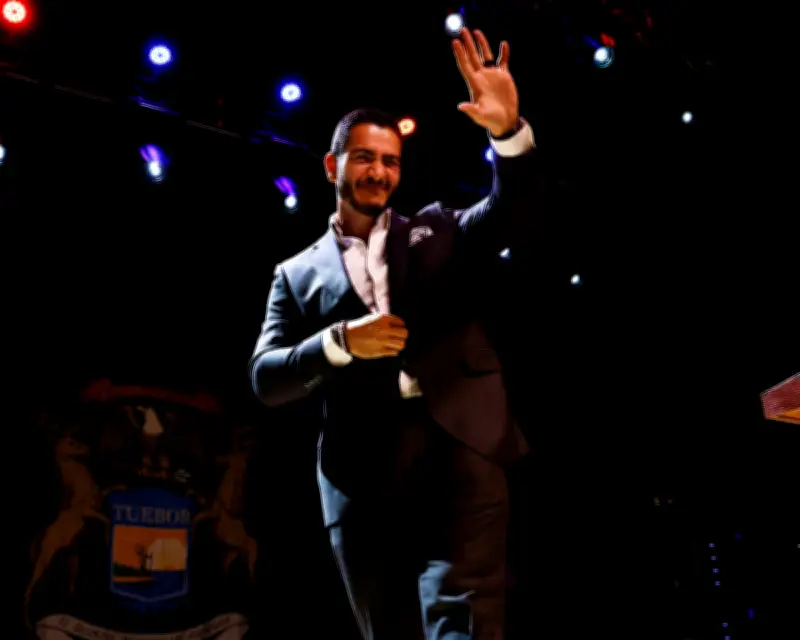
The Democratic primary for Michigan's open U.S. Senate seat concluded with a decisive victory for Abdul El-Sayed, a physician and former Detroit health director, according to results reported by the Associated Press. El-Sayed's win positions him as the likely Democratic nominee in a state that has become a critical battleground for control of the Senate.
El-Sayed, who ran on a platform of Medicare for All, a Green New Deal, and a $15 minimum wage, defeated several opponents, including actor Hill Harper and state Representative Shri Thanedar. With nearly 90% of precincts reporting, El-Sayed held a comfortable lead, capturing about 40% of the vote, according to unofficial returns.
Progressive Momentum in the Midwest
The victory marks a significant milestone for the progressive wing of the Democratic Party, which has sought to translate grassroots energy into electoral success in the Midwest. El-Sayed, who previously ran for governor in 2018, has been endorsed by prominent national figures such as Senator Bernie Sanders and Representative Alexandria Ocasio-Cortez.
“This is a victory for working families across Michigan who are tired of the status quo and ready for a government that actually represents them,” El-Sayed told supporters at his victory party in Detroit. “We built a people-powered campaign, and now we're going to take that energy to Washington.”
Republican Primary and General Election Outlook
On the Republican side, former Representative Mike Rogers won the GOP primary, setting up a high-stakes general election contest. Rogers, a former FBI agent and House Intelligence Committee chairman, has focused his campaign on border security, inflation, and support for law enforcement.
Michigan's Senate seat is open because longtime Democratic Senator Debbie Stabenow announced her retirement earlier this year. The race is considered one of the most competitive in the country, with both parties pouring resources into the state. According to the Cook Political Report, the race is rated as a “toss-up.”
Key Issues and Voter Turnout
El-Sayed's campaign emphasized economic justice and healthcare access, which resonated with voters in urban centers like Detroit and Ann Arbor, as well as in swing suburbs. He also pledged to protect voting rights and abortion access, issues that have animated Democratic voters since the Supreme Court overturned Roe v. Wade.
“We saw an incredible turnout in the primary, which shows the enthusiasm among Democrats,” said Michigan Democratic Party Chair Lavora Barnes. “We are confident that our nominee will carry that energy into November.”
El-Sayed, who was born to Egyptian immigrant parents, would be the first Muslim American elected to the U.S. Senate if he wins in November. His candidacy has drawn national attention as a test of whether progressive policies can win in a diverse, industrial state.
Campaign Finance and External Spending
The primary was marked by significant outside spending, with super PACs and dark-money groups pouring millions into the race. According to data from OpenSecrets, total spending in the Democratic primary exceeded $20 million, with much of it directed at negative ads.
Despite the influx of cash, El-Sayed's grassroots fundraising—averaging small-dollar donations—allowed him to compete effectively. His campaign reported raising over $8 million, with an average contribution of $35.
Looking Ahead to November
El-Sayed will now face Rogers in a general election that will be closely watched as a bellwether for national trends. The outcome could shift the balance of power in the Senate, where Democrats currently hold a slim majority.
Political analysts note that Michigan's electorate is closely divided, and the race is likely to be decided by independent voters in the suburbs of Detroit and Grand Rapids. Both candidates are expected to focus on the economy, jobs, and the cost of living in the coming months.
“We have a clear choice in this election: a future that works for everyone or one that only benefits the wealthy and well-connected,” El-Sayed said. “I'm ready to fight for Michigan families.”




