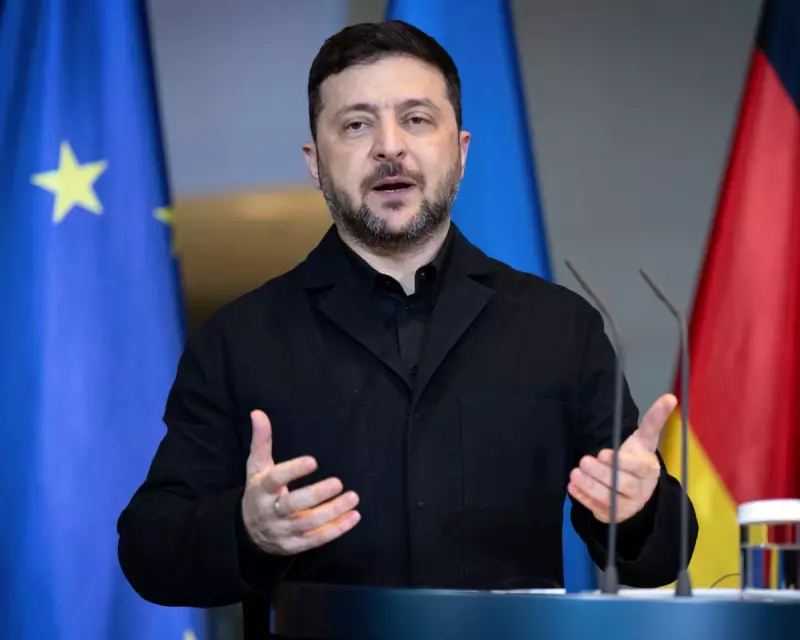
Ukrainian President Volodymyr Zelenskyy has announced that a set of peace proposals, negotiated with American officials, could be finalised and presented to the Kremlin within days. The revelation came after intensive two-day talks in Berlin, where US mediators claimed to have resolved 90% of the problematic issues between the warring nations.
Berlin Breakthrough and the Road to Moscow
Speaking in the early hours of Tuesday morning, President Zelenskyy outlined the expected timeline. He stated that a finalised set of documents should be prepared "today or tomorrow", after which the US Congress is expected to vote on security guarantees for Ukraine. Following this, American envoys would hold consultations with Russia, potentially leading to high-level meetings as soon as this weekend.
Zelenskyy indicated the package involves five key documents, some of which concern legally binding security guarantees that would mirror the collective defence principle of NATO's Article 5. However, US officials have been cautious, declining to specify the package's exact contents or the response should Russia seize more land post-deal. They did confirm the US has no plans to deploy troops on the ground in Ukraine.
The Stumbling Block: Territory and Security
Despite the reported progress, a critical impasse remains over the status of occupied territories. The main sticking point is the future of the Donbas region. US negotiators, led by Steve Witkoff and Jared Kushner, have proposed a compromise where Ukraine would withdraw from parts of Donbas it still holds, creating a demilitarised "free economic zone." Russia, however, has suggested using its police and national guard in the area, indicating an expectation of continued control.
President Zelenskyy was adamant in his rejection of Russian authority over the region. "A 'free economic zone' does not mean under the control of Russia. Neither de jure nor de facto will we recognise Donbas – its temporarily occupied part – as Russian. Absolutely," he asserted. He acknowledged that while a referendum on such a compromise was theoretically possible, no consensus on the territorial issue has been reached.
European Support and Kremlin Resistance
In a show of allied backing, leaders from the UK, France, Germany and eight other European nations issued a joint statement. They suggested troops from a "coalition of the willing" could assist Ukraine with force regeneration and securing its skies and seas. However, these offers fall short of the ironclad, NATO-style guarantees under discussion with Washington.
The most significant obstacle remains the Kremlin's stance. Russia's deputy foreign minister, Sergei Ryabkov, stated Moscow would not agree to NATO country troops operating in Ukraine "under any circumstances." The Kremlin also confirmed it has not seen the details of the proposed security guarantees. Privately, European officials admit the current talks are partly aimed at maintaining support from the Trump White House, with genuine peace appearing distant.
Striking a sober note, Zelenskyy warned of continued conflict if Russian President Vladimir Putin remains intransigent. "If Putin rejects everything, we will end up with exactly what we are experiencing on our plane right now – turbulence," he said, recording a message after departing Berlin for the Netherlands. He added that in such a scenario, he would expect the US to apply greater sanctions pressure and provide more weapons to Ukraine.