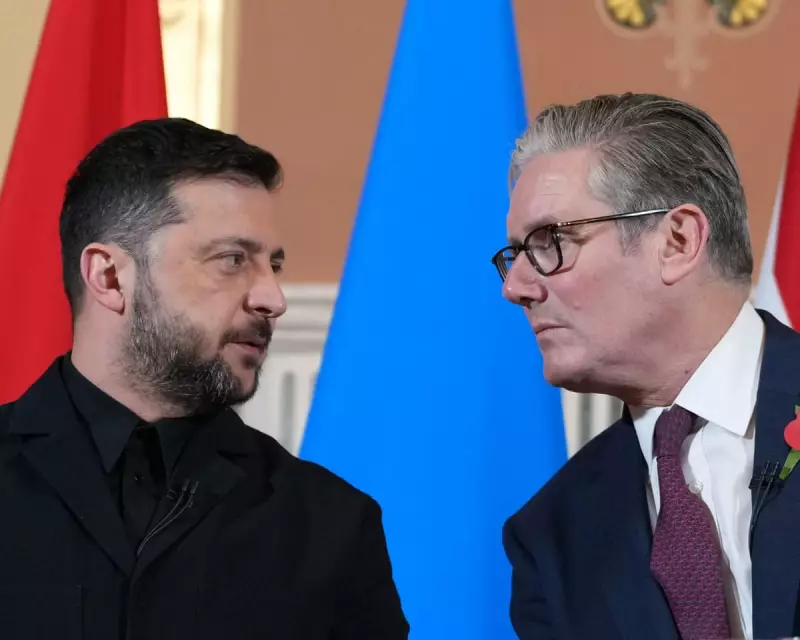
Ukrainian President Volodymyr Zelenskyy will travel to Downing Street on Monday for a critical face-to-face meeting with British Prime Minister Keir Starmer, French President Emmanuel Macron, and German opposition leader Friedrich Merz. The summit is a powerful show of solidarity with Ukraine as it navigates complex peace negotiations.
Coalition Discusses US-Brokered Peace Plan and Security Guarantees
The leaders are set to deliberate on ongoing talks between US and Ukrainian officials concerning a draft agreement aimed at guaranteeing Ukraine's postwar security. This follows a virtual meeting of the so-called "coalition of the willing" approximately two weeks ago, where plans for a European peacekeeping force were discussed. Starmer has emphasised that such a force would play a "vital role" in upholding Ukraine's security, particularly in the event of a ceasefire.
The draft peace deal, initially brokered quietly between US and Russian officials, has faced significant criticism for potentially leaving Ukraine in a weakened state. An early version, reportedly developed by Donald Trump's envoy Steve Witkoff and Kremlin adviser Kirill Dmitriev, proposed severe measures that would have granted Russia considerable control over Ukraine's military and political sovereignty—terms viewed in Kyiv as tantamount to surrender.
Ukraine Amends Deal Amid Ongoing Russian Attacks
Ukraine successfully negotiated significant amendments to the plan last month, removing some of Moscow's most extreme demands. However, the conflict rages on. In a stark reminder of the ongoing threat, Russia launched a major assault on Ukraine's infrastructure on Friday night, deploying 653 drones and 51 missiles. Ukrainian air defences managed to intercept 585 drones and 30 missiles.
President Zelenskyy stated that the energy grid was the primary target, with Ukrainian officials accusing Moscow of trying to "weaponise" the winter cold by depriving civilians of heat and power. This attack underscores the urgent security challenges on the table in London.
Meanwhile, US and Ukrainian negotiators are engaged in a third day of talks in Florida, with the Trump administration urging Kyiv to accept the American-backed peace framework. Russian President Vladimir Putin has already rejected certain elements, with disputes over Ukraine's territorial integrity and measures to deter future Russian aggression proving to be major sticking points.
The Path Forward and International Stances
Both US and Ukrainian officials stated on Friday that "real progress" hinges on "Russia's readiness to show serious commitment to long-term peace". The European Council, in a statement, expressed full support for "President Trump's comments that the current line of contact must be the starting point for any talks".
Prime Minister Starmer has consistently stressed that Ukraine must determine its own future. This principle is expected to be a cornerstone of the Downing Street discussions. The new US national security strategy, published over the weekend, commits to Ukraine's survival as a "viable state" but also prioritises improving relations with Moscow, citing the end of the war as a core American interest to "re-establish strategic stability with Russia".
The meeting between Zelenskyy, Starmer, Macron, and Merz therefore represents a crucial diplomatic effort to align European support with the complex realities of the peace process, ensuring Ukraine's sovereignty and security remain at the forefront of any future settlement.