
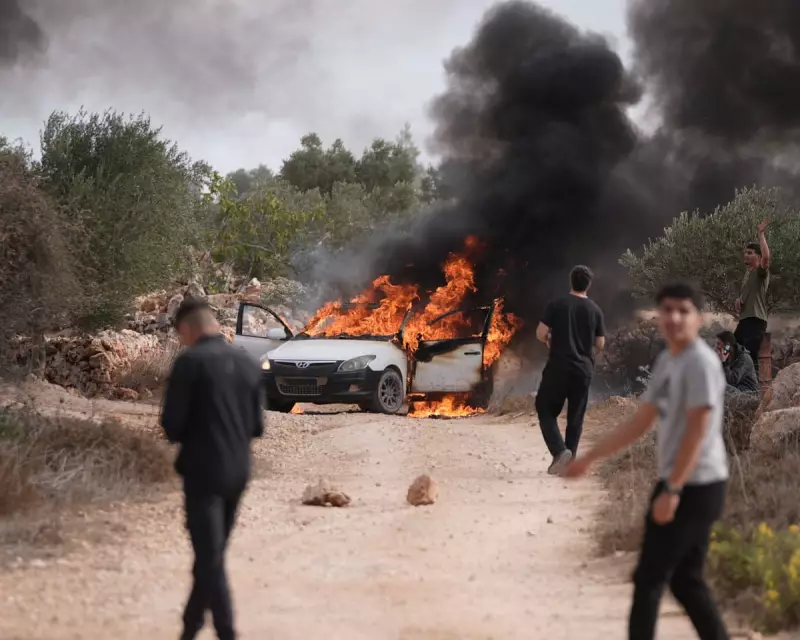
A dramatic escalation of violence by Israeli settlers against Palestinian communities in the West Bank has been documented throughout 2025, with reported incidents increasing by approximately 40% compared to previous years. This surge in attacks has created a climate of fear and displacement across the occupied territory.
Data collected by the United Nations and various human rights monitors reveals a consistent pattern of assaults, property destruction, and intimidation tactics. The violence has not been isolated to any single area but has spread throughout the West Bank, affecting numerous villages and towns.
Patterns of Violence and Key Incidents
The nature of the attacks has varied, ranging from physical assaults on individuals to the large-scale destruction of agricultural land, olive groves, and homes. In many documented cases, settlers have been accompanied by Israeli soldiers, or security forces have been present without intervening to stop the violence.
One of the most severe incidents occurred in the village of al-Mughayyir, where a major assault left one Palestinian man dead and dozens more injured. This attack involved hundreds of settlers and resulted in widespread arson and property damage. Similar, though less deadly, raids have been reported in Duma, Qusra, and Turmus Ayya, creating a pattern of terror that forces many families to abandon their land.
Human rights groups highlight that the violence often follows a predictable trigger. Attacks frequently escalate in the aftermath of Palestinian militant actions against Israelis or during periods of heightened political tension. However, many assaults also occur seemingly without any immediate provocation, as part of a broader strategy to seize control of land.
International Response and Legal Challenges
The international community has expressed growing alarm at the situation. Several Western governments, including the United Kingdom, have condemned the violence and called for Israeli authorities to hold perpetrators accountable. Some countries have even imposed travel bans and financial sanctions on individuals identified as being involved in extremist settler activities.
Despite these measures, convictions for settler violence remain exceptionally rare within the Israeli justice system. Critics argue that a culture of impunity has been allowed to develop, enabling the cycle of violence to continue unchecked. The Israeli military often states it has a duty to protect all civilians, but Palestinians consistently report that soldiers either fail to intervene or actively facilitate settler movements during attacks.
Impact on Palestinian Communities and Future Prospects
The human cost of this violence is profound. Beyond the immediate physical injuries and fatalities, the psychological trauma and economic devastation are crippling communities. The destruction of olive groves, a primary source of income for many families, has long-term economic consequences.
The escalating violence is seen by analysts as a major obstacle to any potential revival of peace talks. It undermines trust and makes the possibility of a two-state solution increasingly remote. For the Palestinians living in these areas, the daily reality is one of vulnerability and fear, with their property and lives under constant threat.
As 2025 continues, the trend shows no signs of abating. Without decisive action from Israeli authorities to dismantle the infrastructure of settler extremism and protect Palestinian civilians, the situation is likely to worsen, further entrenching the conflict and dimming hopes for a peaceful resolution.




