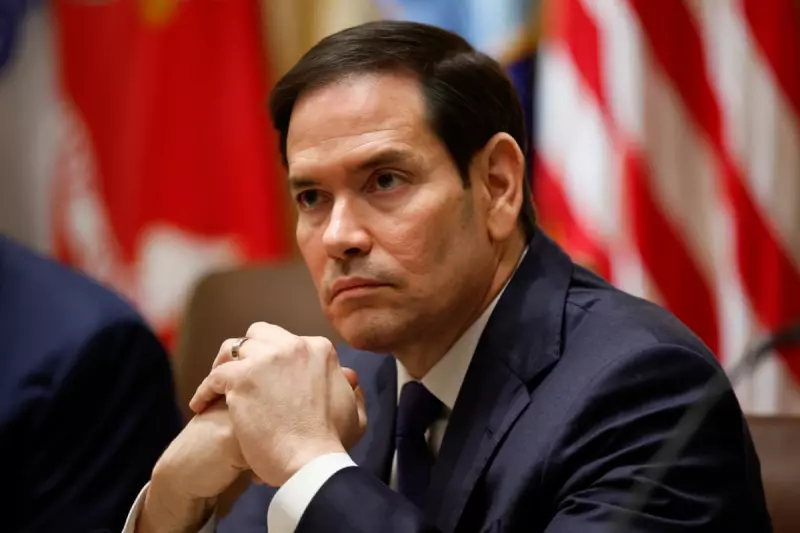
The United States has officially classified Colombia's most formidable drug cartel, the Gulf Clan, as a Foreign Terrorist Organisation. The significant move, announced by US Secretary of State Marco Rubio, marks a major escalation in Washington's stance towards the criminal militia that dominates cocaine trafficking routes through the Darién Gap.
A 'Violent and Powerful' Criminal Enterprise
In a statement released on Tuesday, Secretary Rubio described the Gulf Clan – which also operates under the name Gaitanist Self-Defense Forces of Colombia (AGC) – as a "violent and powerful criminal organisation with thousands of members." He stated its primary revenue stream is cocaine trafficking, funds from which are used to bankroll its extensive violent operations across the country.
The group, with origins in far-right paramilitary forces, is now active in at least 20 of Colombia's 32 departments. It controls critical people- and drug-smuggling corridors, notably through the perilous Darién Gap, and has clashed with left-wing rebel groups for influence along the Venezuelan border. Despite recent attempts to portray itself as a political movement to gain leverage in potential peace talks, analysts widely agree it lacks concrete political objectives.
First Such Designation Under Current US Administration
While other Colombian armed groups, such as the National Liberation Army (ELN) and dissident FARC factions, have long been on the US terrorist list, Tuesday's ruling is the first of its kind targeting a Colombian entity under the current US administration. The move aligns with a broader strategy that has seen six Mexican cartels and two Venezuelan groups receive similar designations.
The decision is poised to intensify the already frayed relationship between the US and Colombian President Gustavo Petro. Petro is a staunch critic of US drug policy, particularly its pressure campaign against Venezuela and the use of deadly airstrikes targeting suspected drug-running vessels. These maritime operations have resulted in over 90 fatalities in the Pacific and Caribbean, attacks which President Petro has condemned as "murder."
Escalating Diplomatic Tensions and Regional Impact
The terrorist designation comes amidst a public war of words between the two nations' leaders. The US president recently warned that any narcotics-producing country was a potential target, specifically naming Colombia, and cautioned that Petro would "have himself some big problems" if he did not alter his approach. Petro responded defiantly, telling the US leader to "not wake the jaguar" with threats of military action.
In a stark demonstration of ongoing operations, the US Southern Command confirmed it conducted new strikes on three vessels near Colombia's Pacific coast early on Tuesday, killing eight individuals. The US justifies these actions as part of its international "war on drugs."
Domestically, the Gulf Clan represents the principal challenge to President Petro's faltering "total peace" initiative. Hopes that the group would weaken after the capture and extradition of its top leader in 2022 were dashed when it launched a retaliatory terror campaign, assassinating police and local officials. The clan is currently engaged in fragile, stop-start negotiations with the Colombian government, but its pervasive power and violence remain a formidable obstacle to lasting peace.