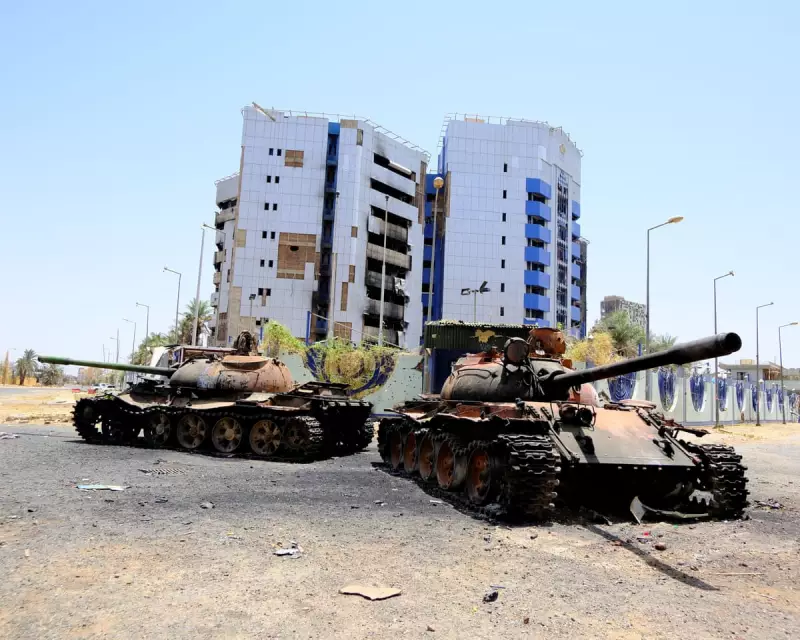
The United States is preparing to impose a significantly broader set of sanctions on the warring factions in Sudan, a move that signals the failure of diplomatic efforts led by Washington's special envoy to broker a ceasefire.
Diplomatic Efforts Stall as Conflict Rages
This development comes as a tacit admission that envoy Massad Boulos has been unable to persuade the Sudanese Armed Forces (SAF) and the paramilitary Rapid Support Forces (RSF) to halt fighting. Boulos, who is former President Donald Trump's father-in-law, has engaged in months of negotiations with little success.
The push for a truce gained momentum last week after Donald Trump announced he had begun work to end the war, following a personal request from Saudi Crown Prince Mohammed bin Salman. US Secretary of State Marco Rubio told a White House cabinet meeting that Trump was "the only leader in the world capable of resolving the Sudan crisis".
However, the warring parties have reportedly been warned that Washington is highly likely to deploy a far wider range of punitive measures against groups seen as obstructing peace. To date, US sanctions have been limited to the leadership of the RSF and army, a small group of Sudanese Islamists, and some UAE-based firms.
Norway Steps In with Civilian Government Plan
As military solutions falter, Norway is initiating a separate diplomatic track focused on Sudan's political future. The Norwegian foreign ministry is preparing to invite a broad spectrum of Sudanese civilian society to Oslo in the coming weeks. The goal is to map out a pathway for restoring a civilian-led government once the conflict ends.
Norway’s deputy foreign minister, Andreas Motzfeldt Kravik, who met army leaders in Port Sudan last week, warned: "Without a ceasefire, the country will continue to fragment, with serious consequences for the entire region."
The humanitarian toll of the war is catastrophic. According to UN figures, the conflict has killed 40,000 people—a figure some rights groups believe is a significant underestimate. It has also created the world's worst displacement crisis, forcing more than 14 million people from their homes.
Regional Stakes and the Threat of Escalation
The war is fuelled by regional rivalries, with Saudi Arabia and Egypt broadly supporting the army, and the United Arab Emirates backing the RSF. The effectiveness of any US intervention may hinge on privately persuading the UAE that its support is counterproductive, and urging Saudi Arabia to soften its stance on preserving Sudan's existing, Islamist-influenced army structures.
Complicating matters, Trump's threat to designate the Muslim Brotherhood a foreign terrorist organisation—a move supported by a House committee this week—could weaken the Sudanese army, which is often accused of having extensive links to the movement.
White House attention has also been spurred by reports that the army may grant Russia an extended port lease, and by claims it has blocked UN investigators from assessing allegations of chemical weapons use.
The UN's human rights chief, Volker Türk, issued a stark new warning on Thursday, fearing "a new wave of atrocities" amid fierce fighting in the Kordofan region. He urged all influential states to "halt the fighting, and stop the arms flows that are fuelling the conflict".