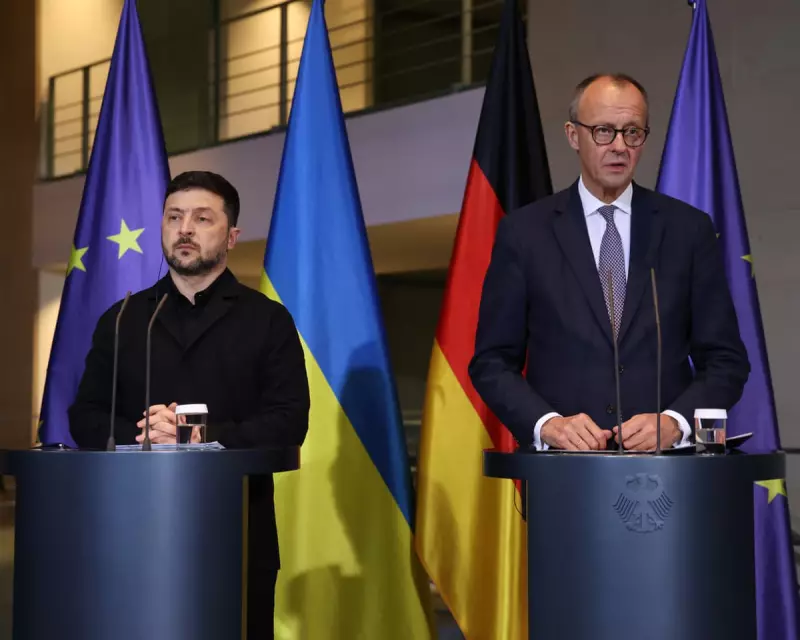
High-level diplomatic talks aimed at forging a path to peace in Ukraine concluded in Berlin this week, with Western leaders presenting a framework of proposed security guarantees for Kyiv. The discussions, involving US, Ukrainian, and European officials, sought to outline the foundations of a potential future agreement with Russia, though significant obstacles persist.
The Berlin Proposals: A European Shield for Ukraine
The central focus of the negotiations was the package of security assurances that the United States and European nations could provide to Ukraine as part of a broader peace settlement. On Monday, a coalition of European leaders, including UK Prime Minister Keir Starmer, issued a joint statement detailing the commitments under consideration.
The proposed measures are substantial. They include the formation of a European-led "multinational force" to bolster the Ukrainian army and defend its airspace and maritime borders. European signatories, including the UK, would also make a "legally binding commitment" to act in restoring peace and security should Ukraine face a future armed attack.
Further pledges encompass steadfast European support for Ukraine's bid to join the European Union and "sustained and significant support" to help Ukraine build and maintain its armed forces. Notably, the proposal supports a peacetime troop level of 800,000 for Ukraine—a direct counter to Russian demands for drastic cuts to the country's military.
Additional elements of the plan involve a US-led ceasefire monitoring mechanism to provide early warning of any new aggression and significant investment in Ukrainian reconstruction, potentially using frozen Russian sovereign assets.
A Shift in Tone, But the War Continues
The mood surrounding these talks was notably more positive than in previous rounds. The German Chancellor, Friedrich Merz, told media that "we now have the chance for a real peace process." The joint statement, signed by leaders from the UK, France, Germany, Italy and seven other nations, asserted the package would "provide robust security guarantees and economic recovery support measures for Ukraine in the context of an agreement on ending the war."
While Kyiv's ideal scenario would involve US troops on the ground as a deterrent, the proposed European force from NATO countries represents a significant alternative. However, it is crucial to stress that the war is not over. This round represents a phase of shuttle diplomacy, with the US negotiation team—led by envoy Steve Witkoff and Donald Trump's son-in-law, Jared Kushner—expected to present the proposals to Russian officials.
The Unresolved Hard Questions
Major roadblocks to a final deal remain starkly evident. Firstly, it is unclear whether the Kremlin would accept any agreement that stations troops from NATO countries on Ukrainian soil, a condition it has historically called a red line. While some US officials briefed on the talks suggest Russia might be ready to deal, the Trump administration's previous optimism over ceasefires has often been premature.
The second, and perhaps most intractable, issue is the status of Ukrainian territory currently occupied by Russian forces. Reports indicate the US delegation was "brainstorming" ideas such as turning these regions into "economic free zones" as a potential compromise. In essence, this seeks a formula for Ukraine to cede sovereign land to an invading army—a move Kyiv has repeatedly and firmly rejected.
Despite US negotiators claiming they are 90% of the way to an agreement, these core disputes over territory and the presence of foreign forces mean the most difficult diplomatic work lies ahead. The Berlin talks have sketched a possible blueprint for European security, but turning it into a lasting peace will require navigating the conflict's most profound divisions.