In a significant intervention, the UK's Attorney General has defended the government's right to consider diplomatic relations before publicly condemning allies for breaches of international law.
Statecraft in a 'Complicated and Dangerous' World
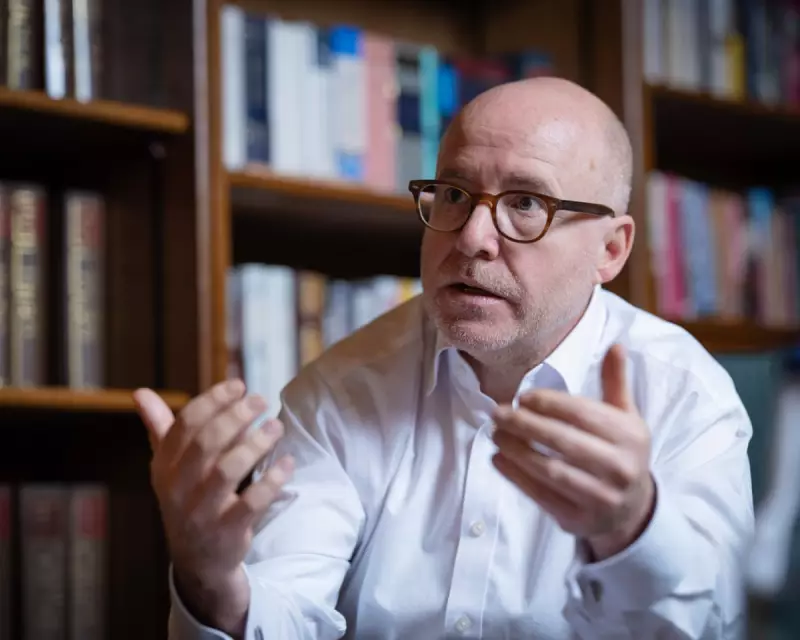
Richard Hermer, the government's most senior law officer, stated that leaders must employ 'statecraft' when deciding whether to hold allied nations to account. His comments come in the wake of criticism directed at the UK for its reluctance to explicitly label the recent US military action in Venezuela as a violation of international law.
In an exclusive interview with the Guardian, Hermer, a close ally of Prime Minister Keir Starmer, framed his remarks as a theoretical principle rather than a direct critique of the Trump administration. He emphasised that in a complex global landscape, a range of factors must be weighed.
'There will be a range of factors for any leader with any ally, about choosing when, if at all, to call out breaches of international law,' Hermer said. 'There will be obvious pros and obvious cons. But in a complicated and dangerous world, it is right that statecraft plays a role in that.'
Domestic Pressure and the Rules-Based Order
The Attorney General's stance has not quelled dissent within the Labour Party. Figures on the left, including Welsh leader Eluned Morgan and Foreign Affairs Committee chair Emily Thornberry, have demanded a firmer line. Thornberry explicitly stated that the Venezuela attack constituted a breach of international law and should not be condoned.
However, both Prime Minister Starmer and Foreign Secretary Yvette Cooper have avoided making that legal declaration. Starmer has separately affirmed that only Greenland and Denmark should decide the future of the Arctic territory, following US threats.
Hermer stressed the UK's enduring commitment to the international rules-based order, arguing it is fundamental to national interest and prosperity. 'Our national interest is served by the international rules based order. It gives that degree of certainty and led to greater prosperity,' he asserted, contrasting this with the approach of 'throwing our muscle around or just kind of flouting rules'.
Contrast with Reform and Defence of Starmer
The interview also saw Hermer draw a sharp distinction between the government's domestic agenda and the policies of Reform UK. He launched a staunch defence of his friend, the Prime Minister, whose public approval ratings have suffered.
'I have no doubt that Reform would take away rights from working people. They'd undermine the rule of law,' Hermer warned, expressing concern about the prospect of a Nigel Farage premiership. He defended the European Convention on Human Rights (ECHR), which both Reform and the Conservatives have pledged to leave, calling a withdrawal 'completely counterproductive' to tackling illegal migration through international cooperation.
Addressing public scepticism towards politicians, Hermer acknowledged deep-seated mistrust after years of austerity and political turmoil. He expressed confidence that the government could demonstrate its difference through action in the coming year. On Starmer's leadership, he admitted frustration with the Prime Minister's public image but insisted his fundamental decency would shine through. 'I'm convinced he can turn it around,' Hermer said.
The Attorney General also addressed criticism of his past legal career, where he represented controversial figures like Gerry Adams, explaining it was his duty under the 'cab rank' rule. He contrasted this with his Tory shadow, Lord Wolfson, who continues full-time private practice while representing clients like sanctioned Russian oligarch Roman Abramovich, raising potential conflict of interest concerns.