Trump's Greenland Ambitions Spark Unprecedented Danish Unity
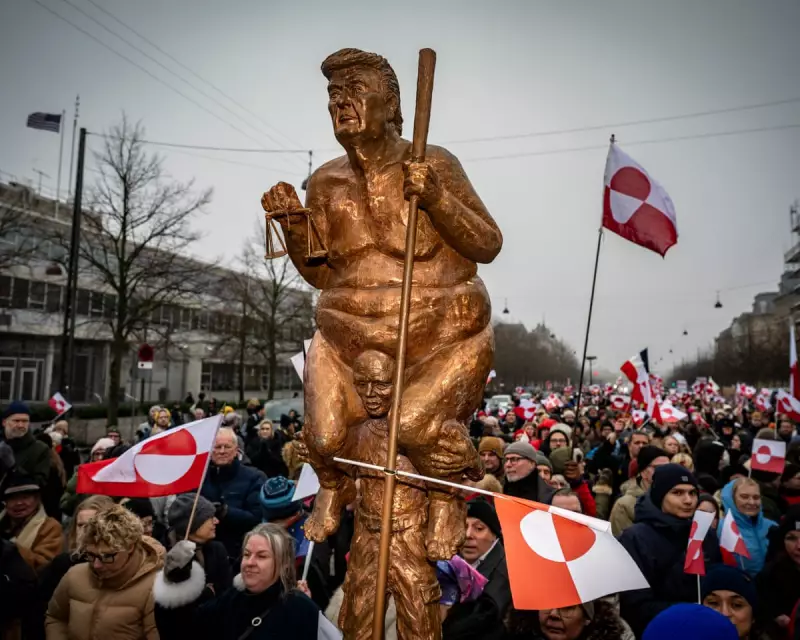
The streets of Copenhagen witnessed an extraordinary display of solidarity last weekend as thousands of Danes and Greenlanders gathered outside the US embassy. Their protest was a direct response to Donald Trump's repeated threats to acquire Greenland, a move that has galvanised the Danish population and prompted a profound re-examination of colonial relationships.
A Wake-Up Call for the Danish Nation
For three consecutive weeks, Denmark has been consumed by discussions about whether their closest ally might attempt to invade Greenland, a largely self-governing territory within the Danish kingdom. Linea Obbekjær, a 64-year-old Copenhagen resident, captured the national mood perfectly: "We got a wake-up call. So we are thinking about what is important to us." Like many Danes, she felt compelled to move beyond passive observation and take tangible action.
The country is collectively working through a complex mixture of anger, bewilderment, and bruised national pride. Yet paradoxically, Trump's aggressive rhetoric – often delivered via late-night social media posts due to the transatlantic time difference – has begun to ease long-standing tensions between Denmark and Greenland.
Protest Symbols and Solidarity
The Copenhagen protest featured a striking visual tableau: alongside Danish and Greenlandic flags waved by thousands, protesters displayed placards and even a statue of Trump himself. Many wore distinctive red hats bearing the slogan "Nu det NUUK!" – a clever linguistic play on the Danish phrase "nu det nok" (now it's enough) that incorporates Greenland's capital city.
Julie Rademacher, a member of Uagut (the national organisation for Greenlandic people in Denmark) and one of the protest organisers, described being overwhelmed by the support: "The first half-hour in front of City Hall when this ocean of people just showed up, every time they cheered because of the speeches I couldn't stop crying." Her emotional response reflected the profound significance of the moment for many Greenlanders with family members who fought alongside US soldiers in conflicts like Afghanistan and Iraq.
Colonial Wounds and Contemporary Healing
Despite signs of newfound unity, Denmark's colonial history with Greenland remains a sensitive and complex issue. Recent months have seen significant developments, including compensation for victims of historical contraceptive scandals and the banning of culturally inappropriate "parenting competence" tests for people with Greenlandic backgrounds.
Rademacher believes Trump has achieved the opposite of his intended effect: "Greenlanders have been pushed away from him, while relations between Greenlanders and Danes, while having a long way to go, are 'under reparation'." She cited a touching encounter where a Danish stranger spontaneously apologised to a Uagut member for Denmark's colonial abuses, demonstrating the potential for genuine reconciliation.
Creative Resistance and Economic Concerns
Jesper Rabe Tonnesen, creator of the "Nu det NUUK!" hats, described Denmark's journey from initial disagreement to current unity: "We feel threatened like the people from Greenland. Of course we are a little country, one of the best countries in the world, but a small economy. We can't do anything about this without France and the greater nations."
His caps began as a small personal protest eight months ago when people complained about news-induced depression. Initially unsold, they went viral following Trump's threats and now sell out within hours. In another act of creative defiance, Tonnesen's workshop cafe has renamed Americanos as "Canados" – a reference to another country targeted by Trump's unpredictable foreign policy.
Cultural Boycotts and Free Speech Debates
The situation has even sparked debates about cultural boycotts. When Icelandic singer Björk urged Greenlanders to declare independence on social media, reactions in Denmark were sharply divided. RecordPusher in Odense boycotted her music entirely, with CEO Bo Ellegaard Pedersen accusing her of "creating her own reality like Trump" and dividing friends.
Meanwhile, Jakob Hejnfelt Thoren of Copenhagen's Rekords record store took the opposite approach, stocking Björk's records to support freedom of speech. As a father of two, he expressed widespread anxiety: "You never know what Trump is going to say, what he is going to do."
Changing Consumption Patterns and Future Relations
The crisis has prompted practical responses beyond protests. Usage of the Made O'Meter app – which helps Danes identify US products in supermarkets – increased by 1,400% following Trump's tariff threats. Creator Ian Rosenfeldt observed: "The shock has turned into clarity. An ally became someone we cannot trust and one we're far too dependent on."
Danish students Emily Jensen and Rikke Nielsen reported that the Greenland situation dominates daily conversations, with many Danes using the crisis as an opportunity to learn more about Greenlandic people and colonial history. Yet not everyone believes relations are permanently damaged. As 76-year-old Mette Jensen noted in a Copenhagen coffee shop: "Of course they can be repaired. But not with Trump."
The protests in Copenhagen represent more than just opposition to American expansionism; they signify a potential turning point in Danish-Greenlandic relations and a national reckoning with colonial history, all triggered by an unexpected external threat.