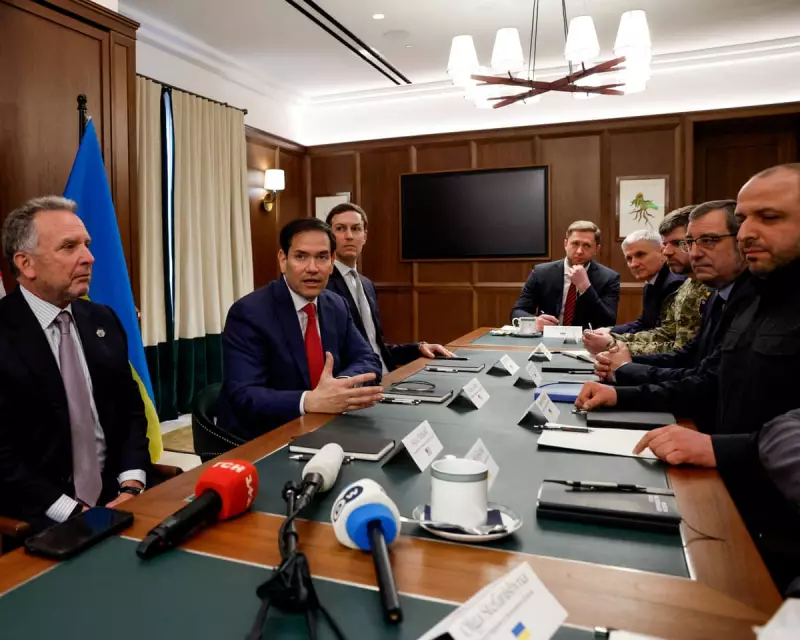
Former US President Donald Trump has reportedly formulated a detailed peace plan aimed at ending the war between Ukraine and Russia, according to a document obtained by The Guardian. The proposal, which could be implemented if he wins the 2024 presidential election, outlines a path to a ceasefire followed by a contentious referendum in Russian-occupied Ukrainian territories.
The Core Proposals of the Trump Plan
The plan, described in a memo from May 2025, hinges on two immediate and interconnected actions. First, it demands an immediate ceasefire between Ukrainian and Russian forces. Second, and most controversially, it proposes organising a referendum, under international supervision, in the five Ukrainian regions that Russia claims to have annexed: Donetsk, Luhansk, Zaporizhzhia, Kherson, and Crimea.
The document suggests this vote would determine whether these areas should be formally ceded to Russia or returned to Ukrainian control. Crucially, the plan implies that the US and its Western allies would halt military aid to Ukraine if the government in Kyiv refused to engage with this proposal. This stance represents a seismic shift from the current, sustained support provided by the Biden administration.
International Reactions and Strategic Implications
The revelation of this plan has triggered significant concern among European allies and within Ukraine itself. Officials in Kyiv have consistently stated that any peace agreement must be based on the complete withdrawal of Russian troops to Ukraine's 1991 borders. The Trump proposal, by putting territorial sovereignty up for a vote, is seen as fundamentally undermining this principle and rewarding Russian aggression.
European diplomats, particularly from nations like Poland and the Baltic states, fear such an approach would destabilise the entire European security architecture. It is viewed as a potential precursor to a US withdrawal from its leading role in supporting Ukraine, which could force Europe to confront Russia's military threat with diminished American backing. The plan makes no explicit mention of consequences for Russia should it violate the proposed ceasefire terms.
NATO's Secretary General, Jens Stoltenberg, has previously warned that any peace deal not supported by Ukraine itself would not be sustainable and could simply allow Russia time to rearm for future conflict. This view is widely shared by security analysts who see the plan as a potential frozen conflict mechanism that legitimises territorial conquest.
A Departure from Established US Policy
The proposed strategy marks a radical departure from the bipartisan US policy that has held since Russia's full-scale invasion in February 2022. That policy has centred on providing Ukraine with the weapons and economic aid needed to defend itself, while rallying international sanctions against Moscow. The Trump memo suggests a move towards a more transactional, unilateral US foreign policy, where support for allies is conditional on their acceptance of American-devised solutions.
The document does not address critical issues such as war crimes accountability, reparations, or the future security guarantees for a post-war Ukraine. Its singular focus on a territorial referendum, to be held in regions where much of the pre-war population has been displaced or persecuted, raises profound ethical and practical questions about the vote's legitimacy.
As the 2024 US election approaches, this leaked plan offers a stark preview of how a second Trump administration might seek to resolve one of the world's most dangerous conflicts. The proposal sets the stage for a potential major rift in transatlantic relations and presents the Ukrainian government with an agonising dilemma: negotiate on terms it has always rejected or risk losing its vital source of military support.