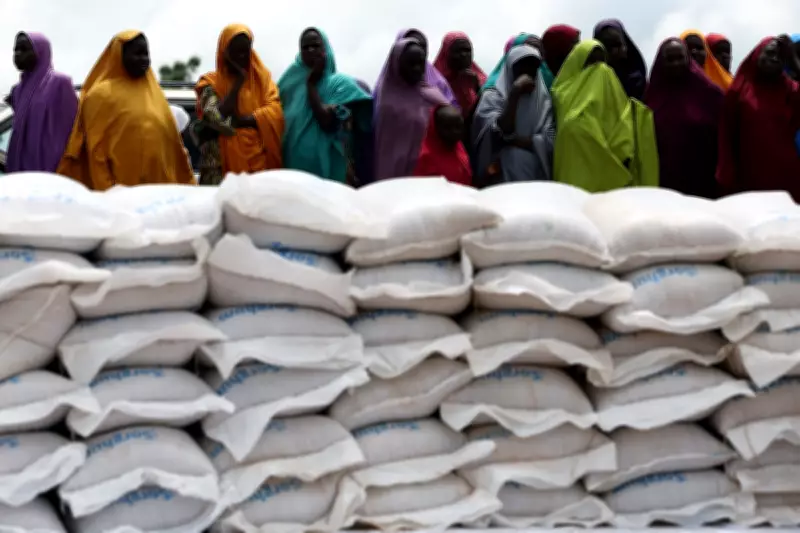
Trump Administration Seeks Global Backing for 'Trade Over Aid' Declaration
The Trump administration has launched a diplomatic initiative to formally enlist foreign governments in a major reorientation of global development policy. American diplomats worldwide are being directed to seek official support for a 'trade over aid' declaration before its introduction at the United Nations later this month. This policy shift would move away from direct financial assistance to poor nations in favor of increased trade led by private companies.
State Department Confirms Initiative
Principal deputy spokesperson at the state department Tommy Pigott confirmed the initiative on Wednesday, framing it as a rejection of what he called a failed aid model. 'The idea that trade and free market capitalism is the surest path to prosperity has been proven by the facts and by history,' Pigott said. He added that those advocating for 'aid not trade' were 'really arguing for lining the pockets of a corrupt NGO industrial complex.'
The new posturing was first reported by the development publication Devex on Tuesday, and the full internal US diplomatic cable was obtained by the Washington Post on Wednesday. The initiative described in the cable represents an attack on the obligation of wealthy nations to provide tens of billions of dollars in annual foreign assistance. It also endorses free-market principles as the primary vehicle for global development.
Four Stated Aims of the Initiative
A state department official outlined the initiative's four key objectives:
- Advancing pro-business reforms in developing economies
- Facilitating government-to-private sector dialogue to attract investment
- Highlighting countries that have pursued free-market development
- Brokering business partnerships between developing nations and US companies or international organizations
Ambassador Mike Waltz previewed the effort during testimony before the Senate foreign relations committee on Tuesday, signaling the administration's commitment to this new approach.
Context of Global Aid Cuts
This push comes as the administration has already moved to dismantle the overwhelming majority of USAID last year, contributing to a broader trend of vanishing humanitarian aid globally. According to new OECD preliminary figures published this week:
- 26 of 34 donor nations shrank their aid budgets in 2025
- France, Germany and the United Kingdom implemented double-digit percentage cuts
- Chatham House estimates the 17 largest donors combined are on course to cut more than $60 billion in aid between 2023 and 2026
In February, UK Prime Minister Keir Starmer announced that Britain would reduce its aid commitment to 0.3% of gross national income by 2027, its lowest share since 1999, to help fund a defence spending increase.
Humanitarian Consequences
The potential human cost of these aid reductions is significant. A study published in the Lancet in February projected that global aid cuts, if sustained, could result in:
- At least 9.4 million additional deaths by 2030
- Up to 22.6 million deaths under more severe scenarios
The Center for Global Development estimated that USAID cuts alone may have already contributed to between 500,000 and a million deaths in 2025 relative to prior-year trajectories.
The US mission to the United Nations is expected to host a formal signing event for the declaration before the end of April, marking a potential turning point in how wealthy nations approach development assistance.