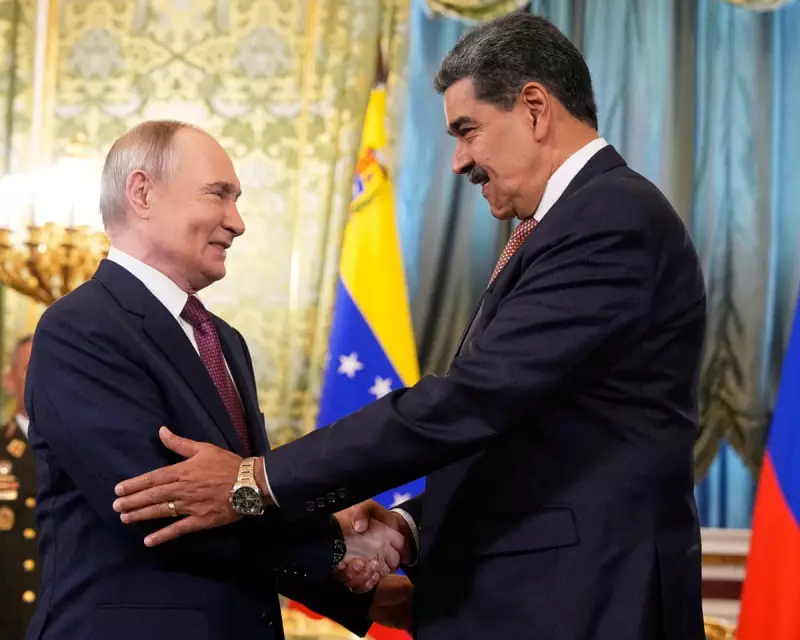
The dramatic, US-led operation that toppled Venezuelan leader Nicolás Maduro has sent shockwaves through the Kremlin, provoking a complex mix of public fury and private admiration among Russia's political and military elite.
A Coup of Envy: Russia's Failed Blueprint Executed by the US
In public, Russian officials have reacted with predictable anger, condemning the raid that captured Maduro as a flagrant breach of international law. Yet behind the official rhetoric, a mood of grudging respect – and even envy – has emerged at the efficiency of an operation that mirrors what Moscow itself had planned for Ukraine.
The swift, night-time capture of a national leader was precisely how Vladimir Putin envisaged his full-scale invasion of Ukraine concluding in February 2022. Instead, it was an operation under Donald Trump that successfully executed this playbook in Venezuela, spiriting away the Kremlin's longstanding ally to face trial in New York.
Pro-Kremlin voices have been openly soul-searching. The Telegram channel Dva Mayora, with close ties to the military, noted the US operation was "carried out competently," adding: "Most likely, this is exactly how our 'special military operation' was meant to unfold: fast, dramatic and decisive."
Strategic Costs and a Distant Ally
For Moscow, the fall of Maduro is more than a symbolic blow; it carries significant tangible losses. Over the past decade, Russia has supplied Caracas with advanced military systems, including S-300VM air-defence units and Pantsir and Buk-M2 systems. A US-friendly government could grant American specialists access to this Russian-made arsenal.
Furthermore, billions of dollars in Russian loans to Venezuela are now unlikely ever to be recovered. However, the most pressing concern is energy. US access to Venezuela's vast oil reserves could depress global prices, directly threatening one of Russia's most crucial revenue streams. Russian billionaire Oleg Deripaska warned on Telegram that American control could aim to cap the price of Russian oil at $50 a barrel.
Despite these stakes, analysts agree that Russia, bogged down in its war in Ukraine, has neither the capacity nor the will to mount a meaningful defence of its distant ally. "Providing any real assistance to a country so distant... is simply not feasible – for technical and logistical reasons," said Fyodor Lukyanov, a foreign policy expert who advises the Kremlin.
Putin's Priority: Ukraine Over Caracas
The Kremlin's calculus is ultimately dominated by one overriding factor: Ukraine. Maintaining a functional relationship with Donald Trump on this front far outweighs the fate of Venezuela. For all its sympathies towards Caracas, Moscow is unlikely to jeopardise its larger strategic game with Washington over what it views as a secondary concern.
This episode is part of a broader trend where Russia, stretched thin by its Ukrainian campaign, has watched other key allies like Syria's Bashar al-Assad weaken, revealing the limits of its global reach.
Yet some in Moscow see a bleak silver lining. Figures like former president Dmitry Medvedev have argued that Trump's cynical, power-based action deals a final blow to the rules-based international order. They welcome a potential return to a 19th-century model of rival spheres of influence, a world view long championed by the Kremlin, where might makes right. For now, however, the dominant feeling in Moscow is one of uncomfortable reckoning, caught between admiration for a rival's ruthless efficacy and anxiety over its own diminished power.