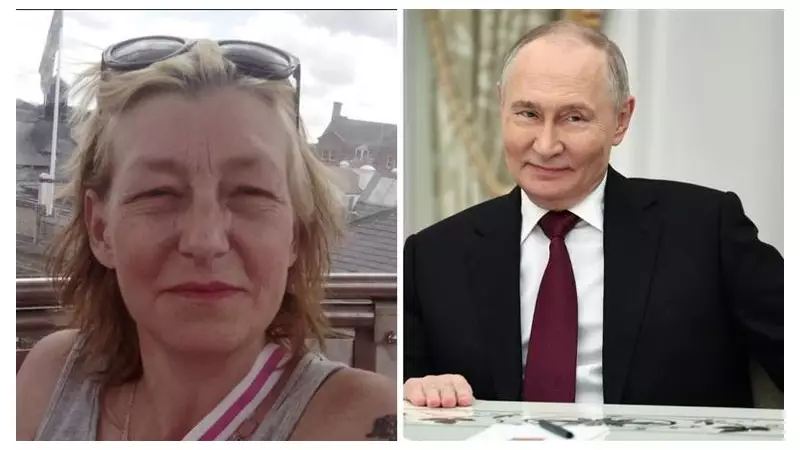
Russia's ambassador to the United Kingdom has issued a stark dismissal of a damning public inquiry and coupled it with a warning that Moscow is prepared for war with Europe "right now". Andrei Kelin rejected findings that held President Vladimir Putin "morally responsible" for the death of British woman Dawn Sturgess in the 2018 Salisbury novichok attack.
Ambassador Dismisses Inquiry as 'Agatha Christie' Fiction
In a remarkable interview, Ambassador Andrei Kelin responded to the inquiry's conclusion that Putin "must have" authorised the use of the military-grade nerve agent in Salisbury. The attack initially targeted former Russian spy Sergei Skripal and his daughter Yulia in March 2018. Dawn Sturgess, 44, died in July 2018 after her partner, Charlie Rowley, found a discarded perfume bottle containing novichok and gave it to her.
Kelin flatly denied any Russian involvement, stating, "It's a tragic death, it is of course sad and Russia has nothing to do with it." He offered no evidence for his counter-claim, instead alleging the poisonings were an elaborate "staging" by the British government and secret services. "The script is very elaborated," he said. "It has been done by very talented professionals. It reminds me of Ian Fleming or even Agatha Christie."

The Evidence Against Russia's Denials
The ambassador's claims stand in direct opposition to a substantial body of evidence compiled by the UK government, independent journalists, and international bodies. The public inquiry established that:
- The novichok nerve agent was confirmed by the Organisation for the Prohibition of Chemical Weapons (OPCW), an organisation of which Russia is a member.
- Two agents from Russia's GRU military intelligence agency, using the aliases Alexander Petrov and Ruslan Boshirov, brought the novichok to Salisbury from Moscow.
- A third agent, known as Sergey Fedotov, accompanied them on the operation intended to kill Mr Skripal.
- The inquiry found the agents likely smeared the nerve agent on Mr Skripal's door before carelessly discarding the bottle, which was later found by Mr Rowley.
Sergei Skripal, his daughter Yulia, and Charlie Rowley all survived the attack but were left seriously ill.
A Warning of War and Accusations of Sabotage
Ambassador Kelin suggested the timing of the inquiry's report was a deliberate attempt to undermine peace talks regarding Ukraine. "By this I think the British government would like to derail talks that are very interesting and in a high stage," he claimed.
When asked if the chance of war between Europe and Russia was now higher than at any point in his career, Kelin responded unequivocally: "Yes, of course." He referenced recent statements by President Putin, saying, "We do not want to wage a war against Europe. But if Europe would like to wage a war against Russia, then we are prepared. Right now."
This combination of blanket denial over the Salisbury attack and a direct warning of military readiness marks a significant escalation in diplomatic rhetoric from the Russian embassy in London, reflecting the deeply frayed state of relations between the UK and Russia.