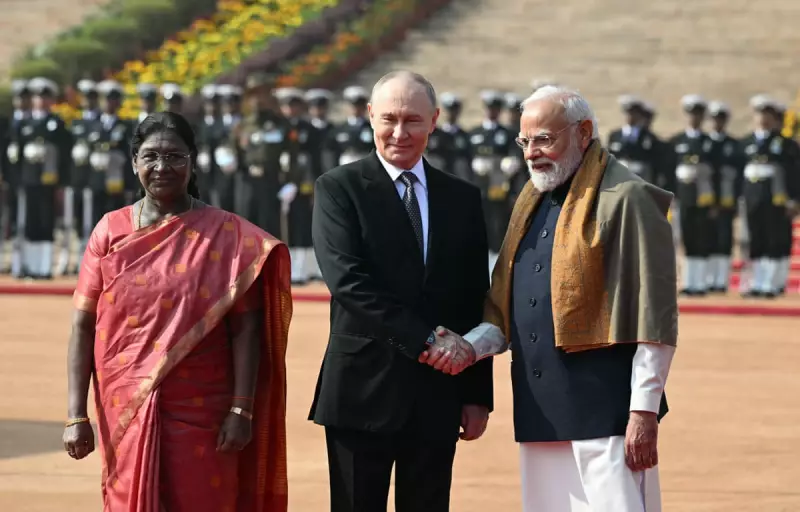
Russian President Vladimir Putin has arrived in Delhi for a significant summit with Indian Prime Minister Narendra Modi, marking his first visit to the country since the full-scale invasion of Ukraine in 2022. The high-profile meeting underscores the enduring partnership between the two nations despite intense international pressure on India to distance itself from Moscow.
A Warm Welcome Amid Global Scrutiny
The Russian leader received a characteristically warm reception upon landing on Thursday. Prime Minister Modi greeted Putin on the tarmac with a hug on a red carpet, in a display of personal diplomacy. The two leaders then travelled together in the same car to a private dinner, a gesture that mirrored the lift Putin gave Modi during their last meeting in China in September.
This visit represents another cautious step onto the international stage for Putin, whose travel has been severely restricted since the 2022 invasion turned Russia into a global pariah and triggered arrest warrants in many jurisdictions.
Defence and Energy Top the Agenda
Formal talks between the two heads of state are scheduled for Friday, with a packed agenda centred on strengthening bilateral ties. Key discussion points are expected to include:
- Major defence deals, particularly the ongoing supply of Russian S-400 Triumf air defence systems to India and potential future sales of advanced Sukhoi Su-57 fighter aircraft.
- Substantial energy purchases, with India having become a major buyer of discounted Russian oil since the onset of the Ukraine war.
- Wider economic engagement, as both nations seek to bolster trade mechanisms that circumvent Western sanctions.
The Shadow of US Pressure
The summit unfolds under the considerable shadow of pressure from the United States. Washington is actively pushing for a peace deal in Ukraine that is perceived by some analysts as favouring Moscow. Simultaneously, the US is seeking to increase pressure on India to significantly cut back its trade with Russia.
This pressure escalated very publicly under former President Donald Trump, who urged India to halt its Russian oil purchases. That pressure culminated in the imposition of a punishing additional 25% punitive US tariff on certain Indian imports, a move widely seen as a direct response to Delhi's continued economic engagement with Moscow.
The Delhi summit is therefore a critical test of India's diplomatic balancing act, maintaining its strategic autonomy and long-standing defence relationship with Russia while navigating its increasingly important ties with Western nations. The outcomes of the talks will be closely watched in capitals around the world, particularly in Washington and European Union headquarters, for signs of how the global geopolitical order is shifting.