The delicate ceasefire in Gaza has reached a pivotal moment, with mediators Qatar and Egypt stating that a full Israeli military withdrawal and the deployment of an international force are essential for the peace plan to progress.
Critical Demands at the Doha Forum
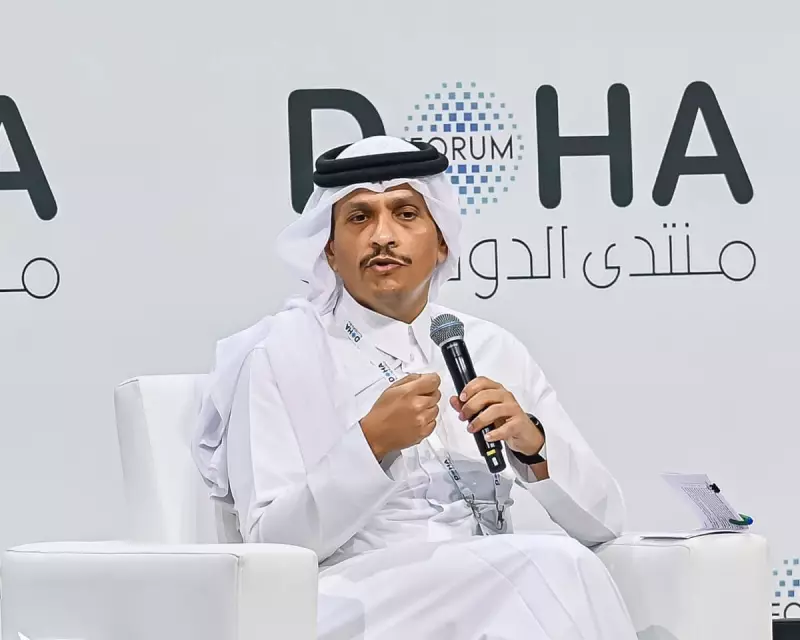
Speaking at the annual Doha Forum on Saturday, Qatari Prime Minister Sheikh Mohammed bin Abdulrahman Al Thani delivered a stark assessment. "Now we are at the critical moment… A ceasefire cannot be completed unless there is a full withdrawal of the Israeli forces (and) there is stability back in Gaza," he declared. His Egyptian counterpart, Foreign Minister Badr Abdelatty, echoed the call for an international stabilisation force to be deployed swiftly to monitor the truce.
The US- and UN-backed peace plan, which has largely halted hostilities, remains fragile. While its first phase involved Israeli troops pulling back behind a designated "yellow line" inside Gaza and Hamas releasing living hostages, the warring parties have not agreed on how to implement the crucial second phase.
Sticking Points and Hamas's Stance
A major obstacle is the issue of Hamas's disarmament. The 20-point plan, first outlined by US President Donald Trump, requires the militant group to lay down its weapons, with members allowed to leave Gaza if they decommission them. Hamas has consistently rejected this demand.
On Saturday, Hamas's chief negotiator, Khalil al-Hayya, offered a conditional proposal. He stated the group was prepared to hand over its weapons in Gaza to a Palestinian authority, but only "on the condition that the Israeli army’s occupation ends." He argued the group's arsenal was directly linked to the presence of Israeli forces.
Under the endorsed plan, Israel is to withdraw, Gaza is to be administered by a transitional "Board of Peace"—theoretically chaired by Donald Trump—and an international stabilisation force is to be deployed.
International Force and Regional Hesitations
Egypt's Foreign Minister Abdelatty stressed the urgency of deploying the force, accusing Israel of daily ceasefire violations. Turkey's Foreign Minister Hakan Fidan, also speaking at the forum, said talks on the force were ongoing but key questions about its command structure and contributing nations remained unresolved.
Fidan suggested the force's primary goal "should be to separate Palestinians from the Israelis" and urged the US to pressure Israeli Prime Minister Benjamin Netanyahu to ensure the plan's success. However, Arab and Muslim nations have shown reluctance to participate in a force that could end up clashing with Palestinian militants.
The situation at the Rafah border crossing further complicates matters. Israel announced it would open the checkpoint only for Gazans to exit to Egypt, a move swiftly denied by Cairo, which insists it must be open for aid to enter. Abdelatty insisted Rafah "is not going to be a gateway for displacement."
With mediators warning of a high risk of the process failing, the coming days will be decisive for the future of the Gaza ceasefire and the broader peace plan.