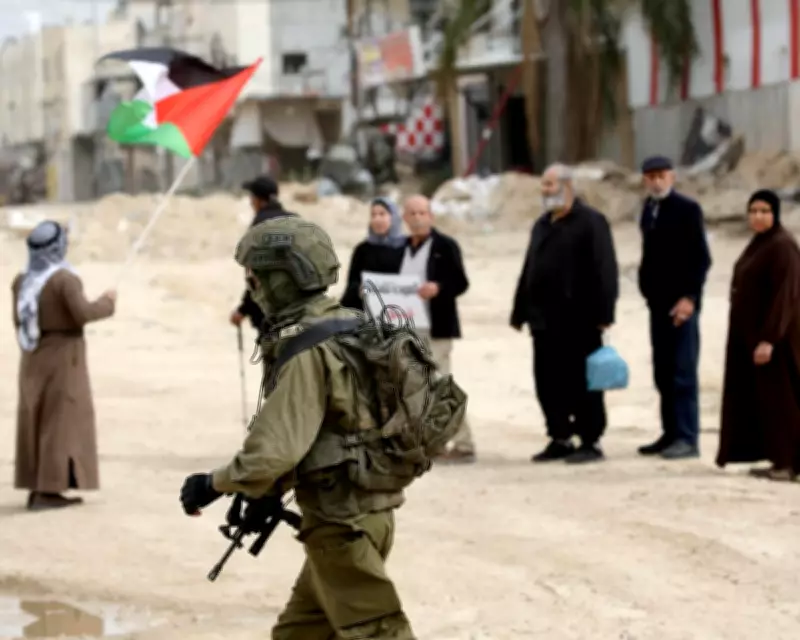
In a move that has ignited a significant diplomatic firestorm, Israel's recently announced plans to tighten its control over the West Bank have been met with widespread international condemnation. The measures, which involve extending Israeli authority in areas currently under Palestinian administration, have been described by critics as a deliberate step towards annexation of the occupied territory.
International Outrage and Diplomatic Warnings
The global response has been swift and severe, with multiple nations and international bodies voicing their strong opposition. The European Union characterised the Israeli actions as "another step in the wrong direction" and explicitly warned that sanctions remain "still on the table," including the potential suspension of certain aspects of the EU-Israel trade agreement.
Britain issued a particularly forceful statement, declaring it "strongly condemns" the Israeli measures. A UK government spokesperson emphasised that "any unilateral attempt to alter the geographic or demographic makeup of Palestine is wholly unacceptable and would be inconsistent with international law." The statement concluded with a direct appeal for Israel to "reverse these decisions immediately."
Arab and Islamic Nations Unite in Condemnation
A coalition of Arab and Islamic states, including Saudi Arabia, Jordan, Egypt, Qatar, the United Arab Emirates, Pakistan, Indonesia, and Turkey, issued a joint statement expressing their profound disapproval. The group "condemned in the strongest terms the illegal Israeli decisions and measures aimed at imposing unlawful Israeli sovereignty." They further warned that the new policies would likely "inflame violence, deepen the conflict and endanger regional stability and security."
This unified stance from key regional players presents a substantial challenge to any future peace initiatives, particularly those championed by the United States.
The Substance of Israel's Controversial Measures
Announced by Israel's Defence Minister, Israel Katz, the new rules are explicitly designed to strengthen Israeli settlements in the West Bank and, in his own words, pre-empt "the emergence of an independent sovereign Palestine." Katz, in a joint statement with Finance Minister Bezalel Smotrich, left little room for ambiguity, stating: "We will continue to kill the idea of a Palestinian state."
The measures passed by the Israeli security cabinet are wide-ranging and fundamentally alter the legal and administrative landscape of the territory. Key provisions include:
- Repealing a longstanding law from the Jordanian era that prohibited the sale of land to non-Arabs, thereby making it easier for non-Arab individuals to purchase property in the West Bank.
- Streamlining the process for determining land ownership within the territory.
- Transferring authority over building licences in the city of Hebron from the Palestinian-run municipality to the Israeli civil administration, which is the military's occupation authority. This move potentially violates the 1997 Hebron protocol that divided the city.
- Placing the Jewish settlement around Rachel's Tomb in Bethlehem under direct Israeli control, removing it from Palestinian governance.
These changes require no further legislative approval and their implementation timeline, while not immediately clear, is now a pressing international concern.
Palestinian Response and Weakened Authority
The Palestinian Authority, whose control over its designated areas of the West Bank has been severely eroded by financial constraints, aggressive Israeli settlement expansion, and internal issues, issued a stark warning from its capital in Ramallah. It stated that the Israeli measures were aimed at "deepening attempts to annex the occupied West Bank."
This sentiment resonates with many Palestinians who view the plans as a direct assault on their national aspirations and historical claims to the land.
The US Position and Regional Implications
The controversy erupted on the eve of a scheduled meeting between Israeli Prime Minister Benjamin Netanyahu and then-President Donald Trump. While the Trump administration did not issue a formal public comment at the time, a White House official signalled its stance to reporters, reiterating that "President Trump has clearly stated that he does not support Israel annexing the West Bank." The official added that a stable West Bank aligns with the administration's regional peace goals.
This global backlash underscores the profound sensitivity of the West Bank issue and signals a significant escalation in diplomatic tensions surrounding the Israeli-Palestinian conflict. The international community's unified criticism places substantial pressure on Israel and sets the stage for a complex and contentious period in Middle Eastern diplomacy.