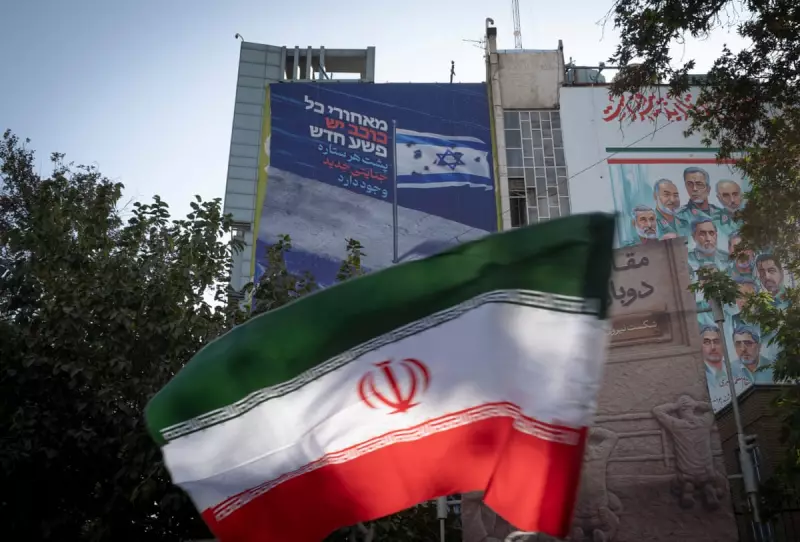
The United States and Israel have jointly accused Iran of orchestrating a plot to assassinate Israel's ambassador to Mexico, Einat Kranz-Neiger, in a significant escalation of their conflict onto foreign soil.
The Foiled Plot and International Response
Israeli authorities confirmed that Mexican security services successfully intervened to prevent the attempted killing of Ambassador Kranz-Neiger. Israel's foreign ministry issued a statement expressing gratitude to Mexican law enforcement for "thwarting a terrorist network directed by Iran that sought to attack Israel's ambassador in Mexico."
A senior US official, speaking anonymously, revealed that the elite Quds Force of Iran's Revolutionary Guards initiated the assassination plot in late 2024, with the operation being disrupted earlier this year. According to the official, the plot involved recruiting operatives through Iran's embassy in Venezuela, whose president, Nicolás Maduro, maintains a tactical alliance with Tehran.
"The plot was contained and does not pose a current threat," the US official stated, while characterizing this as "the latest in a long history of Iran's global lethal targeting of diplomats, journalists, dissidents and anyone who disagrees with them."
Background: Escalating Regional Conflict
The alleged assassination attempt follows a series of escalating confrontations between the regional adversaries. On 1 April 2024, Israel attacked the Iranian embassy complex in Damascus, Syria, killing several senior Revolutionary Guards officers.
This attack prompted direct retaliation from Iran, which launched missiles and drones against Israel. The conflict intensified when Israel conducted a much more extensive bombing campaign in Iran a year later, resulting in more than 1,000 casualties. The United States supported this action by bombing key sites within Iran's contested nuclear programme.
Iran's cleric-led government remains a principal supporter of Hamas, the Palestinian militant group that carried out the unprecedented 7 October 2023 attack on Israel. Israel's subsequent military campaign has devastated much of Gaza and expanded to include operations across the region, targeting Iran, Syria, Lebanon, Qatar and Yemen.
Historical Context and Global Pattern
This incident fits a established pattern of alleged Iranian operations targeting Israeli and Jewish interests worldwide. Australian authorities recently expelled Iran's ambassador over alleged Iranian involvement in arson attacks against a Melbourne synagogue and a Sydney kosher restaurant.
Latin America has previous experience with Middle Eastern-linked violence. In 1994, a bombing at a Jewish centre in Buenos Aires killed 85 people, with Argentina and Israel attributing responsibility to Lebanese militant group Hezbollah acting at Iran's request.
Despite the Iranian government's hostility toward Israel following the 1979 Islamic revolution, Iran maintains one of the Middle East's most historic Jewish communities. Mexico, home to a significant Jewish population, has recognised Israel since the state's early days and maintains diplomatic relations, though it has taken a cautious stance on the Gaza war compared to other leftist-led Latin American countries.
The Iranian mission to the United Nations has declined to comment on the allegations, while Mexican authorities have not yet issued an official statement regarding the foiled plot.