Europe's standing in the Middle East has reached a historic nadir, its moral authority shattered and its diplomatic influence sidelined. According to a stark analysis by foreign policy expert Nathalie Tocci, the continent's "immoral stance" on the war in Gaza has been the final blow in a series of self-inflicted wounds. Yet, she contends, a path to regaining a constructive, independent role remains—not through grand peace initiatives, but by focusing on the fragile states of the Levant: Syria, Lebanon, and Iraq.
The Collapse of a Transatlantic Framework
For decades, Europe operated in the Middle East under a clear, if sometimes uncomfortable, transatlantic framework. After the 1956 Suez Crisis ended its colonial dominance, Europe largely played second fiddle to the United States. While disagreements occurred, notably over the 2003 Iraq war, European diplomacy often aimed to temper Washington's excesses while ultimately supporting its leadership. This model, Tocci argues, no longer exists.
The rupture stems from multiple seismic shifts. The war in Ukraine has consumed Europe's strategic bandwidth and distorted its view of the Middle East, forcing an uncritical alignment with US regional policy to secure American support against Russia. Simultaneously, the Trump administration treats Europe as an adversary, not a partner, and Washington now bypasses Brussels to engage directly with regional powers like Saudi Arabia, Turkey, and Qatar.
Most damagingly, Europe's failure to leverage its influence to stop Israel's war in Gaza has destroyed its last vestiges of credibility. With few exceptions—such as Spain, Norway, and Ireland—Europe is now seen as having no moral standards at all. As German Chancellor Friedrich Merz bluntly stated, Israel was doing Europe's "dirty work" in attacking Iran, revealing a stark reality. On the key issues of the Israeli-Palestinian conflict and Iran, Europe has been reduced to a third-tier player, at best supporting Gulf efforts to influence Washington.
A Vacuum in the Eastern Mediterranean
Despite this profound marginalisation, the Middle East remains Europe's immediate neighbour, making indefinite disengagement impossible. With its room for manoeuvre severely shrunken, Tocci proposes a pragmatic shift in focus: away from intractable core conflicts and towards the wider Levant.
The three nations of Syria, Lebanon, and Iraq are identified as critically vulnerable yet offering a potential opening for European engagement. Lebanon teeters on the brink, navigating a complex reform process while facing the constant threat of war with an Israel that occupies five outposts on its soil. Iraq has precariously stayed out of recent regional convulsions, seeking greater autonomy without antagonising Tehran. Syria, under its new president, the former jihadi fighter turned reformer Ahmed al-Sharaa, remains fragile as it attempts a complex transition towards a participatory system while confronting an expansionist Israel.
Significantly, the United States shows little sustained interest in Lebanon or Iraq. While regional actors like Turkey and the Gulf states are essential for security and economic support, a governance vacuum exists. This is where Europe can still contribute, argues Tocci. In a world where the liberal international order is in disarray, practical governance support—though unfashionable—is desperately needed in the Levant.
A Narrow but Vital Path Forward
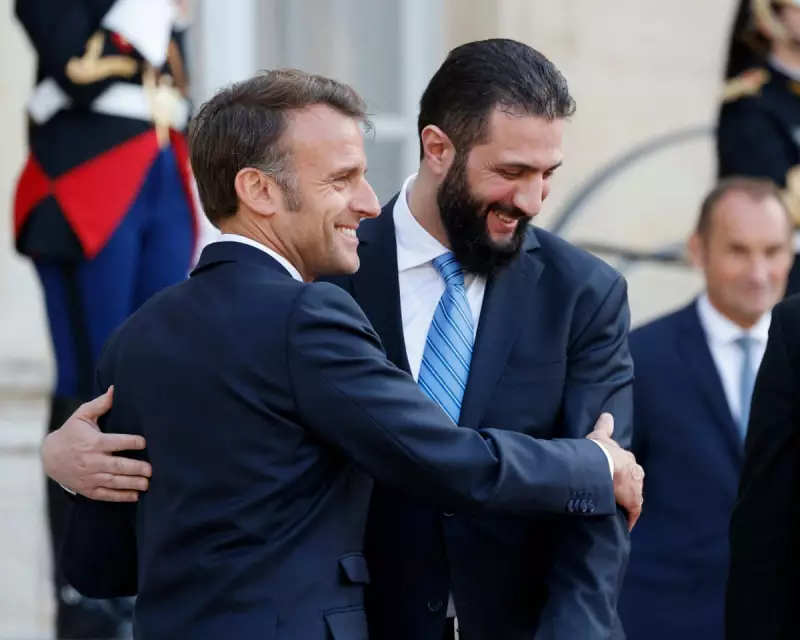
The symbolism of Syrian President Ahmed al-Sharaa's diplomatic engagements—addressing the Doha Forum and meeting French President Emmanuel Macron in Paris on 7 May 2025—highlights the shifting sands. Europe's chance to regain relevance lies not in pretending to lead on Gaza or Iran, but in the patient, unglamorous work of helping stabilise its eastern Mediterranean neighbours.
This requires accepting that the old transatlantic framework is dead and that Europe's catastrophic loss of moral standing must be addressed through concrete action. By focusing on the specific crises in Syria, Lebanon, and Iraq—where US attention is sporadic and regional actors cannot do everything—Europe can begin the long, hard work of rebuilding its shattered credibility and playing a genuinely constructive role as a neighbouring power.