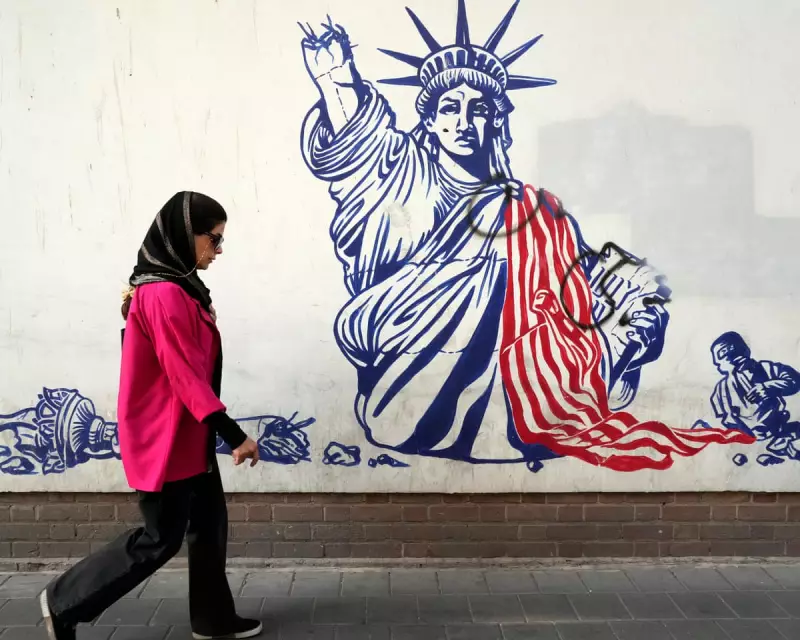
Fresh graffiti on the walls of the former United States embassy in Tehran has surfaced in 2023, marking a poignant 70-year anniversary. The vandalism coincides with the decades-old memory of the CIA-orchestrated coup that overthrew Iran's democratically elected prime minister, Mohammad Mossadegh, in 1953.
A Legacy of Intervention: Letters to the Editor
This visual protest in Iran's capital has been echoed in words published by The Guardian, where a series of reader letters have condemned what they describe as a long and dire history of US interference in Iranian affairs. The correspondence was sparked by a Guardian editorial warning against exploiting Iranian citizens' grievances.
One letter, from Raza Griffiths of Chatham, Kent, lays out a stark chronology of American actions. Griffiths asserts that the US overthrew the secular Mossadegh government primarily to control Iranian oil. He further accuses America of subsequently supporting the Shah's repressive regime, arming Saddam Hussein during the Iran-Iraq war which caused a million deaths, and more recently providing arms to Israel for attacks killing Iranian civilians.
Griffiths argues that figures like Donald Trump use threats against Iran to distract from domestic repression. "The time for America to play-act being the world’s policeman as a front to whitewash its worldwide exploitation and hegemony is over," he concludes.
Historical Distrust and Democratic Aspirations
Another correspondent, Bryn Hughes from Wrexham, questions the sincerity of US calls for freedom in Iran. He asks whether any event since the 1953 coup, executed with British assistance, has given Iranians reason to trust either Western power.
The most personal testimony comes from Maged Karim in Berlin, a survivor of two Iranian dictatorships. Karim reveals a tragic family history: his father, Iraj Karim, died under torture, and his mother, Fatemeh Kharazian, was destroyed by the current regime's interrogators.
He emphasises that the popular protest slogan "No to the Shah, no to the Sheikh" represents a rejection of all tyranny, not a desire to restore the monarchy. Karim points to the National Council of Resistance of Iran (NCRI) and a 10-point plan by opposition leader Maryam Rajavi as a viable democratic alternative for a secular, non-nuclear Iran.
The Enduring Impact of 1953
Together, the graffiti in Tehran and the letters in London underscore how the events of 1953 continue to shape Iran's political landscape and its fraught relationship with the West. The coup remains a foundational grievance, cited repeatedly as evidence of foreign manipulation and a key reason for deep-seated Iranian distrust.
The correspondence makes clear that for many observers and victims, the path to stability in Iran must be paved by its own people, free from external interference that has so often, in their view, led to bloodshed and suffering.