Gaza's Eid al-Fitr: A Day of Mourning Amidst Ruin and Resilience
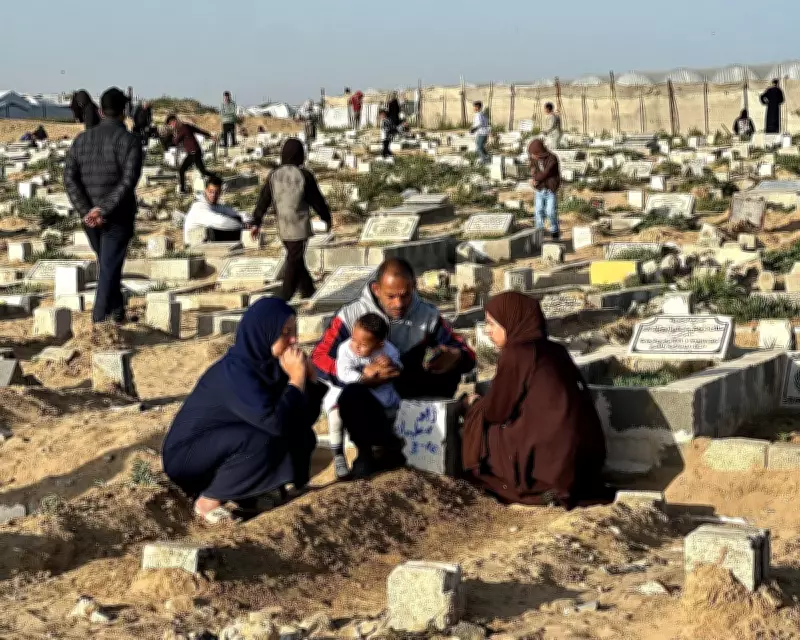
On Eid al-Fitr in Khan Younis, Gaza, Palestinians solemnly visit the graves of relatives killed in Israeli attacks, transforming a day of celebration into a profound expression of grief and loss. The traditional rituals of Eid, including prayers, family visits, and sharing sweets, continue, but the underlying joy has vanished, replaced by a heavy sorrow that permeates every home and street.
The Hollowed-Out Rituals of Eid
Eid al-Fitr, marking the end of Ramadan, is meant to bring release and communal joy. In Gaza, it has always carried a unique vibrancy, with men and boys gathering in clean clothes for morning prayers, neighbours exchanging congratulations, and families embarking on rounds of visits. Children eagerly await eidiya, the customary monetary gifts, while coffee flows and doors remain open to all.
This year, however, the rituals remained intact, but the feeling had dissipated. Sorrow seemed to stand among the people, with greetings of "Eid Mubarak" landing differently, as if spoken across a vast field of absence. Families moved from house to house on foot, as transport proved too difficult and unreliable, but the lightness of past celebrations was missing, feeling more like a procession through loss than a festive occasion.
A Procession Through Loss and Grief
The day began with breakfast at home, followed by visits that stretched from morning until late night. Each stop revealed another layer of tragedy. At an aunt's house, the loss of a daughter, son-in-law, and grandson hung in the air. A sister, displaced from her destroyed home in eastern Gaza, now lives in a rented garage, trying to honour the day despite reduced circumstances. Another aunt's half-standing house in western Gaza bore witness to the deaths of her husband, son, daughter-in-law, and three grandchildren in a single airstrike, with grief sitting silently between greetings.
Further visits uncovered more heartbreak: a sister who lost two sons and her husband, a health official killed at a medical clinic; an aunt mourning her son and grandson, with surviving grandchildren experiencing their first Eid without their father. In every home, missing husbands, sons, orphaned children, and widows learning to inhabit unchosen lives became the painful rhythm of the day.
The Weight of Palestinian Mourning
By afternoon, visitors arrived at the family home in Gaza City's Daraj neighbourhood, each bringing another chapter of the tragic story. The mother had lost her brother, grandchildren, sons-in-law, and daughter. Sitting among guests, it felt as if the full weight of Palestinian mourning was passing through the door, transcending mere courtesy or Eid obligation.
Later visits continued to unveil loss: a sister who lost two sons, the children of another sister now living with their father after their mother's killing. The final scene of the day, in the family sitting room, encapsulated Gaza's pain in one frame. Survivors included an 11-month-old baby pulled from rubble, injured children receiving rehabilitation, and relatives mourning multiple family members. Everyone carried grief, everyone missed someone, with exhaustion and pain lurking beneath the outward customs of Eid.
Eid as Witness and Testimony
Eid is supposed to renew bonds between people, and in Gaza this year, it still did—but not through joy, through witness. Families visited one another not simply to celebrate, but to acknowledge the dead and sit with the bereaved, recognising that grief, too, has its rituals. This first Eid after the ceasefire did not feel like a return to normal life, but a day suspended between faith and devastation, between habit and heartbreak.
The Eid rituals survived—the prayer, breakfast, embraces, visits, and eidiya—but the joy had been hollowed out. In every home, sorrow waited in the corner, turning the first day of Eid in Gaza into a long walk through love, kinship, and ruin: a day that began with blessings and ended as testimony to resilience amidst unimaginable loss.