The European Union has issued a stark warning to the United States, threatening swift retaliation following Washington's decision to bar five European citizens from entering the country. The US State Department accuses the individuals of pressuring American technology companies to censor or suppress US political viewpoints.
Who Are the Banned Europeans?
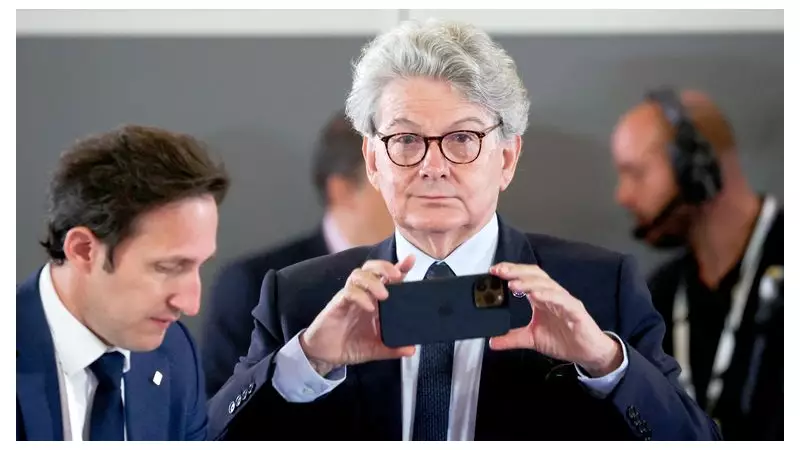
The five Europeans targeted by the US visa restrictions, announced in May and enacted this week, include prominent figures from the digital policy and activism sphere. The most senior is Thierry Breton, the European Commissioner for the Internal Market, who supervises the EU's landmark tech regulations like the Digital Services Act.
The others named are Imran Ahmed, CEO of the Centre for Countering Digital Hate; Josephine Ballon and Anna-Lena von Hodenberg, leaders of the German anti-hate speech organisation HateAid; and Clare Melford, who runs the Global Disinformation Index (GDI). US Secretary of State Marco Rubio labelled the group "radical" activists, alleging they advanced foreign government censorship campaigns with "potentially serious adverse foreign policy consequences" for America.
EU and National Leaders Condemn "Intimidation"
The European Commission, the EU's executive arm, stated it has requested urgent clarification from US authorities. In a firm declaration, it warned: "If needed, we will respond swiftly and decisively to defend our regulatory autonomy against unjustified measures." The Commission defended its digital rulebook, stating it ensures a safe, fair, and level playing field for all companies without discrimination.
The response from European capitals was equally forceful. French President Emmanuel Macron denounced the visa restrictions, stating they "amount to intimidation and coercion aimed at undermining European digital sovereignty." In a post on X, he emphasised that the EU's rules were created through a democratic, sovereign process and "are not meant to be determined outside Europe."
Germany's justice ministry expressed its "support and solidarity" with the two German activists affected, calling the bans unacceptable and asserting that "the rules by which we want to live in the digital space in Germany and in Europe are not decided in Washington."
A Broader Pattern of Tension
This incident is not isolated. Commissioner Breton, a former French finance minister, was notably involved in a public dispute with tech billionaire Elon Musk last year over platforming an online interview with Donald Trump. Furthermore, a spokesperson for the GDI condemned the US action as "an authoritarian attack on free speech and an egregious act of government censorship," accusing the Trump administration of using federal power to silence dissent.
The visa policy used to enact the bans was unveiled in May, designed to bar foreigners accused of censoring protected speech in the US. This move also follows a pattern from the Trump administration, which in August sanctioned a French judge from the International Criminal Court over its probes.
The standoff, dated Wednesday 24 December 2025, marks a significant escalation in transatlantic tensions over who controls the rules of the global digital economy, setting the stage for a potential diplomatic and regulatory confrontation.