Canada and Australia Forge 'Strategic Cousins' Alliance Amid Global Tensions
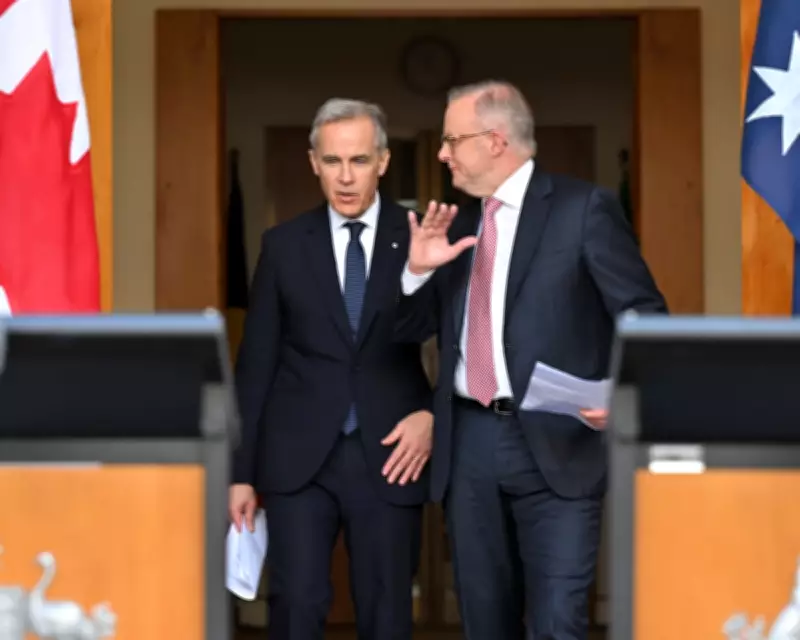
In a significant diplomatic move, Canadian Prime Minister Mark Carney and Australian Prime Minister Anthony Albanese have jointly advocated for a strengthened partnership, positioning their nations as "strategic cousins" to enhance their negotiating power with global superpowers. This announcement was made during a press conference outside Parliament House in Canberra on Thursday, where both leaders emphasized the importance of unity in an increasingly complex international landscape.
Navigating Superpower Relations Together
Carney, in a speech to parliament, articulated that Canada and Australia would be more effective in dealing with major powers—including the United States under Donald Trump—by collaborating rather than competing. This approach aims to leverage their shared values and interests to influence global affairs more robustly. The concept of "strategic cousins" underscores a deep, familial-like alliance that goes beyond traditional diplomatic ties, focusing on mutual support and coordinated strategies.
Call for De-escalation in Middle East Conflicts
Amid rising tensions, both leaders issued a joint call for a de-escalation of US and Israeli strikes on Iran, as well as for Iran to cease its retaliatory attacks across the region. Their statements come as the conflict enters its sixth day, with reports indicating that US forces are prepared to provide air support to Kurdish fighters if they become involved. This diplomatic push highlights their commitment to promoting peace and stability in volatile regions, reflecting their roles as influential middle powers on the world stage.
Key Developments and Broader Context
The alliance announcement coincides with several notable events:
- Gift to Trump: Anthony Albanese presented Donald Trump with a model nuclear submarine on a golden plate during a visit to the White House, symbolizing defense cooperation.
- Political Transparency: The Labor party in Australia has abandoned proposed freedom of information law changes that would have reduced transparency, hailed as "a win for democracy."
- Architectural Recognition: Five Australian projects, including two by Candalepas Associates, have been shortlisted for the Royal Institute of British Architects International awards, showcasing global design excellence.
- Fashion Trends: The emergence of "veavage"—a deep V neckline style popularized by figures like Gwyneth Paltrow—has captured cultural attention, reflecting broader societal shifts.
These developments underscore the multifaceted nature of current affairs, blending diplomacy, politics, culture, and design. The "strategic cousins" framework is poised to shape future bilateral relations, with both nations seeking to amplify their voices in international forums. As global dynamics evolve, this partnership could serve as a model for other countries looking to enhance their influence through collaborative efforts.
In related news, the Liberal party in Australia faced scrutiny over a buried election review, which was later tabled by Albanese, revealing internal challenges. Meanwhile, issues such as public safety concerns over anti-theft gates at Woolworths and legal cases involving political figures continue to resonate domestically. The alliance between Canada and Australia, therefore, not only addresses external pressures but also reflects a shared commitment to democratic values and transparency in governance.