
US Military Conducts Second Deadly Drug Boat Strike in Caribbean Region
The United States military's Southern Command has confirmed conducting its second lethal kinetic strike on a suspected drug-trafficking vessel within a single week, this time targeting a boat in the Caribbean Sea. The operation, which occurred on Friday, resulted in the deaths of three individuals believed to be involved in narcotics smuggling operations.
Details of the Latest Caribbean Strike Operation
According to official statements released by the Southern Command, military intelligence had confirmed that the targeted vessel was actively transiting along established narco-trafficking routes within Caribbean waters. The command asserted that the boat was definitively engaged in drug trafficking operations at the time of engagement.
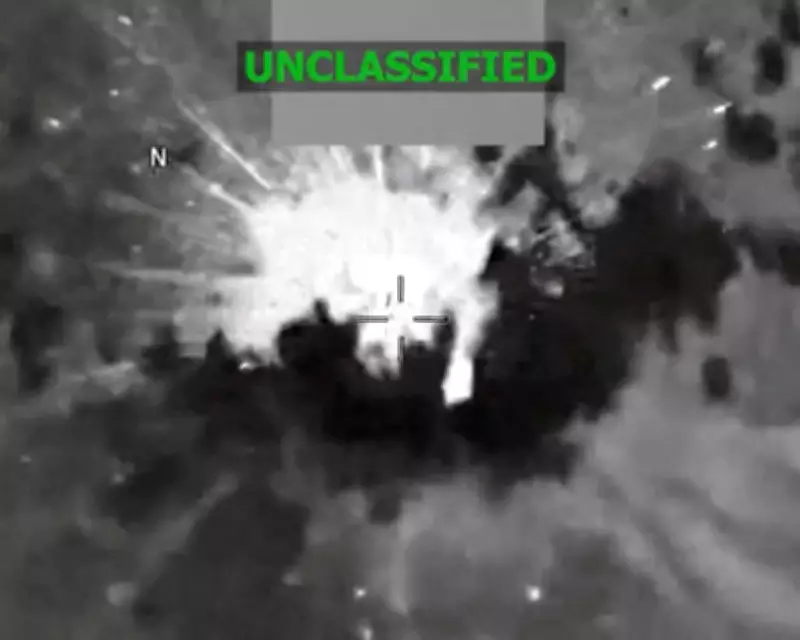
The Southern Command accompanied its announcement with video evidence showing the dramatic moment of impact. The footage depicts a boat moving through open water before being struck by what appears to be a missile or similar projectile, causing the vessel to erupt into flames almost instantaneously. Both the Southern Command and the Pentagon have declined to provide additional operational details or respond to immediate requests for further information regarding the strike's specific circumstances.
Escalating Pattern of Maritime Strikes
This Caribbean strike follows closely on the heels of another deadly engagement announced earlier in the week. On Monday, the Southern Command reported conducting a similar operation against a suspected drug-smuggling vessel in the eastern Pacific Ocean. That previous strike resulted in two confirmed fatalities among suspected traffickers, with one individual surviving the attack.
When combined with Friday's Caribbean operation, these latest incidents bring the overall death toll from such maritime strikes to at least 133 individuals across 39 separate engagements, according to Pentagon statements meticulously tallied by investigative journalists. Notably, this represents the first confirmed Caribbean strike conducted by US forces since November of last year, with the overwhelming majority of recent operations having been concentrated in Pacific waters instead.
Legal and Policy Controversies Surrounding Strike Operations
The legality and ethical implications of these maritime strikes have come under increasing scrutiny from legal experts and human rights organizations. Critics argue that these operations constitute extrajudicial killings conducted by the Pentagon with virtually no accountability mechanisms in place.
An analysis published on Friday by the Washington Office on Latin America, a respected advocacy organization, starkly notes that "those being killed by US military strikes at sea are denied any due process whatsoever." The report further contends that the current administration appears to be "asserting and exercising an apparently unlimited license to kill people that the president deems to be terrorists" without proper judicial oversight or transparency.
Leadership Changes and Regional Context
The timing of these strikes coincides with recent leadership transitions within the Southern Command. Earlier this month, General Francis L. Donovan was formally sworn in as the new commanding officer, taking over from Admiral Alvin Holsey who reportedly chose retirement amid disagreements concerning the boat-strike policy's implementation and ethical dimensions.
These maritime operations occur within a broader regional context of heightened US military activity. In early January, American forces launched a significant operation in Venezuela's capital, apprehending then-President Nicolás Maduro on alleged drug-trafficking charges. The Pentagon has consistently framed its Caribbean and Latin American operations as essential components of a comprehensive campaign against what it terms "narco-terrorism," though critics note that concrete evidence of coordinated, large-scale drug-smuggling networks has been notably scarce in official justifications.
The continuation of these strike operations suggests an ongoing commitment to maritime interdiction strategies, even as legal questions and ethical concerns continue to mount regarding their implementation and consequences.




