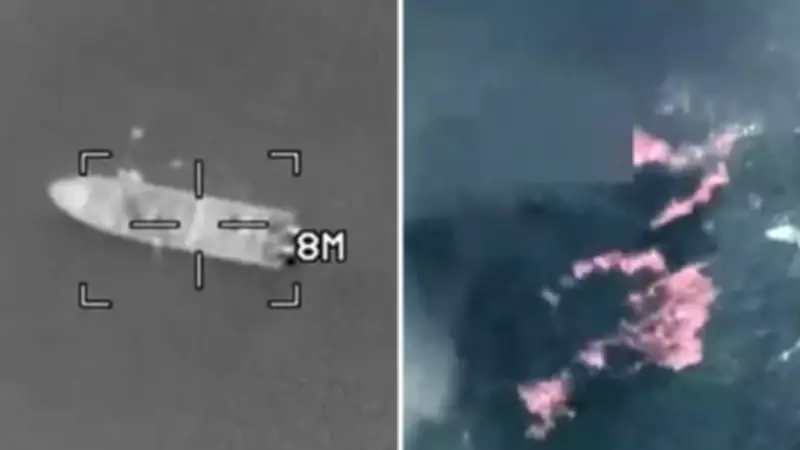
In a significant military operation, United States forces have launched strikes on three vessels allegedly involved in drug smuggling activities, resulting in the deaths of eleven individuals across the eastern Pacific Ocean and the Caribbean Sea. The incident, which occurred on Monday, represents the latest in a series of controversial actions targeting so-called "narcoterrorists" under the current administration.
Details of the Maritime Strikes
According to statements from US Southern Command, intelligence confirmed that the targeted boats were transiting along known narco-trafficking routes and were engaged in illicit drug operations. The military posted video footage on social media platform X showing the vessels being destroyed during the operation.
Two of the boats, each carrying four people, were struck in the eastern Pacific Ocean, while a third vessel with three individuals aboard was hit in the Caribbean Sea. US Southern Command alleged that all three boats were "operated by designated terrorist organizations," though no specific evidence linking the vessels or those killed to drug trafficking has been publicly provided.
Escalating Anti-Cartel Campaign
These strikes bring the total number of alleged narcoterrorists killed since early September 2025 to at least 145 people across 42 known military operations. The Trump administration has characterized these actions as part of an "armed conflict" with cartels in Latin America, justifying the escalation as necessary to stem the flow of drugs into the United States.
In a social media post following the operation, US Defense Secretary Pete Hegseth remarked, "Turns out President's Day - under President Trump - is not a good day to run drugs." This statement underscores the administration's aggressive stance against international drug trafficking networks.
Broader Context of US Anti-Drug Operations
The recent maritime strikes occur within a broader pattern of intensified US military action against alleged drug operations. In January 2026, the United States launched a direct military attack on Venezuela, resulting in the extradition of President Nicolas Maduro and his wife Cilia Flores to New York to face narcoterrorism and other charges, which both defendants deny.
These operations have sparked debate about the legal and ethical boundaries of military engagement against non-state actors involved in drug trafficking. Critics question the evidence supporting specific strikes, while supporters argue that aggressive measures are necessary to combat the flow of illicit substances.
The US military's continued focus on maritime drug smuggling routes reflects ongoing concerns about the transportation methods used by cartels to move narcotics across international waters. As these operations persist, they raise important questions about sovereignty, international law, and the effectiveness of military solutions to complex transnational criminal challenges.