
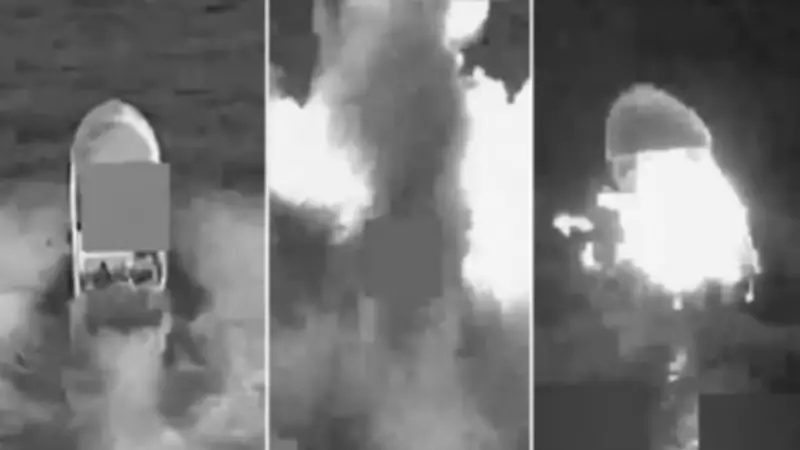
In a significant escalation of its counternarcotics operations, the United States military has confirmed the killing of two individuals described as "narco-terrorists" during a strike on an alleged drug vessel in the eastern Pacific Ocean. The incident, which occurred on Thursday, underscores the intensifying campaign against maritime drug trafficking routes that has seen dozens of similar attacks in recent months.
Details of the Latest Engagement
According to a statement released by US Southern Command on social media platform X, intelligence sources verified that the targeted boat was navigating along established narco-trafficking corridors in the eastern Pacific and was actively involved in illicit drug operations. The military reported that no American personnel were harmed during the engagement, though precise details regarding the vessel's origin or intended destination were not disclosed.
A video accompanying the announcement depicts the boat moving through the water before being engulfed in flames following the strike. This visual evidence highlights the aggressive tactics employed by US forces in their efforts to disrupt drug smuggling networks across international waters.
Escalating Campaign and Casualty Figures
Since September, the US military has conducted at least 36 attacks on boats suspected of transporting drugs in the Caribbean Sea and eastern Pacific Ocean. The Trump administration has consistently defended these operations, arguing they are crucial for national security by stemming the flow of narcotics into the United States. Official figures from the military indicate that a total of 128 individuals have been killed in these strikes, including those presumed dead after being lost at sea.
This latest incident represents only the second such strike since the dramatic capture of former Venezuelan President Nicolas Maduro on 3 January. Maduro was subsequently transported to New York to face trial, where he has pleaded not guilty to charges including narco-terrorism conspiracy and cocaine importation conspiracy.
Political and Diplomatic Ramifications
The strike also follows a recent meeting between former US President Donald Trump and Colombian President Gustavo Petro, who has been a vocal critic of the boat attacks. President Petro has previously likened these military actions to war crimes, citing instances where Colombian citizens have been injured or killed in previous engagements.
During their discussions this week, Trump and Petro addressed counternarcotics efforts, despite previous tensions. Trump had previously referred to Petro as a "drug leader," reflecting the strained relations between the two nations on drug policy matters.
Controversy Over Colombian Drug Production
US Treasury Secretary Scott Bessent has accused the Petro administration of allowing cocaine production in Colombia to surge to its highest levels in decades, allegedly flooding American markets and endangering public health. Bessent claimed that "President Petro has allowed drug cartels to flourish," pointing to what he described as a failure in effective drug enforcement.
In response, President Petro has vigorously disputed these allegations, asserting that his government has achieved unprecedented rates of cocaine seizures and that the expansion of coca crops—the primary ingredient for cocaine—has consistently slowed each year since 2021. This ongoing dispute highlights the complex geopolitical dynamics surrounding international drug trafficking and enforcement strategies.
The continued military strikes and the accompanying diplomatic friction underscore the challenges faced by the United States in its protracted war against drug trafficking organisations, with significant implications for regional stability and bilateral relations in the Americas.




