
US Military Buildup in Middle East Intensifies Amid Iran Nuclear Tensions
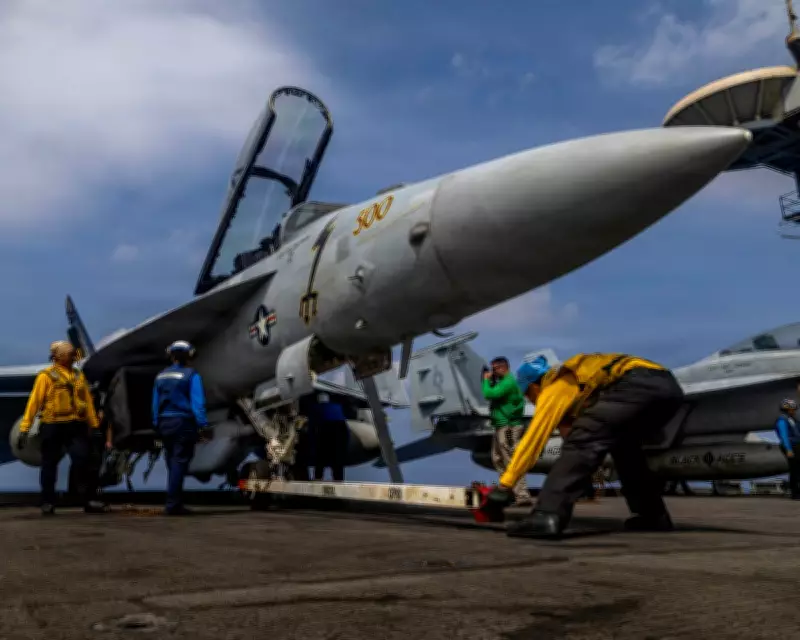
US military assets in the Middle East have significantly increased, with the impending arrival of a second aircraft carrier strike group, as tensions with Iran over its nuclear programme escalate. This buildup provides the United States with the capability to launch extensive airstrikes, though the strategic objectives of such a campaign remain unclear.
Trump's Timeline and Diplomatic Moves
President Donald Trump has indicated that a nuclear deal with Iran could be determined within "probably 10 days," following recent diplomatic talks. Speaking at the inaugural meeting of his Board of Peace in Washington DC, Trump emphasised that Iran cannot possess a nuclear weapon and warned that "bad things will happen" if regional stability is threatened.
White House envoys Steve Witkoff and Jared Kushner met with Iranian officials in Geneva to discuss Iran's nuclear enrichment programme, which was set back but not eliminated after US and Israeli bombing during the 12-day war last June. Iran has promised to respond within two weeks to US demands to abandon enrichment in exchange for sanctions relief, aligning with Trump's timeline.
Military Assets and Capabilities
The USS Abraham Lincoln aircraft carrier and its strike group have been stationed in the Arabian Sea for nearly a month, equipped with nine squadrons of aircraft, including F-35 Lightning IIs and F/A-18 Super Hornets. A second carrier strike group, led by the USS Gerald R Ford, is expected to head through the Strait of Gibraltar towards the eastern Mediterranean.
Matthew Savill, director of military sciences at the Royal United Services Institute, noted that together, these carrier groups could generate "several hundred strike sorties a day for a few weeks," exceeding the intensity of the 12-day war. Even without the Ford, planes from the Lincoln could fly over 125 bombing missions daily, enabling attacks on Iranian government and military sites.
Aviation and Air Defence Movements
Aviation experts have tracked a large movement of military planes to the Middle East, including six E-3 Sentry Awacs deployed at Prince Sultan airbase in Saudi Arabia for real-time command and control operations. The US has also increased air defence systems in the region, such as placing a Patriot system at Al-Udeid airbase in Qatar, to counter potential Iranian ballistic missile threats.
Iran's supreme leader, Ali Khamenei, has threatened to send US warships "to the bottom of the sea," highlighting the risk of counterattacks. Iran possesses an estimated 2,000 ballistic missiles, with improved hit rates observed during the summer conflict, making defence challenging even with advanced systems.
Strategic Questions and International Involvement
Despite the military buildup, experts question its purpose. Savill pointed out that the deployment suggests options for a wide-ranging bombing campaign beyond targeting senior Iranian figures. Trump has shifted focus from supporting protests against the Iranian regime to addressing Iran's nuclear ambitions, with potential targets including the Pickaxe Mountain complex and Taleghan 2 at Parchin.
International allies are also involved, with the UK indicating it will not allow its airbases to be used for B-2 bomber runs, though it may defend allies in the Middle East. The RAF's 12 Squadron has redeployed to Qatar with Typhoon jets for self-defence purposes.
As the situation develops, the world watches closely, with the next 10 days potentially critical in determining whether diplomacy or military action will prevail in the ongoing US-Iran standoff.




