
Heightened Military Posturing in the Strait of Hormuz
The strategic Strait of Hormuz, a vital maritime corridor through which approximately twenty percent of the world's oil supply flows, has become the focal point of escalating tensions between the United States and Iran. Both nations are conducting significant military exercises in the region, signaling a dangerous standoff that analysts fear could precipitate a broader conflict.
Iran's Unambiguous Military Display
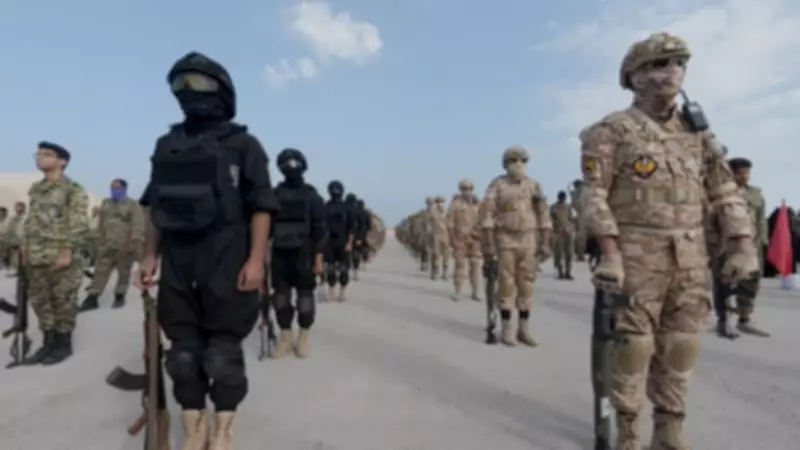
Iran has conducted extensive military drills in the Persian Gulf, demonstrating its capabilities with precision missile strikes on simulated targets and exercises involving the seizure of dummy tankers. These maneuvers temporarily closed the Strait of Hormuz, offering a stark preview of potential disruptions to global energy markets should hostilities erupt.
Supreme Leader Ayatollah Ali Khamenei issued a stark warning, stating, "A warship is a dangerous device. But more dangerous than that is a weapon that can send that warship deep under the sea." This rhetoric underscores Iran's readiness to confront US naval power directly in its backyard.
US Naval Buildup and Preparations
Simultaneously, a formidable US naval force, spearheaded by the USS Lincoln aircraft carrier strike group, is amassing just a few hundred miles east of the Iranian exercises. These US drills are characterized by military experts as preparations for potential offensive operations, rather than routine defensive maneuvers.
The convergence of rival navies in such a confined and critical waterway has created a volatile environment. The region is now cluttered with military assets from both sides, each actively drilling for war scenarios, raising urgent questions about the risks of miscalculation or accidental escalation.
Diplomatic Efforts Amidst Hardening Positions
Despite the military posturing, diplomatic channels remain open. Iranian Foreign Minister Abbas Araghchi emerged from recent talks expressing cautious optimism, suggesting that a basis for future negotiations has been established. However, he tempered expectations by warning that a final agreement remains distant.
The core disagreement centers on Iran's nuclear program. The Iranian government asserts that any deal requiring the complete abandonment of its nuclear enrichment capabilities would be tantamount to surrender and is a non-negotiable red line. Conversely, US President Donald Trump has explicitly stated that full denuclearization is a prerequisite for any agreement, with failure potentially leading to US military strikes.
Squaring these diametrically opposed positions, along with other contentious issues, presents a fiendishly difficult challenge for diplomats. Veteran negotiators acknowledge that without substantive progress, the region is undeniably moving closer to a military confrontation.
The international community watches with apprehension as these parallel tracks of military escalation and fragile diplomacy unfold. The outcome will have profound implications for global energy security, regional stability, and the broader geopolitical landscape.




