US and Iran Agree to Provisional Two-Week Ceasefire Following Pakistan-Led Diplomatic Intervention
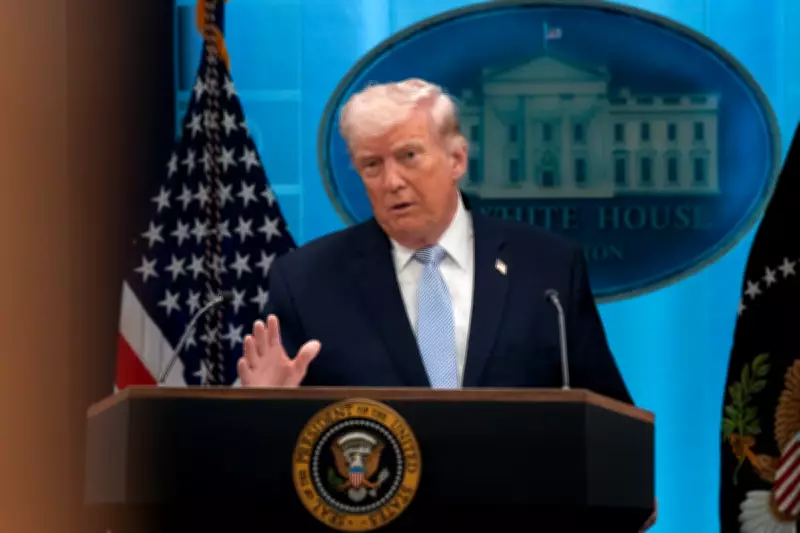
In a dramatic turn of events, the United States and Iran have agreed to a two-week conditional ceasefire following a last-minute diplomatic intervention spearheaded by Pakistan. This development cancels an ultimatum issued by former President Donald Trump demanding Iran's surrender or facing widespread destruction.
Trump's Deadline Averted Through Diplomatic Channels
The ceasefire agreement was announced on Tuesday evening, less than two hours before Trump's self-imposed 8pm Eastern time deadline to bomb Iran's power plants and bridges. Legal scholars, international officials, and even the Pope had warned that such actions could constitute war crimes under international law.
Just hours before the agreement, Trump had posted on Truth Social: "A whole civilization will die tonight, never to be brought back again. I don't want that to happen, but it probably will." Reports indicated B-52 bombers were en route to Iran before the ceasefire was announced.

Pakistan's Crucial Role in Mediation
Trump announced that the ceasefire had been mediated through Pakistan, with Prime Minister Shehbaz Sharif requesting the two-week peace period to "allow diplomacy to run its course." In a social media post, Trump stated: "Subject to the Islamic Republic of Iran agreeing to the COMPLETE, IMMEDIATE, and SAFE OPENING of the Strait of Hormuz, I agree to suspend the bombing and attack of Iran for a period of two weeks."
During this period, Trump expressed belief that the US and Iran could negotiate over a 10-point proposal from Tehran that would allow an armistice to be "finalized and consummated." He emphasized this would be a "double sided CEASEFIRE" and claimed military objectives had already been exceeded.
Iran's Response and Regional Implications
Iranian Foreign Minister Abbas Araghchi issued a statement shortly after Trump's announcement confirming Iran's agreement to the ceasefire. "For a period of two weeks, safe passage through the Strait of Hormuz will be possible via coordinating with Iran's Armed Forces," he declared.
This sudden reversal allows Trump to step back from a conflict that has dragged on for five weeks with little indication Tehran was prepared to surrender or release its hold on the Strait of Hormuz. This critical waterway serves as a conduit for approximately one-fifth of global energy supplies, where traffic had slowed to a trickle during the conflict.
According to Axios, Israel will also agree to the two-week ceasefire, with an Israeli official stating the ceasefire would take effect as soon as the blockade of the Strait of Hormuz ceased.
Escalating Tensions and International Concerns
Amir-Saeid Iravani, Iran's representative at the United Nations, had earlier warned that Trump's threats constituted "incitement to war crimes – and potentially genocide." During a Security Council session on the Strait of Hormuz, Iravani stated: "Iran will not stand idle in the face of such egregious war crimes. It will exercise, without hesitation, its inherent right of self-defence and will take immediate and proportionate reciprocal measures."
UN Secretary-General António Guterres had issued a reminder through his spokesperson that attacking civilian infrastructure is prohibited under international law. Despite this, Trump declared he was "not at all" concerned about being labeled a war criminal.
Recent Military Actions and Retaliatory Strikes
In the hours preceding Trump's deadline, Israel launched attacks on Iranian infrastructure. Iranian state media reported a rail bridge in Kashan was bombed, resulting in two fatalities, while Israel's military confirmed "a wide-scale wave of strikes targeting dozens of infrastructure sites."
Additional targets included a bridge near Karaj, northwest of Tehran, and power infrastructure in the same city. Bridges near Qom and Tabriz were also reportedly hit. The US struck 50 military targets on Iran's Kharg Island, home to its primary oil export terminal.

In retaliation, Iran's Revolutionary Guards attacked Saudi Arabia's Jubail petrochemical complex following strikes on an Iranian petrochemical facility the previous night. This ceasefire agreement represents a temporary pause in what had become an increasingly volatile regional conflict with global energy implications.