US Intelligence Report Contradicts Trump's Claims on Iran's Missile Arsenal
A recent Reuters report, based on intelligence from five sources familiar with U.S. assessments, reveals that the United States has destroyed only about one-third of Iran's missile and drone arsenal after a month of conflict. This finding directly contradicts statements from former President Donald Trump and other U.S. officials who claimed Tehran's capabilities had been largely wiped out.
Detailed Assessment of Iran's Military Stockpile
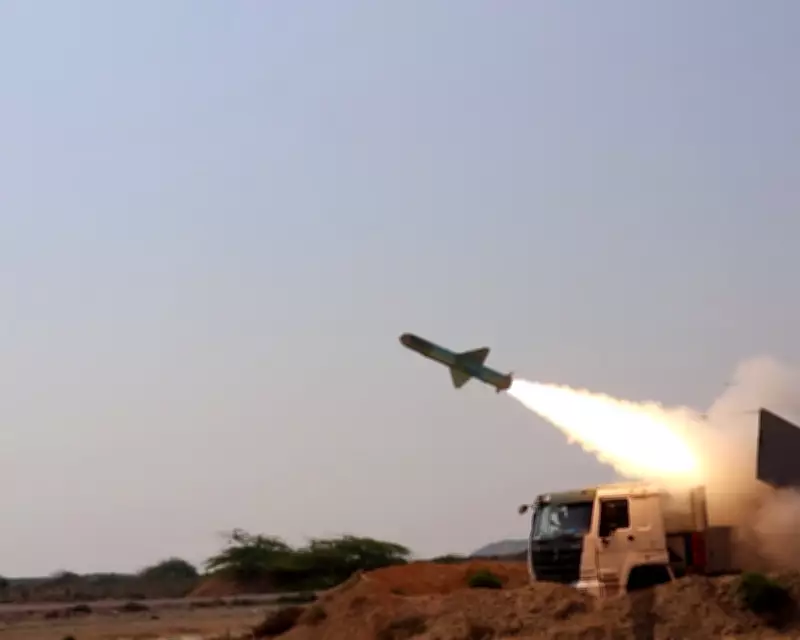
The intelligence suggests that approximately one-third of Iran's missiles have been destroyed, while another third has likely been damaged or buried within extensive underground tunnels and bunkers. A similar assessment applies to Iran's drone arsenal, indicating that while many missiles are currently inaccessible, the country maintains a significant remaining stockpile.
This contradicts Trump's Thursday statement that Tehran had "very few rockets left" and assertions from other U.S. officials that the war had eliminated Iran's ballistic missile capabilities. Iranian officials consider their ballistic missile program a crucial deterrent, especially given the military superiority of the U.S. and Israel, which views the arsenal as a direct threat.
Ongoing Conflict and Strategic Implications
Over the past month, Iran has utilized ballistic missiles and drones to devastating effect, targeting Israel and key infrastructure in the Gulf region, causing substantial damage to the global economy. The U.S. and Israel have stated that degrading Iran's ballistic missile capacity is a primary war aim.
Israel reports having "neutralized" 335 missile launchers, or 70% of Tehran's total, as part of its aerial campaign. Iran has strategically distributed its launchers across the country to evade detection and airstrikes. Despite a decline in launches due to ongoing bombing campaigns, missiles continue to hit Israel and the Gulf as interceptor stocks deplete.
Challenges in Assessing Underground Stockpiles
A U.S. official, speaking anonymously, highlighted the difficulty in accurately assessing Iran's missile stockpile, noting that much of it is stored underground. "I don't know if we'll ever have an accurate number," they admitted. U.S. Defense Secretary Pete Hegseth acknowledged the challenge posed by Iran's vast tunnel network but affirmed the military's commitment to continuing operations.
Recent developments include the U.S. deploying thousands of additional troops to the Middle East, with considerations for a ground operation on Kharg Island to reopen the Strait of Hormuz. Trump emphasized the strategic importance, stating that even 1% of remaining missiles could cause catastrophic damage to billion-dollar ships.
In a recent attack, Iran fired 15 missiles and 11 drones at the United Arab Emirates, according to the UAE defense ministry. This incident underscores the ongoing threat and the complex dynamics of the conflict, which involves Houthi forces entering with missile attacks on Israeli military sites.