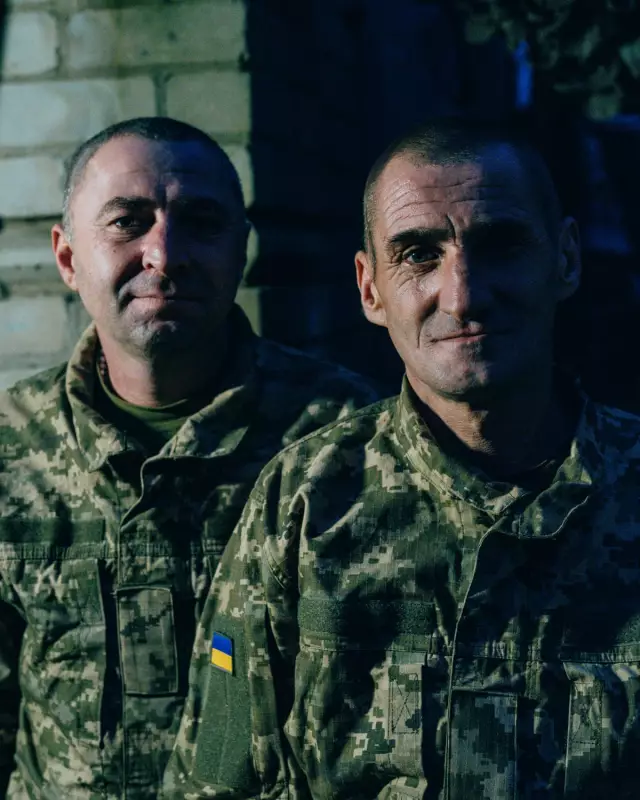
For 62 gruelling days, Ukrainian soldiers Bohdan and Ivan hid from Russian drones in a cramped basement, their survival dependent on supplies dropped by friendly aircraft and their resolve tested by the relentless threat overhead. Their story, from the 31st Brigade's position west of Pokrovske, exposes the grinding reality for infantry in a conflict where remote warfare dominates headlines but ground troops bear a brutal, silent burden.
The Underground Ordeal: Survival in a 3-Square-Metre Room
Deployed at the end of September, Bohdan, 41, and Ivan, 45, initially took shelter in a village shop. Their mission, like that of many Ukrainian ground troops, was to hold a position quietly. That changed dramatically one morning at 7am when three Russian soldiers stumbled within metres of their location. A fierce firefight ensued, leaving two Russians dead and the survivor calling in drone strikes on the Ukrainians' position.
Forced to scatter and regroup, the pair ended up in a tiny basement, a space of just three square metres that became their home, toilet, and refuge for the ensuing seven weeks. Food, water, and even cigarettes were delivered by drone. Their nearest comrades were 200 metres away. The constant fear was detection. "We were thinking it would come back. Two more mines and we’d have been done," Bohdan recalled after a Russian 'Baba Yaga' drone bombed the entrance, partially blocking it with rubble.
A War of Attrition and the Strain on Soldiers
Their extended deployment underscores a critical strain within the Ukrainian military: a severe shortage of reserves leading to long, exhausting frontline rotations. Bohdan, a father of five, had told his wife he would be gone for two weeks. A record 21,602 soldiers went absent without leave in October alone, a statistic that speaks to the immense pressure. The situation is compounded by the infantry's isolation; unlike drone crews with Starlink access, they cannot receive messages from home.
While they were underground, the diplomatic landscape shifted. Initial peace efforts faltered, followed by a Russian proposal demanding Ukraine cede Donetsk province, abandon occupied land, and renounce NATO membership—terms Kyiv rejected as a surrender. "Nobody, of course, wants the war to continue because there have been a lot of sacrifices," Bohdan said. "But we don’t want to give up, to give our land because we don’t then want those sacrifices to be wasted."
The Perilous Journey Back and an Uncertain Future
Extraction was as dangerous as the deployment itself. After a relief team arrived, they waited three days for a safe moment. Finally, in rainy and foggy conditions that hampered drones, they were given ten minutes' notice to leave. The 10-15km trek to safety took three days, moving only by day and hiding in treelines at night to avoid thermal-sighted drones. Even their drive to safety was marked by witnessing another vehicle struck by a drone.
Now in the relative calm of the rear, both soldiers are being monitored by military psychologists—a service increasingly in demand, with an estimated 3-5% of returning troops needing further treatment. Despite the trauma, they expect to return to the front within a week if called. When asked if they were ready to risk another 62-day stint, Bohdan's response was resigned yet defiant: "What choice do we have?" He added, "We have a saying in Ukraine: if you let a cat under the table, it will appear on the table. It’s the same with Putin." Their story is a stark reminder that for Ukraine's weary infantry, there is no end in sight.