
Ukraine War Transforms into Drone-Dominated Trench Warfare, Commander Reveals
The conflict in Ukraine has undergone a profound and fundamental transformation, evolving into a grinding test of attrition where battlefield movements are measured in mere meters rather than miles. In the frozen wastelands of the Donbas region, the war feels endless, with stakes that extend far beyond Ukrainian borders to challenge the entire international order and the principle that borders cannot be altered by force. On the ground, the daily reality is less about grand strategy and more about a desperate slog for survival.
Daily Drone Threats in the Fortress Belt
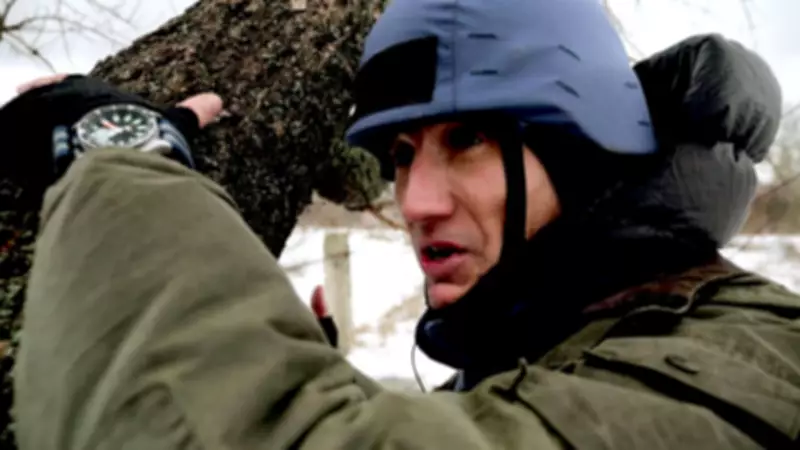
Sky News joined a unit from the 117th Brigade, tasked with defending one of the most heavily contested areas of the Donbas, known as the "fortress belt." Just reaching their positions requires immense nerve, as advancing often involves traversing open ground under constant threat. The landscape is scarred by war, with burnt-out vehicles lining the roads as stark reminders of the danger. While the scream of artillery shells remains a fear, it is now accompanied by the menacing buzz of drones filling the skies.
During the visit, a drone spotted the unit, triggering handheld detectors to bleep incessantly. Soldiers heard the whizzing sound grow louder as the unmanned aerial vehicle approached. The deputy commander and another soldier opened fire with assault rifles, a routine but challenging task given the small, fast-moving targets. They successfully downed the drone, but there was no time to celebrate, as more drones or artillery strikes could follow.
Cheap and Deadly Aerial Warfare
The journey continued by quad bike over icy roads, past abandoned Ukrainian vehicles, while Ukrainian drones tracked the movement overhead for protection. Inside a bunker where the "drone hunter" unit lives and plans missions, they displayed a cheap, mass-produced drone shot down that morning. Commander Bohdan of the anti-aircraft battery unit explained the tactics: "There are men working with pump-action shotguns because the drones fly at their lowest altitude there. But here, they fly higher and faster, so the Kalashnikov is the most effective tool."
In this shattered environment, two civilians, Alexander and his wife, have survived under constant bombardment for four years, too poor to leave. As they spoke, the group moved for cover when another drone was spotted overhead. A soldier described the relentless rhythm: "It happens two, three times a day: icy roads, sleeper drones, flying drones, and the Russians. It couldn't be more dangerous. Threats from everywhere—within seconds."
Secret Bunker and Technological Shift
At a secret location deep in a forest, access to the brigade's headquarters was tightly restricted. Descending into a bunker revealed a labyrinth of screens and monitors, symbolizing how the war has become a conflict of microchips and mud. Colonel Dmytro Yaroshenk, commander of the 117th Brigade, stated, "The war has changed fundamentally. We used to fight 'on horseback,' so to speak; now we fight in the sky. We're even taking down helicopters with drones."
He showed footage on screens where surveillance drones, guided by algorithms, spotted everything, including a group of Russian soldiers using mist for a probing attack. Another image displayed a Russian bunker struck by attack drones, with no survivors emerging. Colonel Yaroshenk added, "Logistics are currently a nightmare because technology has evolved so much; drones are flying almost everywhere. If the enemy spots a vehicle, it's highly likely to be quickly destroyed."
Grim Fusion of Past and Present
The 21st century has fused with the muddied trench battlefields reminiscent of the First World War, creating a grim and brutal reality. While the fighting may feel remote to those thousands of miles away, its implications are profound. This war will determine whether might makes right in the 21st century and whether international law is enforced or eroded. After four years of merciless combat, the battle for the Donbas is about more than territory—it is about shaping the world that emerges when the guns finally fall silent.




