
Ukraine's Unexpected Resilience in the Face of Russian Aggression
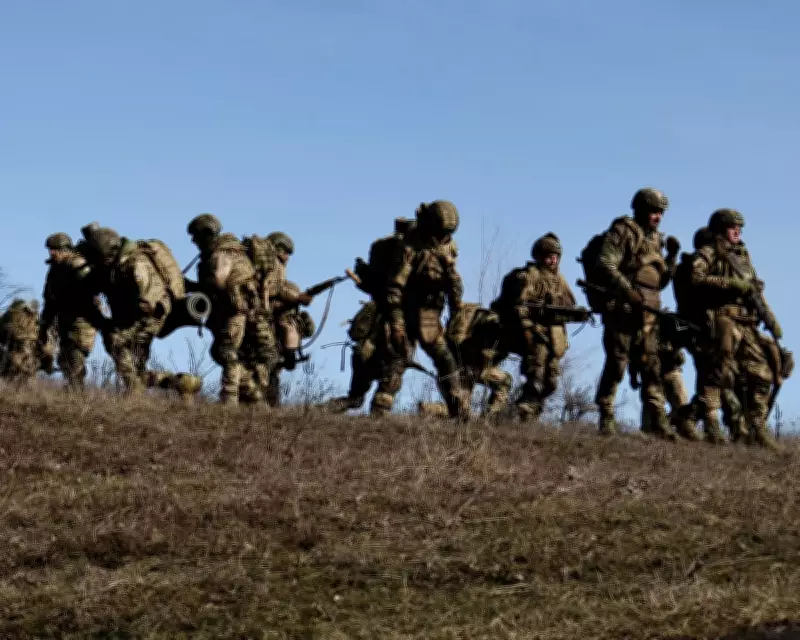
Four years ago, global observers anticipated Ukraine's rapid defeat against Russia's military might. Yet as the conflict enters its fifth year on February 24, Ukrainian forces continue to demonstrate remarkable resilience, confounding early predictions of collapse and creating a complex geopolitical stalemate that even former President Donald Trump's political maneuvers have failed to resolve.
The Staggering Human and Material Costs
Russian President Vladimir Putin initiated this conflict expecting Ukrainian capitulation, perhaps even welcoming Russian troops. With Russia's population exceeding Ukraine's by more than three times and its GDP approximately ten times larger, along with superior military assets including tanks, artillery, missiles, and warplanes, most experts projected a swift Russian victory. US and British intelligence agencies accurately predicted the war's outbreak but similarly forecasted rapid Russian success.
The reality has proven dramatically different. Ukrainian military casualties range between 500,000 and 600,000, including 100,000 to 140,000 fatalities, yet the army maintains its fighting spirit. Russian losses are reportedly twice as severe, with approximately 1.2 million casualties including 219,000 confirmed deaths through obituaries and probate records, though some estimates suggest fatalities may reach 325,000. Geolocated data indicates around 24,000 pieces of Russian equipment have been destroyed, damaged, abandoned, or captured—losses that have surprised even Putin himself.
Civilian Endurance and Technological Innovation
Ukrainian civilians have endured tremendous hardships throughout the conflict. During the winter of 2022-23, Russia repeatedly targeted Ukraine's electricity grid, depriving millions of light, heat, and water. The most recent winter proved even more brutal, with Russia launching thousands of drones and missiles against cities and power stations. Ukraine lacks sufficient missile defense systems to adequately protect these critical targets.
Despite these challenges, visitors to Ukraine consistently hear variations of the same refrain: "We have no choice but to fight if we want to survive." This existential motivation has bolstered Ukrainian morale in ways that Russian soldiers, who face no comparable threat to their homeland, cannot match. Higher stakes have historically strengthened resolve, as demonstrated by French and American experiences in Vietnam.
The Drone Revolution and Battlefield Adaptation
On the battlefield, Ukraine's innovative use of drones has fundamentally altered combat dynamics, preventing Russian generals from employing their preferred warfare tactics. Traditional methods of concentrating armored and mechanized brigades to breach enemy lines, followed by infantry deployment to seize and hold territory, have become suicidal in this drone-dominated conflict. Both sides have become trapped in a war of attrition that limits Ukraine's ability to concentrate forces for decisive breakthroughs.
Russian commanders have adapted by dispatching small groups of dismounted infantry to infiltrate Ukrainian lines and create bridgeheads, while employing unconventional supply methods including passenger vehicles, motorcycles, donkeys, and horses to minimize armored vehicle losses. Ukraine maintains a qualitative edge in drone technology thanks to ingenious, tech-savvy civilians operating from makeshift facilities. These weapons now account for 60-70% of casualties in the conflict.
Ukraine has relentlessly deployed drones alongside increasingly sophisticated domestically produced missiles, including the Long Neptune (a modified anti-ship missile) and Flamingo models, to strike distant Russian command posts, airfields, and ammunition depots. Ukrainian forces have successfully targeted more than half of Russia's major refineries at least once, reducing their capacity and causing gasoline shortages, long lines, and price hikes in parts of Russia. These deep strikes have significantly disrupted Russian logistics.
Naval Successes and Territorial Stalemate
Ukraine's sea drones and anti-ship missiles have effectively neutralized Russia's Black Sea fleet since sinking the flagship Moskva on April 14, 2022. Approximately two dozen additional ships have been sunk, forcing the Russian navy to relocate its headquarters from annexed Crimea's Sevastopol to Novorossiysk on the Black Sea's eastern coast.
Russian forces have failed to leverage their numerical advantage to seize territory at the pace achieved in 2022, much of which Ukraine successfully retook by year's end. Since 2024, particularly during key offensives against locations like Pokrovsk and Myrnohrad, Russia's maximum average daily territorial gains have measured just 70 meters, while monthly casualties have averaged nearly 35,000.
Following the capture of Avdiivka (prewar population: 30,000) in February 2024, Russia failed to capture another large town until this February, gaining only 1.5% of Ukrainian territory during this period. To annex the remainder of Donbas, Russian forces must breach formidable defensive fortifications and storm the substantial Slavyansk, Kramatorsk, and Kostyantynivka conurbation—a prospect that promises bloody urban warfare.
Manpower Challenges and Political Calculations
Ukraine faces significant challenges, particularly troop shortages exacerbated by draft-dodging. While Western media has extensively covered this issue, the implication that Russia's larger population guarantees abundant manpower overlooks Moscow's increasing reliance on foreign fighters from Africa, Cuba, Central Asia, India, and Nepal, along with thousands of North Korean troops. Despite economic pressures, Russia continues to offer soldiers lavish signing bonuses and salaries to maintain enlistment numbers.
Russia has not lost the war, its economy shows no signs of collapse, and it retains ample firepower. Yet its army's performance remains shambolic despite Trump's suspension of direct military aid to Kyiv. This may explain Putin's recent proposal for a settlement. While consistently defining victory as conquest of four provinces—Luhansk, Donetsk, Zaporizhzhia, and Kherson—with Russia fully controlling only Luhansk, Putin now proposes a deal contingent on Ukraine surrendering the remainder of Donetsk.
Despite Putin's recent boasts that "our troops are advancing all across the line of contact," he may be recognizing that his generals' reports about "liberating" Kupiansk in Kharkiv province and conquering swathes of Zaporizhzhia constitute exaggeration. Similarly, Western accounts suggesting Ukraine recently ejected Russian forces from parts of Zaporizhzhia and Dnipropetrovsk provinces presume the accuracy of Russian commanders' claims about controlling these territories.
Ukrainian President Volodymyr Zelenskyy rejects any political settlement requiring surrender of territory that Russian forces have failed to capture militarily, a position supported by approximately 75% of war-weary Ukrainians according to recent polls. This determination persists despite Trump's political fulminations, demonstrating Ukraine's continued resolve as this devastating conflict enters its fifth year with no clear resolution in sight.




