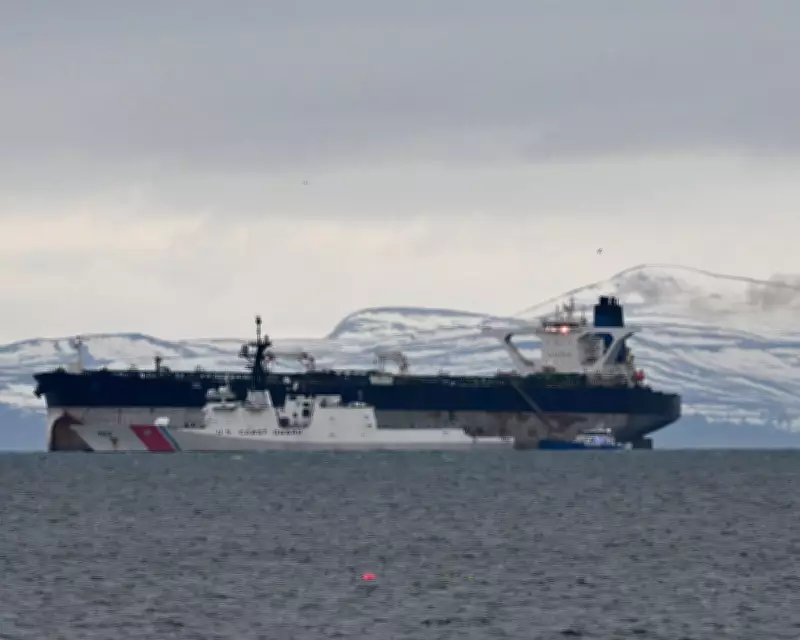
UK Threatens to Seize Russian Shadow Fleet Tanker in Escalatory Maritime Move
The United Kingdom is threatening to seize a Russia-linked shadow fleet tanker in an escalatory move that could open a new front against Moscow at a time when Russian oil revenues are experiencing significant decline. British defence sources have confirmed that military options to capture a rogue vessel have been identified during discussions involving NATO allies, though this comes a full month after US forces seized the Russian tanker Marinera in the North Atlantic with British assistance.
Shadow Fleet Operations and Maritime Law Challenges
According to Lloyd's List Intelligence, January saw 23 shadow fleet ships using false or fraudulent flags spotted in the Channel or Baltic Sea. Many of these vessels are directly linked to the export of Russian oil, primarily transported by water to China, India and Turkey. A joint statement signed by the UK, Germany, France and other NATO countries bordering the Baltic and North seas late last month declared that all vessels sailing through these regions should "strictly comply with applicable international law." Despite establishing conditions for potential seizures, no concrete actions have followed this declaration.
Richard Meade, editor-in-chief of specialist shipping title Lloyd's List, explained the legal position: "The Royal Navy could challenge any number of ships under maritime law because they are in fact stateless. But they haven't, because there are escalatory risks." This hesitation reflects the complex diplomatic and military calculations involved in such operations.
Military Readiness and Political Will
Last month, the Royal Marines conducted a briefing for British MPs and peers covering the threat from Russia and the situation in the Arctic and high north regions. One attendee reported that the Marines were "champing at the bit" to receive orders to seize a ship. This military readiness coincides with political statements from UK Defence Secretary John Healey, who announced in late January that Britain would host a meeting of Baltic and Nordic countries to discuss "military options that we might use." Healey suggested that any seized oil could be sold with proceeds directed toward supporting Ukraine's defence against Putin's invasion.
Russian Response and Economic Context
The proposed action comes at a critical juncture for Russia's economy, with its war boom having faded and economic growth faltering. According to Yuliia Pavytska, a sanctions specialist at Kyiv School of Economics Institute, oil and gas revenues for the Kremlin "fell by 24% in 2025" to 8.5 trillion rubles, accounting for just 22% of state income compared to 41% in 2022. Russia produces approximately 10 million barrels of oil daily, with about 5-6 million travelling by sea, of which 60% goes to China and India.
Following Russia's full-scale invasion of Ukraine, Western nations implemented economic sanctions including a price cap on Russian seaborne crude exports. Moscow responded by spending an estimated $15 billion to acquire 400 ageing tankers, often more than 20 years old, creating its own "shadow fleet." Gonzalo Saiz Erausquin from the Royal United Services Institute described this fleet as "a collection of old, poorly maintained ships that are opaquely owned, often underinsured and flying flags from jurisdictions either with weak controls or enforcement efforts, increasingly taking up false flags."
Legal Vulnerabilities and Operational Risks
The very evasion of regulations that makes the shadow fleet attractive to Moscow also creates vulnerabilities. A ship's flag represents its jurisdiction, but vessels using false or multiple flags become effectively stateless and theoretically subject to seizure. However, European countries differ in their legal interpretations of such situations. Craig Kennedy, an associate at Harvard University's Davis Center for Russian and Eurasian Studies, notes that while the shadow fleet concept was borrowed from Iran and Venezuela, Russia's version operates essentially separately.
Russian complaints following the US seizure of the Marinera tanker were relatively muted, but analysts suggest a UK or European-led operation would be potentially more fraught. Meade warned that "Moscow would probably respond more robustly" to such actions, though risks could be reduced if seizures occurred away from Baltic or Arctic waters.
Recent Precedents and Future Implications
On 22 January, before the joint statement signing, France detained the Grinch oil tanker off the coast of Spain. The vessel had departed from Murmansk in Russia under the flag of Comoros, but French President Emmanuel Macron informed his Ukrainian counterpart that it would have to be released due to French legal constraints. Meanwhile, there are indications that Moscow is reacting to Western threats by re-registering shadow fleet tankers under the Russian flag to prevent seizure, with the Marinera being one of 10 vessels in the Caribbean that had reflagged to Russia in December and January.
Despite these developments, more than 200 Russia-linked shadow fleet vessels remain operational, though Russia's mainstream, own-flagged fleet is expanding and now accounts for 51% of volumes. The price cap to which these vessels are subject is considered relatively easy to flout. The European Union is reportedly considering a total ban on providing maritime services such as insurance to Russian ships, which Pavytska argues would be "very painful" for Moscow, particularly if accompanied by military action.
As British sabre-rattling continues, the ultimate impact of capturing one or two shadow fleet vessels on Moscow's economy remains uncertain. Data on oil export volumes assembled by Kennedy does not suggest a significant drop-off in response to previous actions, with Russian exports holding at more than 5 million barrels daily, though down from a 6 million daily autumn peak. The situation continues to evolve as Western nations balance legal, military and diplomatic considerations in their response to Russia's maritime operations.