In a landmark move to underpin a future peace in Eastern Europe, the United Kingdom and France have formally agreed to send troops to Ukraine following a ceasefire agreement. The joint declaration, signed by Prime Minister Sir Keir Starmer and French President Emmanuel Macron, commits both nations to deploying a multinational force aimed at guaranteeing Ukraine's long-term security against any future Russian aggression.
The Paris Summit and Security Framework
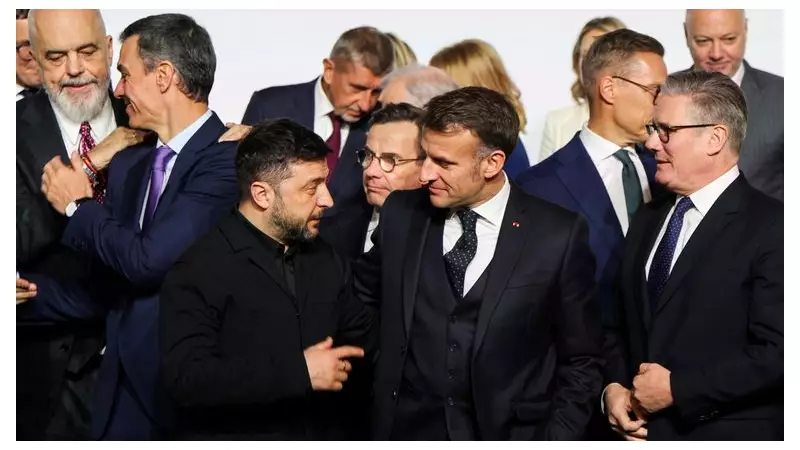
The historic pact was unveiled on Tuesday 6 January 2026 at a news conference in Paris, following a meeting of the 'Coalition of the Willing'. The summit was led by President Macron and Sir Keir Starmer and was notably attended by Ukrainian President Volodymyr Zelenskyy, US Special Envoy Steve Witkoff, and Donald Trump's son-in-law, Jared Kushner.
Sir Keir Starmer stated that the agreement creates the necessary legal framework for British and French troops to operate on Ukrainian soil. The core purpose of the multinational force will be to deter further attacks from Russia, bolster security guarantees, and provide a secure environment for the Ukrainian armed forces to rebuild their strength.
"We've had a very constructive meeting," Sir Keir told the media. "The purpose of the Coalition of the Willing is to help to deliver a peace that can last and to work with the US to guarantee Ukrainian security for the long term. This work is more advanced than ever."
Details of the Anglo-French Commitment
The declaration outlines several concrete measures the UK will undertake as part of the security guarantees. These include:
- Participating in US-led monitoring and verification of any ceasefire.
- Providing long-term arms supplies to Ukraine.
- Seeking binding commitments to support Ukraine in case of a future armed attack.
- Establishing military hubs across Ukraine to facilitate the deployment of defensive equipment.
- Extending protection to Ukraine's skies and sea.
President Zelenskyy hailed the declaration as "very concrete", confirming that Ukraine already knows which countries will contribute and what their specific roles will be. However, he admitted that significant issues remain open, primarily the contentious issue of territory within the revised 20-point peace plan.
US Involvement and the Path Ahead
The presence of high-level US representatives, Jared Kushner and Steve Witkoff, was seen as a significant show of transatlantic unity. Witkoff described European leaders as "colleagues" and praised Sir Keir Starmer as "incredible", signalling a supportive stance from the Trump administration.
"President Trump strongly, fervently believes that this killing has to stop, that the carnage has to stop," Witkoff stated, adding that security protocols were largely finished. Jared Kushner later called the agreement a "very, very big milestone."
Despite the progress, Sir Keir Starmer struck a note of caution, emphasising that a peace deal ultimately depends on Russian President Vladimir Putin's willingness to compromise. "We have to be frank - for all Russia's words, Putin is not showing that he is ready for peace," he said, vowing that the UK and its allies would continue to increase pressure on Moscow until it comes to negotiations in good faith.
The agreement marks a pivotal step in planning for Ukraine's post-conflict future, but with key details still to be resolved and Russia's reaction uncertain, the road to a lasting peace remains complex.