Trump's Flailing Iran Strategy Exposes Leadership Crisis
During a White House ceremony in April 1963, President John F. Kennedy honored Winston Churchill with honorary citizenship, praising how Churchill "mobilized the English language and sent it into battle" during World War II. This stands in stark contrast to Donald Trump's handling of the ongoing Iran war, where his words have created confusion rather than inspiration.
Contradictory Statements Undermine War Effort
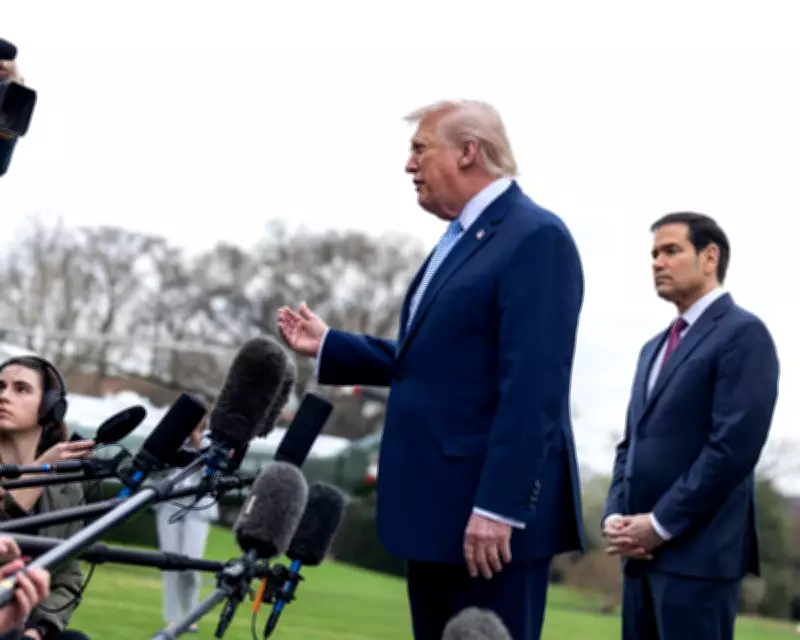
Trump's approach to the Iran conflict has been marked by inconsistent messaging that betrays a lack of coherent strategy. While traditional presidents would deliver solemn addresses from the Oval Office to build support for military actions, Trump announced the war from his Mar-a-Lago retreat wearing a baseball hat, with a video released in the middle of the night on February 28.
Since then, his statements have routinely contradicted themselves. The war is simultaneously about to end and may last a long time. The US is both willing to send ground troops and reluctant to do so. Trump claimed the threat from Iran was "imminent," yet intelligence suggested it might have taken a decade to materialize. He asserted that Iran's nuclear stockpiles were "obliterated" in 2025, then questioned this achievement.
Shifting Goals and War Crime Implications
In the conflict's fifth week, the confusion deepened when Trump threatened to target Iran's civilian infrastructure on March 21, a move many argued could constitute a war crime. This goal was abruptly withdrawn two days later, before his self-imposed 48-hour deadline, claiming Iran had initiated communication—a claim Tehran denied. The result was a five-day pause to calm roiled markets, followed by another 10-day ceasefire until April 6, leading some to dub this the "Stop-and-Go War."
On Monday, Trump again threatened civilian targets, including desalination facilities crucial for water in the arid region, while simultaneously claiming "great progress" in negotiations that may not be happening. His demands have oscillated between calling for Iran's "unconditional surrender"—which Tehran clearly rejects—and declaring the war already "won," despite ongoing hostilities and a recent $200 billion funding request from American taxpayers.
NATO Relations Severely Damaged
The incoherence has severely damaged American prestige, particularly within NATO. On March 16, Trump demanded that NATO allies clear the Strait of Hormuz, despite the alliance never being consulted on the war and having resources strained by Ukraine. When no nation complied, Trump erupted on social media, declared he no longer wanted their help, and later asked China—an Iranian ally—to perform the same task, which they refused.
This rift stems partly from Trump's January obsession with Greenland, which marked the end of NATO solidarity and began a period of instability. His failed attempt to seize the territory persuaded no allies and led Denmark to prepare for a potential US invasion, with other NATO nations siding with Copenhagen. The resulting loss of confidence has been devastating, evident in Europe's ambivalence toward the Iran war.
Special Relationship with UK in Jeopardy
The situation has been especially difficult for the United Kingdom, traditionally America's closest ally. Trump has repeatedly insulted Prime Minister Keir Starmer as "no Churchill," damaging the special relationship that Churchill helped create. A recent poll shows only 30% of Britons believe this relationship still exists—a 17-point decline over the past year.
This calamity benefits Vladimir Putin, who emerges as a potential victor from the Iran conflict. To control oil prices, Trump has waived sanctions on Russian oil, replenishing Moscow's coffers and aiding its war in Ukraine. Meanwhile, Britons face catastrophic gas and heating prices—a consequence Trump never explained.
Historical Contrast in Wartime Communication
Trump's rambling speaking style, often called "the Weave," may entertain rally crowds but fails in complex military missions requiring clear goals and allied persuasion. In 1962, Charles de Gaulle trusted President Kennedy's word on Cuban missile evidence without seeing photos; today, no NATO leader would extend such trust to Trump.
When recently asked about a possible war end date, Trump replied, "We're very far ahead of schedule," then undermined this by adding, "I don't know, it depends. Wrapping up is all in my mind, nobody else's." This contrasts sharply with Churchill's poetic yet realistic communication, which inspired without promising easy conquest.
The war may end soon, but Trump's incoherent strategy has already wounded American credibility and alliances, leaving a legacy of muddle where clarity was desperately needed.