Trump Faces Pressure to Send Ground Troops to Iran Amid War Crisis
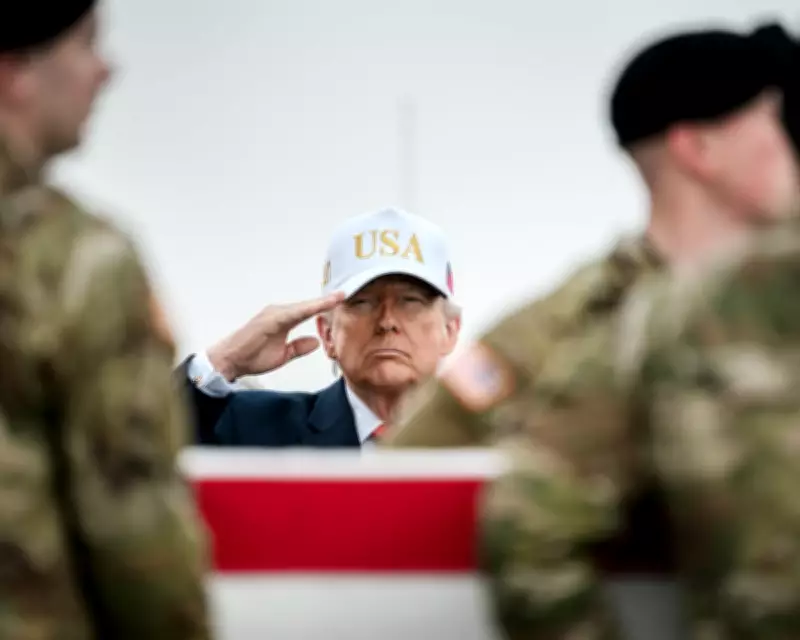
Donald Trump recently paid respects to the coffin of an American serviceman killed in a drone strike in Kuwait on March 7, 2026, a somber moment captured in a photograph by Daniel Torok. This image underscores the human cost of a conflict that has spiraled into a dire predicament for the United States. Trump is now reportedly considering the deployment of ground troops to Iran, a move many view as a desperate attempt to avoid personal and political humiliation in a war he started and has struggled to manage effectively.
The Catch-22 of Military Escalation
After the painful experiences of Iraq and Afghanistan, the idea of sending US troops back to the Middle East seems almost unthinkable. However, Trump, described as desperate and narcissistic, is cornered. Sending ground forces, even if framed as a limited operation, could lead to catastrophic outcomes for both him and the American people. This situation has been likened to a modern-day catch-22, with Trump stuck between a rock and a hard place, particularly in the strategic Strait of Hormuz.
In his own narrative, Trump claims the war is nearly won, with Iran seeking peace and negotiations progressing. Reality tells a different story: Iran continues to fight on multiple fronts, Israel persists with bombing campaigns, the Strait of Hormuz remains largely closed, and Houthi militias in Yemen have joined the conflict, threatening Red Sea trade routes. The US and Iran have issued maximalist demands, but actual negotiations are nonexistent, widening the gap since Trump abandoned diplomacy last month, influenced by Benjamin Netanyahu.
How the Conflict Reached This Point
It is astonishing that, following the tragedies of Iraq and Afghanistan, a US president is once again seriously contemplating boots on the ground in the Middle East. More surprising is that this president is Trump, who previously criticized costly foreign interventions. This crisis is not a result of bad luck but of deliberate policy choices. If the US faces impossible decisions, the responsibility lies squarely with Trump, though he is likely to blame others, such as Pete Hegseth at the Pentagon.
The White House continues to disseminate falsehoods and bombast, with Trump in denial, asserting that regime change has been achieved through assassination. He behaves like a detached spectator, ignoring the global energy shock, US failures in defending the Strait of Hormuz, Iran's defiance, and the lack of popular uprising in Tehran. Trump fails to grasp that Iran is waging an asymmetric war where ideology and history cannot be bombed away.
Growing Isolation and Military Risks
Trump is increasingly isolated, with wealthy Arab allies losing trust and US bases in the region becoming liabilities. European NATO members have offered lukewarm support, and Iran's ethnic Kurds are reluctant to assist. Domestic support for the war, already weak among the US public and MAGA right, is fading rapidly. Netanyahu, who encouraged Trump, now refuses to provide a bailout, leaving Trump to face the consequences of believing in a quick victory promise.
Iran's leadership, dominated by hardliners, believes it is winning and hardens its stance daily. For US marines and paratroopers deploying to the Gulf, the situation is precarious. Iran boasts 610,000 active-duty personnel and 350,000 reserves, with the Islamic Revolutionary Guard Corps prepared to use extreme measures, including carpet-bombing its own territory if invaded.
If Trump orders ground attacks, likely targets include coastal batteries and missile defenses along the Strait of Hormuz, with potential strikes on the Kharg oil export terminal. Such incursions aim to reopen the strait, ease the energy crisis, and strengthen Trump's negotiating position. However, the risks are daunting: casualties are inevitable, and mission-creep could lead to a prolonged occupation reminiscent of Iraq and Afghanistan. An even riskier option involves special forces attempting to seize Iran's enriched uranium stockpile.
The Path Forward and Political Fallout
Does Trump truly want to unleash this nightmare? His claims that Iran is secretly begging for peace suggest he fears a land war could destroy his presidency. Iran, aware of this, rejects his maximalist peace plan, which demands total surrender, and instead insists on an end to aggression, sovereignty over the Strait of Hormuz, reparations, and lifted sanctions. Any deal failing to address US and Israeli demands—such as halting Iran's nuclear programs and ensuring Gulf navigation—will be seen as a defeat for Trump.
At this critical juncture, the illegal war should never have begun, with Trump and Netanyahu sharing blame. The threat was not imminent, and promises of freeing Iranians have been abandoned. The only sane solution is unconditional negotiations, requiring Trump to admit error and swallow his pride—a move deemed utterly ridiculous given his reckless and narcissistic nature. The second Trump presidency, always poised for disaster, is now unfolding in real-time, with global implications.