
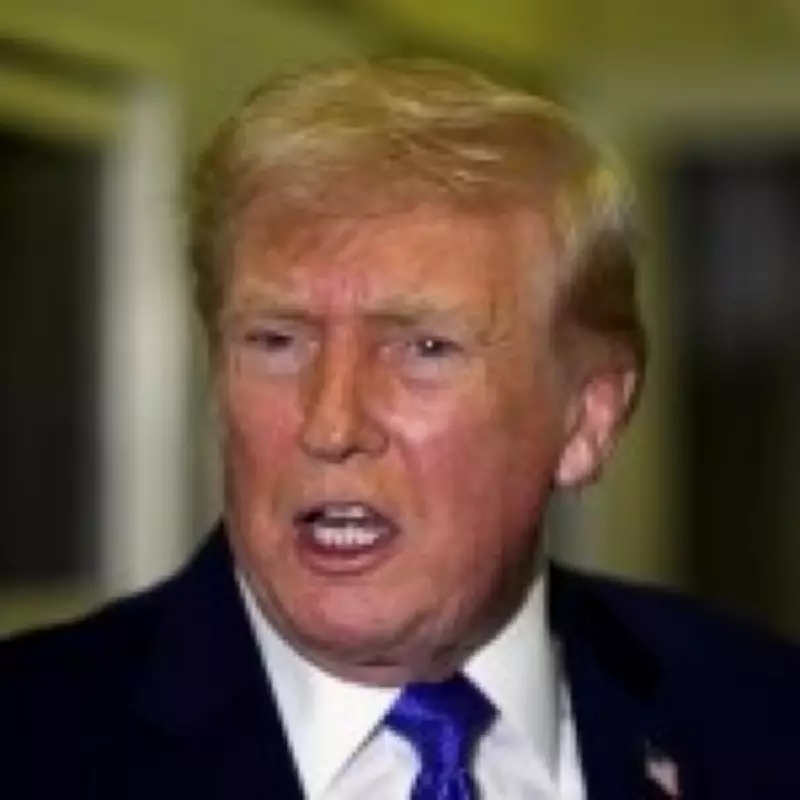
Former President Donald Trump has issued a direct warning to Iran, stating the country must reach a nuclear agreement or face severe consequences. This comes as the United States and Iran engage in their second round of talks in Geneva, focusing exclusively on Iran's nuclear program, while ignoring the nation's violent crackdown on protesters.
Trump's Forceful Stance on Nuclear Negotiations
Speaking to reporters aboard Air Force One en route to Washington, Trump emphasized his intention to be involved in the negotiations, at least indirectly. He expressed confidence that Iran desires a deal, but warned of the repercussions if they fail to comply. "I think they want to make a deal. I don't think they want the consequences of not making a deal," Trump declared, hinting at potential military action if talks break down.
Iran's Provocative Military Maneuvers
In a bold move, Iran shut down the Strait of Hormuz for several hours, citing "safety and maritime concerns" as Ali Khamenei's forces conducted live-fire military exercises. This marks the first closure of this critical international waterway since the US began threatening Iran with military intervention. Reports indicate that Russian and Chinese ships participated in the exercises, escalating regional tensions.
Iranian Foreign Minister Abbas Araghchi, leading the talks in Geneva, asserted, "I am in Geneva with real ideas to achieve a fair and equitable deal. What is not on the table: submission before threats." However, just hours later, Khamenei's official social media account posted a menacing message, challenging US military dominance: "The US President keeps saying that they have the strongest military force in the world. The strongest military force in the world may at times be struck so hard that it cannot get up again."
Heightened Warnings and Military Buildup
Khamenei has intensified his warnings to the US over its military buildup in the Middle East, stating, "Of course, a warship is a dangerous apparatus, but more dangerous than the warship is the weapon that can sink the warship into the depths of the sea." This appears to reference Trump's deployment of the USS Gerald R Ford, the world's largest aircraft carrier, from the Caribbean Sea to the Middle East.
The USS Gerald R Ford will join the USS Abraham Lincoln and its accompanying guided-missile destroyers, which have been stationed in the region for over two weeks. This significant military presence underscores the escalating standoff between the two nations, with nuclear negotiations hanging in the balance.
As talks continue, the closure of the Strait of Hormuz and the involvement of Russian and Chinese forces add layers of complexity to an already volatile situation. The international community watches closely, aware that any misstep could lead to broader conflict in the Middle East.




