
Trump Orders Second Aircraft Carrier Deployment to Middle East Amid Iran Nuclear Talks
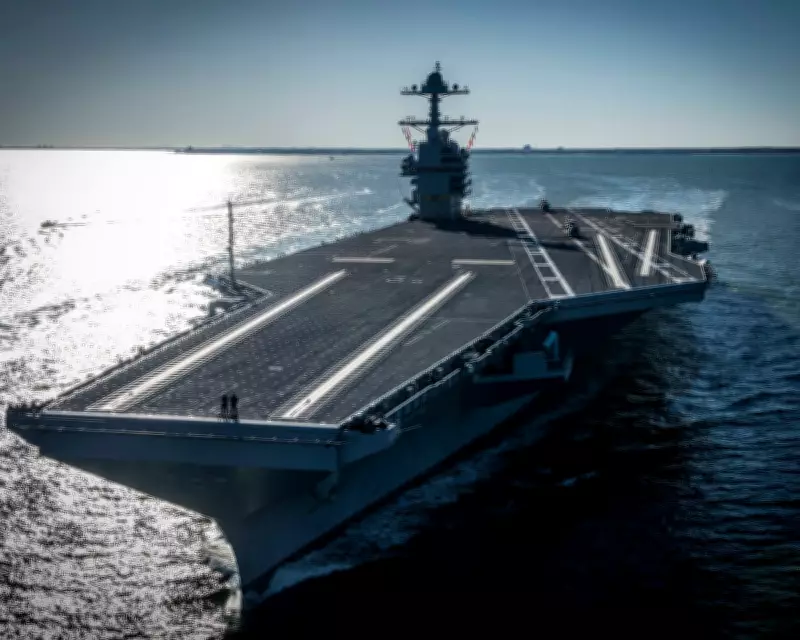
In a significant military escalation, former President Donald Trump has directed the USS Gerald R Ford, currently recognized as the world's largest aircraft carrier, to sail from the Caribbean Sea to the Middle East. This strategic move aims to substantially increase pressure on Iran during ongoing discussions concerning its nuclear and ballistic missile programs.
Expanding US Naval Power in the Region
The USS Gerald R Ford, accompanied by its supporting warships, is projected to require approximately three weeks to complete its transit to the Middle East. Upon arrival, it will join the existing USS Abraham Lincoln carrier strike group, dramatically amplifying the United States' available military firepower and naval presence in the strategically vital region.
This deployment follows Trump's public remarks on Tuesday, where he indicated he was "thinking" about sending a second carrier group. At that time, he expressed a belief that Tehran might be willing to negotiate a nuclear agreement. The decision to mobilize the Ford was confirmed in US media reports on Thursday, shortly after Trump's meeting with Israeli Prime Minister Benjamin Netanyahu in Washington to coordinate on the Iran negotiations.
Complex Negotiations and Shifting Rhetoric
Recent indirect talks between the US and Iran took place in Oman last week, with expectations for further discussions, though no subsequent dates have been finalized. Iran has signaled a potential willingness to limit its nuclear enrichment activities in exchange for sanctions relief but has firmly rejected additional demands. These include calls from Israel to restrict Iran's ballistic missile development and reduce support for proxy groups like Hezbollah.
Trump's public stance on Iran has undergone notable fluctuations over the past month. Initially, he suggested potential intervention during domestic protests in Iran, promising "help is coming" to demonstrators. However, at that juncture, the US had limited immediate military assets in the area. The situation evolved with the deployment of the Lincoln carrier group, though by then, Iranian authorities had reportedly suppressed protests through a severe crackdown.
Carrier's Extended Deployment and Strategic Implications
The Ford carrier strike group had previously been deployed from the eastern Mediterranean in late October, arriving in the Caribbean Sea by mid-November as part of increased pressure on Venezuela's former leader, Nicolás Maduro. It played a pivotal role in the dramatic seizure of Maduro by US forces in early January and had remained stationed in the Caribbean since.
Redirecting the carrier and its accompanying warships back to the Middle East represents an unusually prolonged naval deployment. The Ford originally departed the United States in June 2025 and currently has no scheduled return date, underscoring the sustained commitment to regional military posture.
Trump's Ultimatum and Timeline for a Deal
On Thursday, Trump issued a stark warning to Iran, stating that failure to reach an agreement with his administration would prove "very traumatic." He expressed hope for a swift conclusion to the negotiations, suggesting a timeline of about one month. "It should happen quickly. They should agree very quickly," Trump emphasized when questioned about his expectations for a nuclear deal.
This dual-carrier presence marks one of the most substantial US naval buildups in the Middle East in recent years, reflecting the high stakes of the diplomatic efforts to curb Iran's nuclear ambitions and regional influence.




