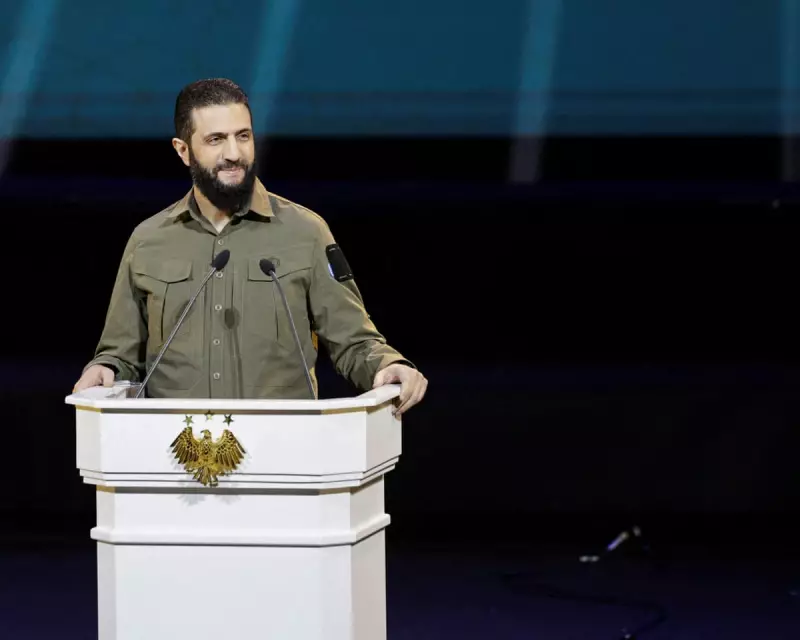
Trump's Controversial Embrace of Syrian Leader Amidst Rapid Offensive
In a significant geopolitical shift, former US President Donald Trump has publicly endorsed Syrian President Ahmed al-Sharaa, describing him as "attractive" and "tough". This development comes despite Mr Sharaa's background as a former jihadist who carried a substantial $10 million bounty from the United States until late 2024. The Trump administration's warming relations with Damascus mark a dramatic departure from previous US policy in the region.
Kurdish Self-Rule Unravels in Government Offensive
This political realignment coincides with a lightning-fast Syrian government military campaign that has fundamentally redrawn the territorial map of north-eastern Syria. Within a remarkably short timeframe of just over two weeks, President al-Sharaa's forces have effectively dismantled more than a decade of Kurdish self-administration in the region.
The Kurdish-dominated Syrian Democratic Forces (SDF), which previously controlled approximately a quarter of Syrian territory along with numerous critical resources, have been compelled to retreat from substantial portions of their former holdings. Although the SDF has theoretically agreed to dissolution in principle, their practical implementation of this agreement remains uncertain, casting doubt over the stability of the current fragile ceasefire arrangement.
US Abandons Former Kurdish Allies
The United States, which previously relied heavily upon the SDF as its primary ground partner in the campaign against Islamic State, appears to have decisively shifted its allegiance. American officials have grown increasingly frustrated with the Kurdish forces' failure to implement last spring's integration agreement into the newly formed Syrian army, reportedly due to internal divisions within the SDF leadership.
Tom Barrack, the US special envoy to Syria and ambassador to Turkey, articulated this changing perspective in recent communications, stating that the fundamental rationale for the American partnership with the SDF had "largely expired" because Damascus had demonstrated its readiness to assume full security responsibilities throughout the territory.
Abandoned Detainees Pose Growing Threat
Beyond the geopolitical realignment, a second critical abandonment has emerged regarding the tens of thousands of suspected Islamic State members and their families detained in previously SDF-administered prison camps, including the notorious al-Hawl facility. European Union officials have identified alleged breakouts from these camps as being of "paramount concern" to regional security.
The United States has announced plans to transfer approximately 7,000 of the most hardened fighters to detention facilities in Iraq. While these individuals must be protected from torture, forced confession, and execution regardless of their alleged crimes, the conditions within the camps have reportedly fostered increased radicalization. Particularly concerning are reports that women have emerged as among the most fanatical inmates, raising their children according to extremist ideologies.
Many Western nations, including the United Kingdom, have attempted to distance themselves from this crisis by stripping citizenship from foreign nationals who joined Islamic State, such as Shamima Begum who left Britain at age fifteen. However, this approach has failed to address the underlying security threat, which has only intensified as countries hoped the detainee problem would remain someone else's responsibility.
Political Horizon Remains Essential for Stability
Regardless of the Syrian government's current security capabilities—and it should be noted that Mr Sharaa's forces initially targeted Islamic State as rivals before confronting them as an insurgent threat—the nation's long-term prospects appear bleak without meaningful political progress. Sustainable stability will require genuine inclusivity, substantive dialogue, transitional justice mechanisms, and credible electoral processes.
While Damascus has recently reaffirmed Kurdish language and cultural rights, the government shows little indication of tolerating political organization among minority groups that might challenge the centralized authority it seeks to reestablish throughout Syria.
Europe's Treatment of Syrian Refugees Draws Criticism
The volatility of Syria's situation further highlights what many observers describe as a third abandonment: Europe's treatment of Syrians who managed to escape the conflict. As the country's future remains profoundly uncertain, nations including Austria are advocating for the repatriation of refugees to a homeland requiring an estimated $200 billion for reconstruction, where safety and rights remain precarious at best.
This approach has drawn significant criticism from humanitarian organizations and policy experts who argue that governments must reconsider policies that would return vulnerable populations to such unstable conditions, particularly while the political and security landscape remains so dangerously fluid.