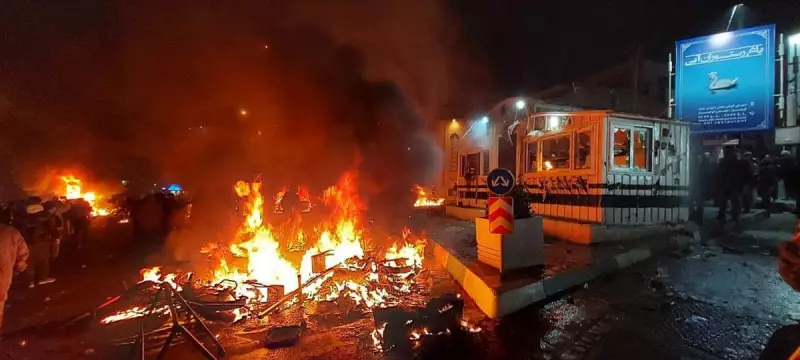
US President Donald Trump has stated he is evaluating "very strong" military options against Iran, as the death toll from the regime's violent suppression of nationwide protests continues to rise sharply. The unrest, which began in late December, was initially sparked by a severe economic downturn but has since evolved into a broader movement demanding political change.
Trump's Threats and Claims of Iranian Overtures
Speaking to reporters aboard Air Force One on Sunday, Trump asserted that Iran has proposed negotiations, suggesting the regime is "tired of being beat up by the United States." However, he simultaneously warned of a potential military response to the government's crackdown on demonstrators.
When questioned if Iran had crossed his previously stated "red line" of protesters being killed, Trump responded, "they’re starting to, it looks like." He confirmed that the US military was examining the situation and that his administration was "looking at some very strong options."
Trump reiterated his stance on his Truth Social platform, declaring, "Iran is looking at FREEDOM, perhaps like never before. The USA stands ready to help!!!"
Mounting Casualties and a Brutal Crackdown
Human rights groups report a devastating and escalating human cost. According to the US-based Human Rights Activists News Agency, at least 538 people have been killed in the violence, including 490 protesters, with over 10,600 arrests made by Iranian authorities.
Another monitor, the Norway-based Iran Human Rights group, stated on Sunday that a minimum of 192 protesters had lost their lives. All figures are believed to be significant undercounts, exacerbated by a near-total internet blackout imposed by the regime last Thursday, which has severely hampered information flow and verification.
Iranian authorities have pursued a harsh response. The national police chief announced "significant arrests" of "main elements in the riots," while the attorney general warned that protesters or their supporters could face charges of being "an enemy of God," a crime punishable by death.
Regional Tensions and Internal Divisions
The prospect of US intervention has heightened regional tensions. In a stark warning, Iranian parliament speaker Mohammad Baqer Qalibaf, a former Revolutionary Guards commander, stated that US bases and Israeli territory would become "legitimate targets" if Iran were attacked.
Internally, the protest movement has gained symbolic support from influential figures. Reza Pahlavi, the US-based son of Iran's deposed shah, publicly urged Iranian security forces and government employees to defect and join the protesters.
Meanwhile, Iranian President Masoud Pezeshkian accused the country's "arch-foes" of escalating unrest and bringing "terrorists from abroad," calling for a pro-government "national resistance march" in response.
As the crisis deepens, President Trump is reportedly considering a spectrum of actions, from military strikes and cyber operations to expanded sanctions and online support for anti-government voices. The situation remains highly volatile, marking the most significant challenge to Iran's leadership in years.