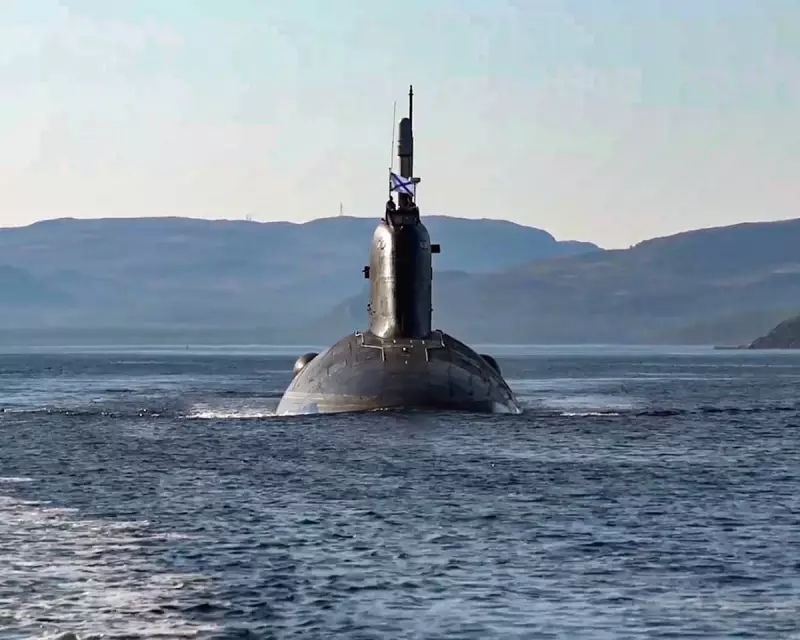
The Swedish navy is encountering Russian submarines in the Baltic Sea on an almost weekly basis, a senior commander has revealed, warning that Moscow is poised to further reinforce its presence in the region.
An 'Almost Weekly' Reality for Swedish Forces
Captain Marko Petkovic, the Swedish navy's chief of operations, stated that sightings of Russian vessels have become a very common part of life for his forces. The frequency of these encounters has increased in recent years, he confirmed, describing Moscow as "continuously reinforcing" its military footprint in the strategically vital Baltic.
Petkovic warned that the situation could intensify further. "Once a ceasefire or armistice is eventually in place in Ukraine, you can only assess, and we do assess that Russia will reinforce its capabilities in this region," he said. This assessment is driving the Swedish navy to continuously grow and focus on the broader security picture.
Modernisation and Multifaceted Threats
The operational chief detailed Russia's ongoing military modernisation, noting it is producing one Kilo-class submarine annually from facilities in St Petersburg and the Kaliningrad exclave. This forms part of a "deliberate and constant modernisation programme" for its Baltic fleet.
The threats in the region, however, extend beyond traditional military assets. Petkovic highlighted a dangerous mix of challenges including:
- Suspected hybrid attacks using drones.
- Alleged sabotage targeting critical underwater infrastructure like cables and pipelines.
- The pervasive presence of a shadow fleet of ageing oil tankers carrying Russian crude.
While the shadow fleet is not a direct military asset, Petkovic did not rule out its potential use for launching drones, stating it could affect nations from a military perspective.
Nato Response and Vulnerable Infrastructure
In response to these escalating threats, Sweden recently hosted a major NATO anti-submarine warfare exercise, Playbook Merlin 25. The drill involved hundreds of personnel from nine nations, including the US, Germany, and France, honing their skills in the Baltic's unique underwater terrain, where hilly landscapes can help submarines evade detection.
Petkovic emphasised the acute vulnerability of underwater infrastructure in the Baltic, where conditions like salinity and temperature complicate monitoring. Nations like Sweden, Finland, Estonia, and Lithuania are "fully dependent on the sea lines for communication, for our sustainment of our societies."
He pointed to a recent NATO initiative, Operation Baltic Sentry, launched in January, as a successful deterrent. "We haven't seen any cable incidents in this region at all" since it began, he noted, arguing it demonstrates alliance cohesion and has raised awareness among commercial shipping.
The warnings from Sweden follow last month's statement by the British Defence Secretary that a Russian spy ship had entered UK waters and targeted military pilots with lasers, underscoring a "new era of threat" from hostile state actors in European waters.