
Undercover Officer Exposes Metropolitan Police's 'Don't Ask, Don't Tell' Policy on Deceptive Relationships
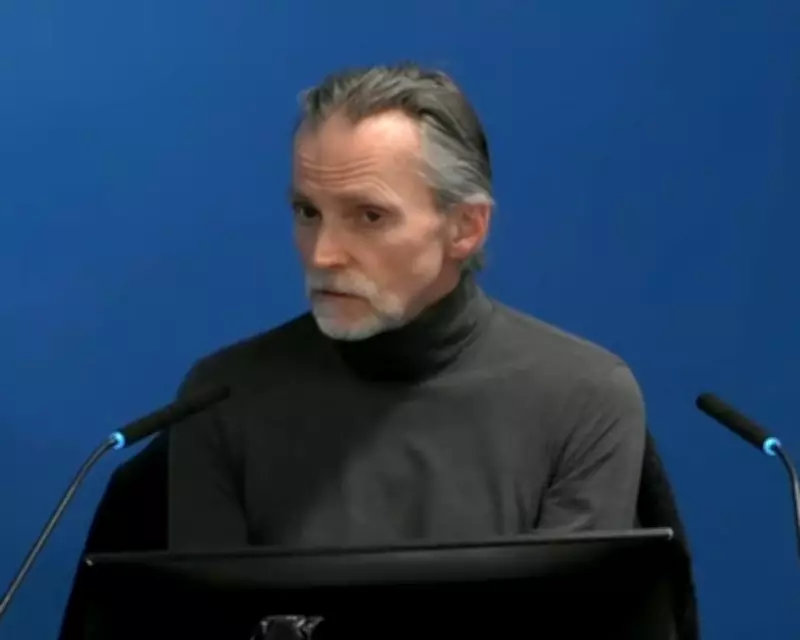
An undercover police officer who infiltrated activist groups has revealed that senior Metropolitan police managers operated a "don't ask, don't tell" policy regarding officers forming deceptive sexual relationships with women while using fake identities. Jim Boyling, who spent five years spying on environmental and animal rights campaigners, told the ongoing public inquiry into police spying that his superiors deliberately turned a blind eye to these unethical practices.
Systemic Failure in Police Oversight
Boyling testified that managers within the Metropolitan Police's Special Demonstration Squad (SDS) knew that undercover officers were inevitably forming intimate relationships with activists but chose not to address the issue directly. "At no time, before or during my deployment, was I ever specifically told not to have sexual relationships whilst in my undercover identity," Boyling stated during his evidence to the inquiry.
The officer estimated that approximately half of the SDS undercover operatives during his tenure engaged in sexual relationships with activists without disclosing their true police identities. He explained that managers considered these relationships "inevitable" but preferred not to discuss them openly, leaving individual officers to navigate the ethical dilemmas themselves.
Devastating Impact on Victims
Three women who were deceived by Boyling have described how his betrayal caused them profound psychological harm. During his deployment between 1995 and 2000, Boyling formed relationships with three Reclaim the Streets activists while maintaining his undercover persona as an environmental campaigner.
One woman, identified only as Monica, described a six-month relationship with Boyling that left her feeling "ashamed, exposed and humiliated." She testified: "I feel strongly that what has happened to me and others was very wrong. I was sexually violated."
A second activist, known as Ruth, entered what became an 18-month relationship with Boyling that represented her first significant romantic involvement. She characterized his behavior as "repulsive," adding that she felt "conned, betrayed, emotionally and sexually manipulated and very much used."
Long-Term Deception and Aftermath
Boyling's third relationship with an activist named Rosa began in late 1999 and continued until August 2000 when he abruptly disappeared at the conclusion of his undercover assignment. He reappeared in 2001 and revealed his true identity to Rosa, after which they resumed their relationship and eventually had two children together.
Rosa has alleged that Boyling trapped her in "an increasingly abusive and controlling relationship" and systematically isolated her from friends and associates. Boyling has denied these allegations while acknowledging the fundamental deception at the heart of their initial relationship.
Institutional Recognition Despite Ethical Failures
Despite these ethical breaches, Boyling received formal letters of commendation for his covert work from then-Home Secretary Jack Straw and senior police officials. These letters praised his effectiveness in gathering intelligence about protest movements while making no mention of the deceptive relationships he maintained during his deployment.
The public inquiry, led by retired judge Sir John Mitting, is examining how approximately 139 undercover officers spied on predominantly left-wing campaigners between 1968 and at least 2010. Sir John has noted that the devastating impact of deceptive relationships on women has "become very clear in the course of the hearings I have been conducting."
Broader Patterns of Deception
Boyling's testimony reveals systematic failures within police undercover operations. He described how fellow undercover officer Matt Rayner advised him that relationships with activists could help gain access to "the inner circle" of campaigners and "break through the glass ceiling of acceptance." This suggests that deceptive intimacy was sometimes viewed as an operational tactic rather than an ethical violation.
During his deployment, Boyling served as treasurer for the Reclaim the Streets environmental group while simultaneously passing information to police supervisors. This dual role allowed him to organize protests while undermining the very movements he pretended to support.
The inquiry continues to examine how police institutions permitted and sometimes encouraged these deceptive practices despite their profound human costs.




