Liverpool Street Station's £1.2 Billion Transformation Gets Green Light
London's busiest railway terminal, Liverpool Street Station, is set for a monumental £1.2 billion redevelopment after receiving official planning permission from the City of London Corporation. The approval, granted on February 10, 2026, marks a pivotal moment for the Victorian-era station, which last underwent significant changes in 1991.
A Station Under Pressure
Liverpool Street Station, often described as chaotic by daily commuters, has seen passenger numbers triple since its last major upgrade. Current projections estimate that a staggering 158 million people could pass through the station annually by 2041, creating urgent need for expansion and modernization.
The station's daily reality includes navigating through crowded concourses filled with city workers, tourists, and various commuters, making the redevelopment plans particularly timely for improving passenger experience.

The Approved Redevelopment Plan
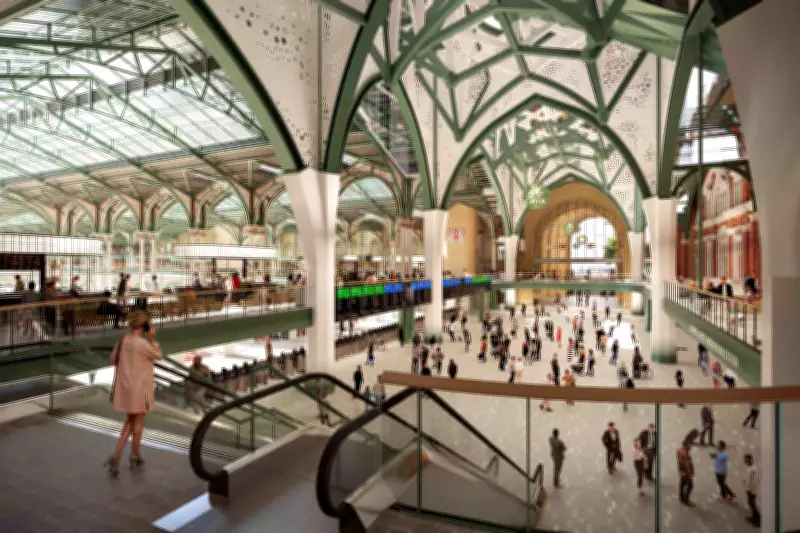
Designed by ACME architects, the approved scheme will dramatically transform Liverpool Street Station while preserving its historic Victorian trainshed. Key improvements include:
- A 76 percent increase in concourse capacity
- Full step-free accessibility from street level to all platforms, including London Underground connections
- Installation of eight new lifts and six new escalators
- Toilet facilities on all station levels
- New landmark entrances to improve wayfinding
The most controversial element involves constructing a substantial office block above the station, complete with a publicly accessible roof garden. This aspect has drawn significant criticism from heritage conservation groups.
Network Rail's Perspective
Ellie Burrows, Managing Director for Network Rail's Eastern region, expressed enthusiasm about the approval: 'This decision represents a key step towards the transformation of Britain's busiest station and marks the beginning of an exciting new chapter for Liverpool Street.'
Burrows emphasized that the plans balance modernization with heritage preservation: 'Our plans focus on improving the everyday experience for passengers whilst respecting the station's unique heritage. With annual passenger numbers forecast to grow to 158 million, this approval ensures the station will be future proofed for decades to come.'
Conservationist Opposition
The Victorian Society has voiced strong opposition to the development, calling the planning approval 'a sad day for the City of London.' The organization argues the project will 'destroy an existing conservation area' and represents inappropriate development on a major heritage asset.
Griff Rhys Jones, President of both the Victorian Society and the Liverpool Street Station Campaign (LISSCA), criticized the office block component: 'A disfiguring billion pound office block on top of a major heritage asset is not essential to the City's development plans. Its focus is retail opportunities which the commuter doesn't need.'
Jones further challenged Network Rail's justification: 'Any advantages to disabled access are a statutory duty and should not require twenty storeys of office block and ten years of disruption to achieve. By ignoring all these considerations, the Corporation planning committee have bowed to developer ambitions.'
Historical Context and Future Impact
The approved design represents the latest iteration of redevelopment plans that have evolved over several years. Initial proposals for a 16-storey tower faced backlash from conservationists and celebrities including Stephen Fry and Tracey Emin, leading to revised submissions.
Regular users of Liverpool Street Station should prepare for significant disruptions during construction, with major weekend closures scheduled throughout March 2026 as work begins on the transformative project.
The redevelopment controversy highlights the ongoing tension between preserving London's architectural heritage and meeting the demands of a growing city with expanding transportation needs. As construction progresses, all eyes will be on how Network Rail balances these competing priorities while delivering improved facilities for millions of annual passengers.