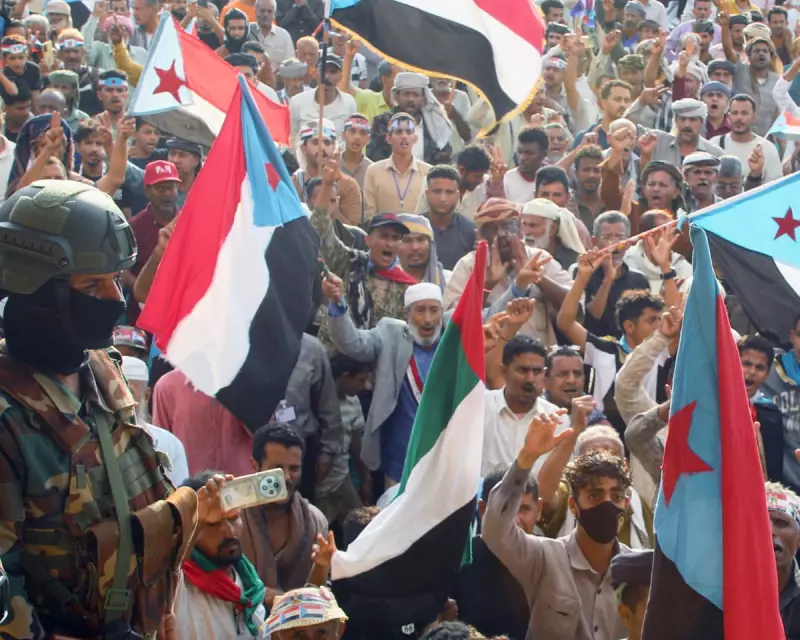
Saudi Arabian warplanes have launched deadly airstrikes against Yemeni separatist forces backed by the United Arab Emirates, killing at least seven fighters and exposing a deepening fissure within the military coalition. The strikes on Friday targeted a camp belonging to the Southern Transitional Council (STC) in eastern Yemen, representing the first fatal attack by the Saudi-led alliance on the group since it seized large territories last month.
A Deadly Escalation in a Proxy Conflict
The air raids hit the al-Khasah camp in the Hadramawt province, with local STC leader Mohammed Abdulmalik reporting seven separate strikes that left seven dead and more than twenty wounded. Further bombardments targeted other sites in the same region. This military action followed a public campaign by pro-Saudi Yemeni government forces to take control of military sites in Hadramawt "peacefully and systematically."
However, the rapid transition from declared peaceful intent to lethal force drew sharp condemnation. Amr Al Bidh, the STC's foreign affairs representative, accused Riyadh of deliberately misleading the international community, pointing out that the airstrikes began just minutes after the announcement of the peaceful operation. "This was evidenced by the fact that they launched 7 airstrikes minutes later," he stated on social media platform X.
Fractured Alliances and a Stalled Peace Process
The incident underscores the severe strain between Saudi Arabia and the UAE, wealthy Gulf powers who have backed rival factions within Yemen's anti-Houthi bloc for years. The STC's offensive last month, where it seized swathes of Hadramawt and neighbouring Mahra province, significantly angered Riyadh. A source close to the Saudi military warned that the strikes "will not stop until the Southern Transitional Council withdraws from the two governorates."
This internal conflict deals a major blow to already slow-moving peace negotiations with the Iran-backed Houthi rebels in northern Yemen. The STC's advances have revived the possibility of South Yemen declaring independence, a scenario that would further fragment the country. The group's military spokesman framed the current clash with Saudi-backed forces as a "decisive and existential" war against radical Islamism, aligning with a longstanding security priority of the UAE.
Diplomatic and Logistical Fallout
Tensions have spilled over into diplomacy and logistics. On Friday, the Saudi ambassador to Yemen, Mohammed al-Jabir, accused the STC of blocking a Saudi delegation from landing at Aden airport. This followed a dispute on Thursday, when the STC-controlled transport ministry denounced a Saudi demand for all flights to and from the UAE to stop in Saudi Arabia for security checks. Flight tracking data indicated that no planes had used Aden airport for over 24 hours, though its official closure was not announced.
The confrontation comes just days after the Saudi-led coalition bombed an alleged Emirati weapons shipment, prompting the UAE defence ministry to announce the withdrawal of its remaining troops from Yemen. These events highlight how the original coalition goal of dislodging the Houthis has been superseded by a complex and violent struggle for influence among the nominal allies, casting a long shadow over Yemen's future stability.